Find out what makes an orchid’s leaf so glossy that the plant was named after a precious cloth. And learn how an early plant scientist explored the optical properties of the leaf’s epidermis.
In the tropics, jewel orchids (Goodyerinae) are among the minority of orchids that grow on the ground (as opposed to those that grow as epiphytes). As it is difficult to create suitable conditions for epiphytic orchids in a sealed container, it makes sense to experiment with jewel orchids instead. For an easy start, Macodes petola is a good choice. The flowers are unspectacular, but the plant is readily available; and its patterned leaves are very attractive (see the two pictures below). Known in Europe as a cultivated plant since the 1860s (Johnson 1860: 241), M. petola is today one of the most popular jewel orchids worldwide.
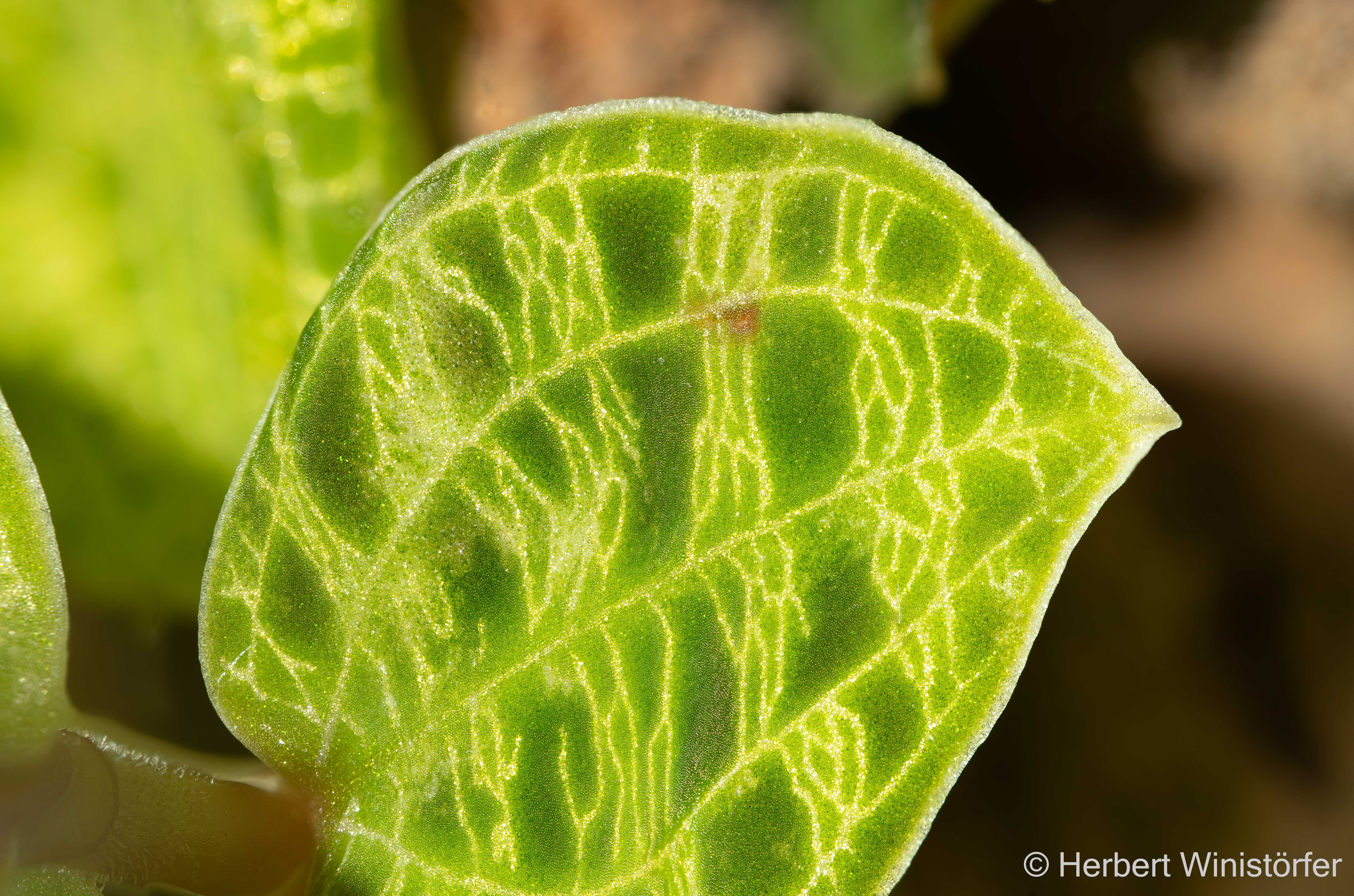
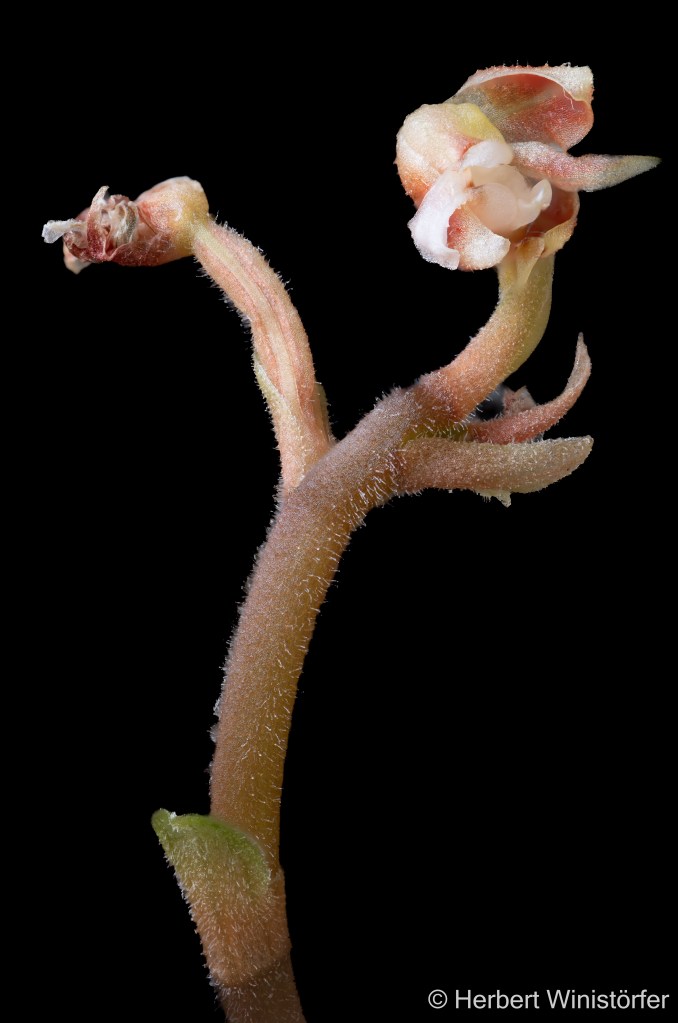
The natural range of M. petola extends from the Malay Peninsula through Sumatra, Java and Borneo to the Philippines. Its wide distribution already suggests that it does not have very specific requirements regarding the growing conditions.
A detailed description of the natural habitat of M. petola refers to its occurrence in Bromo-Tengger-Semeru National Park on the island of Java, Indonesia (Nao e.a. 2021): A total of 44 individuals were found at altitudes of 800-1.200 m.a.s.l. at temperatures between 19 and 23°C and relative humidity between 75 and 80%. The orchids were found on the rock faces along the shore of a lake, on rocks and rotting tree trunks as well as on clay cliffs and on moss-covered trees. The vegetation of this habitat is characterised by, in the tree layer Ficus benjamina, Lithocarpus platycarpus, Trema orientale and Ficus ampelos; in the shrub layer Ficus septica and Pittosporum ferrugineum; and in the undergrowth Melastoma malabathricum and Blumea lacera.

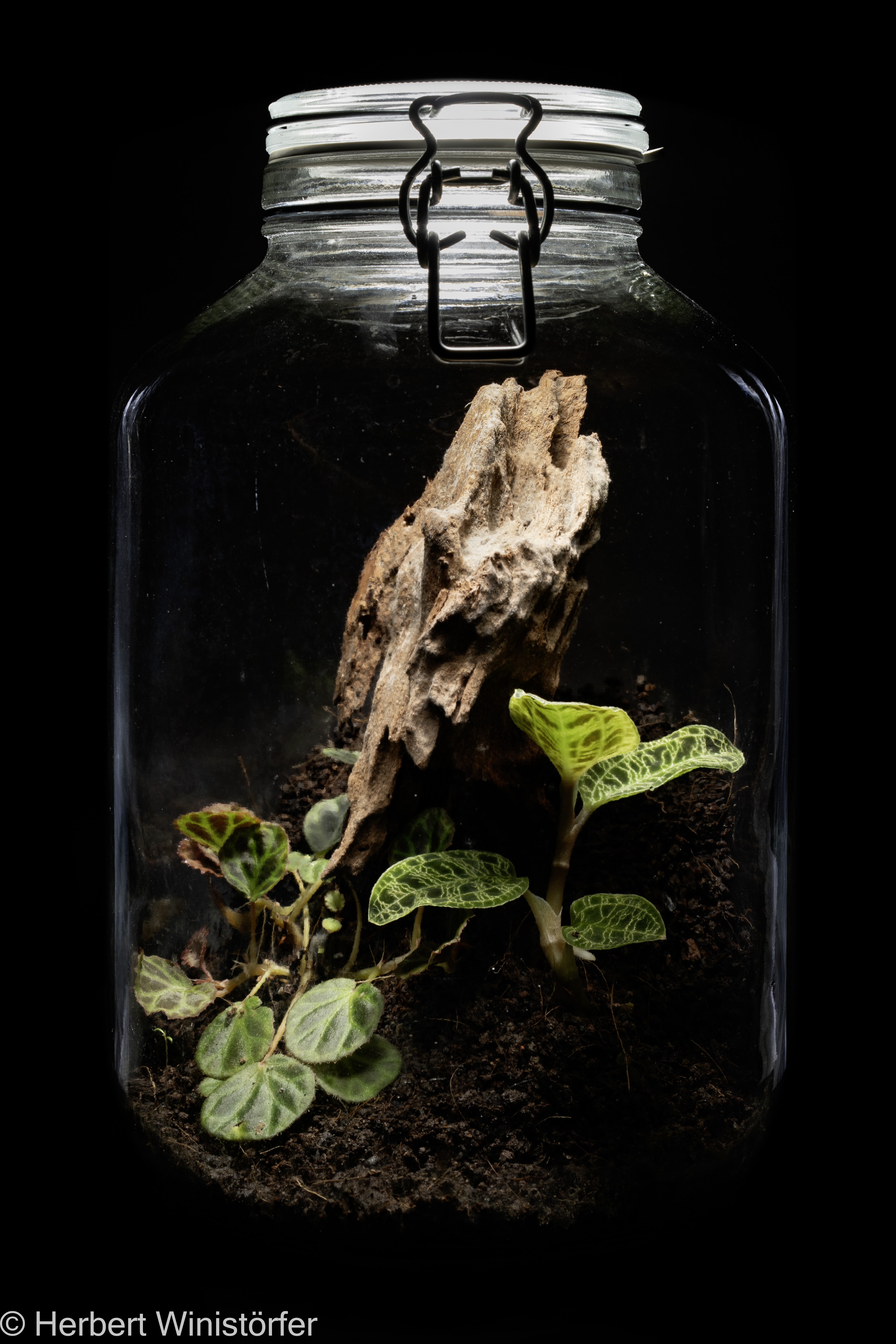
In the hermetosphere, M. petola thrived right from the start. It was perhaps not the best idea to plant Begonia olivacea in the jar as well, as this climbing Begonia grows quickly and vigorously. Nevertheless, M. petola managed to hold its own for 13 months after the start without me having to intervene (see the two pictures below). It will be interesting to see how both plants develop from here on. We would expect M. petola to produce offshoots after flowering, but for them to survive, I suppose I will have to interfere and make space by cutting back the Begonia.

M. petola was scientifically described by Carl Ludwig von Blume (1825) as Neottia petola and later assigned to the genus Macodes by John Lindley (1840). In his initial description, Blume (likely mistakenly) refers to a plant named Folium petolatum by Rumphius (1750), and adopts the latter’s species-specific epithet. There are various speculative theories regarding the etymology and meaning of the species name. The origin of the word is thought to lie in Javanese (‘patola’ = ‘a fine soft silk material’), Malay (‘petola’ = ‘brightly marked’, ‘of gaily colored cloths described by old writers as ‘Indian coloured cottons and silks much prized at Malacca’’) or Sanskrit (‘pata’ = ‘woven cloth’, ‘a painted piece of cloth’), always referring to a textile pattern (Beekman 2003: 151ff.). A different, mythological origin of the term is assumed by Lawler (1984 as cited by Beekman 2003: 154): “The Javanese regard this plant as of divine origin and relate the following legend: Long ago a radiantly beautiful goddess, Petola, was sent by the gods to Java to show the uncivilized natives the right and good ways. Her gentleness did not persuade them, and they chased her away to a rocky outcrop in the deep forest. She returned the next day in an angry mood and the people then subjected themselves to her. They pleaded for her beautiful scarf as a sign of her forgiveness, but she could not leave it. She returned to the rocky outcrop and while asleep laid her scarf on the ground. Soon the ground was covered with lovely plants that bore on their leaves the pattern of the heavenly scarf; and so originated the daun petola [the Malay name of the orchid] of Java, brought there by a goddess. Soon the news of the divine flowers spread, and people came from far and near to collect them for themselves. All these plants, however, began to die. The goddess magically restored them to the rock, breathed life into them, and left them in the care of the mountain fairies.”
Divine scarf or precious earthly cloth – a glance at the glossy surface of the M. petola leaf makes it clear just how apt these comparisons are (see the picture below).
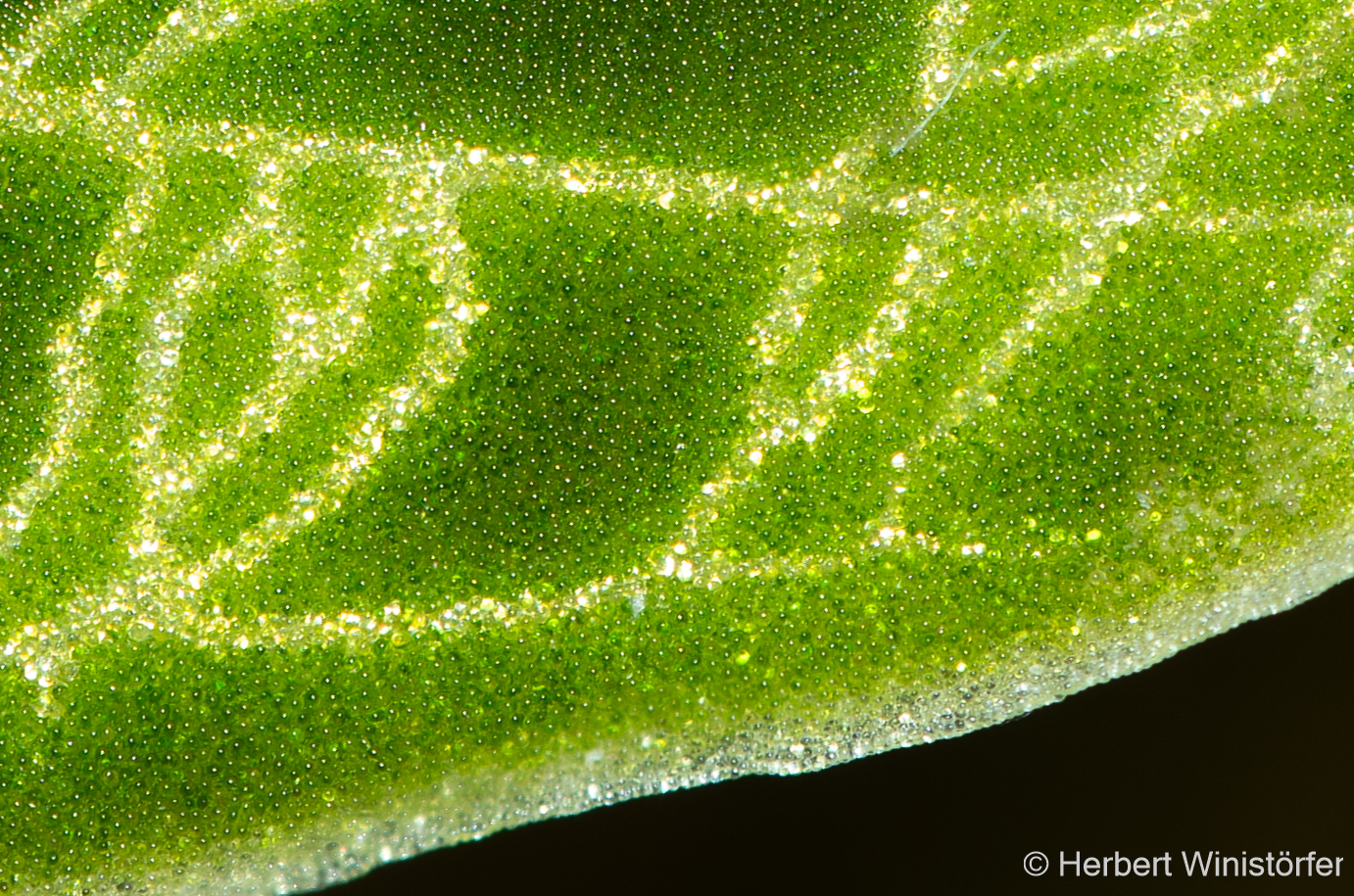
Can modern science explain the sparkle? A research paper from 2024 provides answers. The authors describe “[…] a unique cellular arrangement found in the leaves of the jewel orchid species Macodes petola. The cells have a favorable combination of shape, size, and are connected through an ordered structure that makes them able to distribute the light across the leaf surface through a ‘living optical network’.” (Guidetti and Omenetto 2024: 2) The sparkle is caused by an upper leaf epidermis that is not flat, as in most other plants, but consists of a single layer of dome-like shaped cells whose surface curves outwards (see Figure 1D below). “When the leaf is illuminated, a reflected pattern made by an array of bright dots appears overlayed to each cell (Figure 1C)”. (Guidetti and Omenetto 2024: 2)
!["Figure 1. Optical and morphological characterization of Macodes petola orchid leaves – [...]. C) High magnification bright field reflection micrograph of a green region displaying closely packed cells. [...]." Image source: Guidetti and Omenetto 2024, reproduced with kind permission from John Wiley & Sons, Inc; all rights reserved.](https://hermetospheres.com/wp-content/uploads/2026/08/guidetti_omenetto_2024_adom202401729-fig-0001-c.jpg)
!["Figure 1. Optical and morphological characterization of Macodes petola orchid leaves – [...]. D) Cryo-scanning electron microscopy (Cryo-SEM) image of a cross-section portion of the leaf showing round cells in the upper epidermis. False color green, blue, and orange overlays highlight upper epidermal cells, palisade cells, and the vascular bundle, respectively. Inset shows a schematic representation of the cells morphology and packing in the upper epidermis. [...]." Image source: Guidetti and Omenetto 2024, reproduced with kind pwermission from John Wiley & Sons, Inc; all rights reserved.](https://hermetospheres.com/wp-content/uploads/2026/08/guidetti_omenetto_2024_adom202401729-fig-0001-d.jpg)
The optical properties of M. petola leaves and the leaves of other understorey plants adapted to low-light habitats have captured the interest of plant scientists since way back. Ever since these unusually shaped epidermal cells were discovered, people have been puzzling over their function and the benefits they offer to plants. One of the first researchers to work on this question was Ernst Stahl (1848–1919). The Alsatian-born botanist was Professor of botany and director of the botanic garden in Jena from 1881. He travelled to Java 1889–90, where he studied the tropical flora up close (Kniep 1919). In his treatise “Über bunte Laubblätter” he states (Stahl 1896: 199): “It is well known that the distinctive velvety sheen on the upper surface of the leaves of many tropical plants is due 1) to the papillary shape of the individual epidermal cells. When viewed through a powerful magnifying glass or under a microscope using incident light, an epidermis of this structure does not appear uniformly illuminated; instead, against a dark background, there are as many highlights as there are epidermal cells that are convex towards the outside.” As a potential advantage of this type of epidermal cell, he discussed, among other things, improved transpiration due to rapid evaporation of the particularly thin film of water on the leaf surface after wetting. However, he was convinced that this effect alone was not sufficient to explain the peculiar cell shape. In order to better understand the optical properties of the cells, he poured clear gelatine into cone-shaped moulds and, once it had set, examined the path of the incident light as it passed through the gelatinous structure. These experiments convinced him that (see the diagram below): “[…] the papillae act as light-capturing structures, or rather, as ray-capturing structures. Thanks to them, the leaf is able to absorb even those rays that strike its surface at a very large angle of incidence and which would otherwise be lost to leaves of the usual structure, with a flat outer wall of the epidermal cells.”
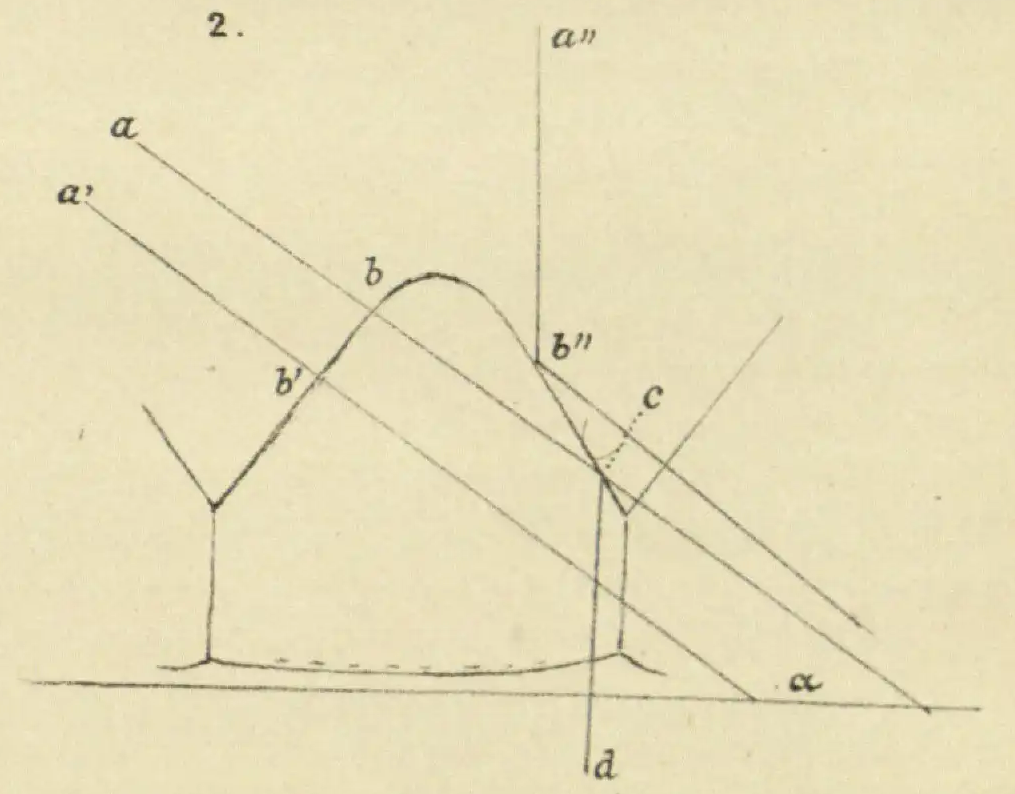
The theory sounds convincing, both then and now. However, it has not yet been possible to demonstrate a higher light-to-energy conversion efficiency for this type of epidermal cell in experiments with live plants (Brodersen and Vogelmann 2007). It therefore remains open whether the specific cell shape offers an advantage in some entirely different way.

