Discover a genus of Melastoma from the Neotropics comprising just four species, at least one of which has been found to be a perfect hermetosphere plant.
When I was offered a rooted cutting of a plant named Centradenia inaequilateralis by a fellow plant enthusiast, I had no idea what to expect.
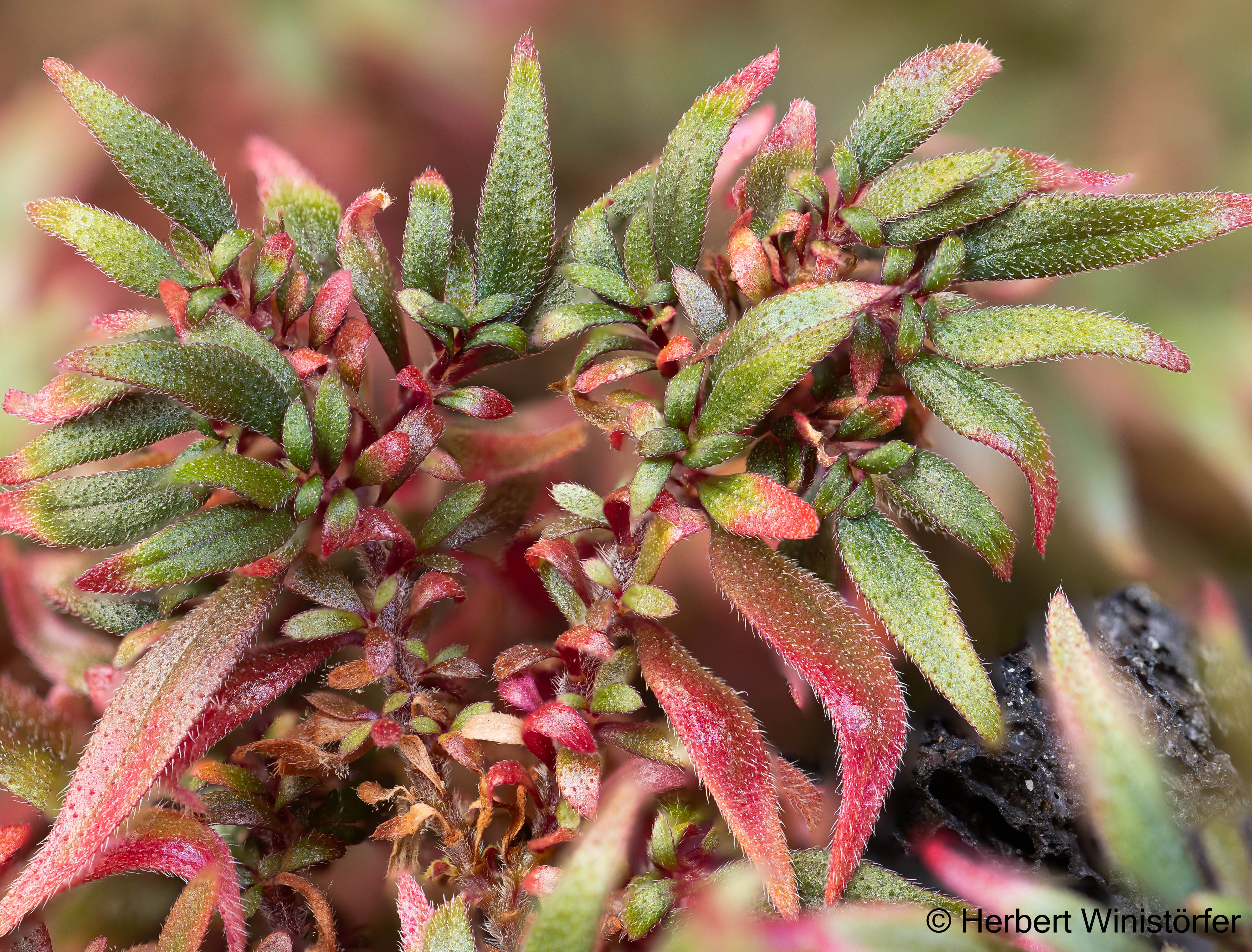
The most striking features were the colouration of the leaves, ranging from dark red to dark green with all transitions – sometimes on the very same leaf – and the marked variation in the size of the leaves growing from the same node. This latter characteristic must have seemed significant to the author of the species as well, for that is what the species-specific epithet describes (‘with unequal sides’).
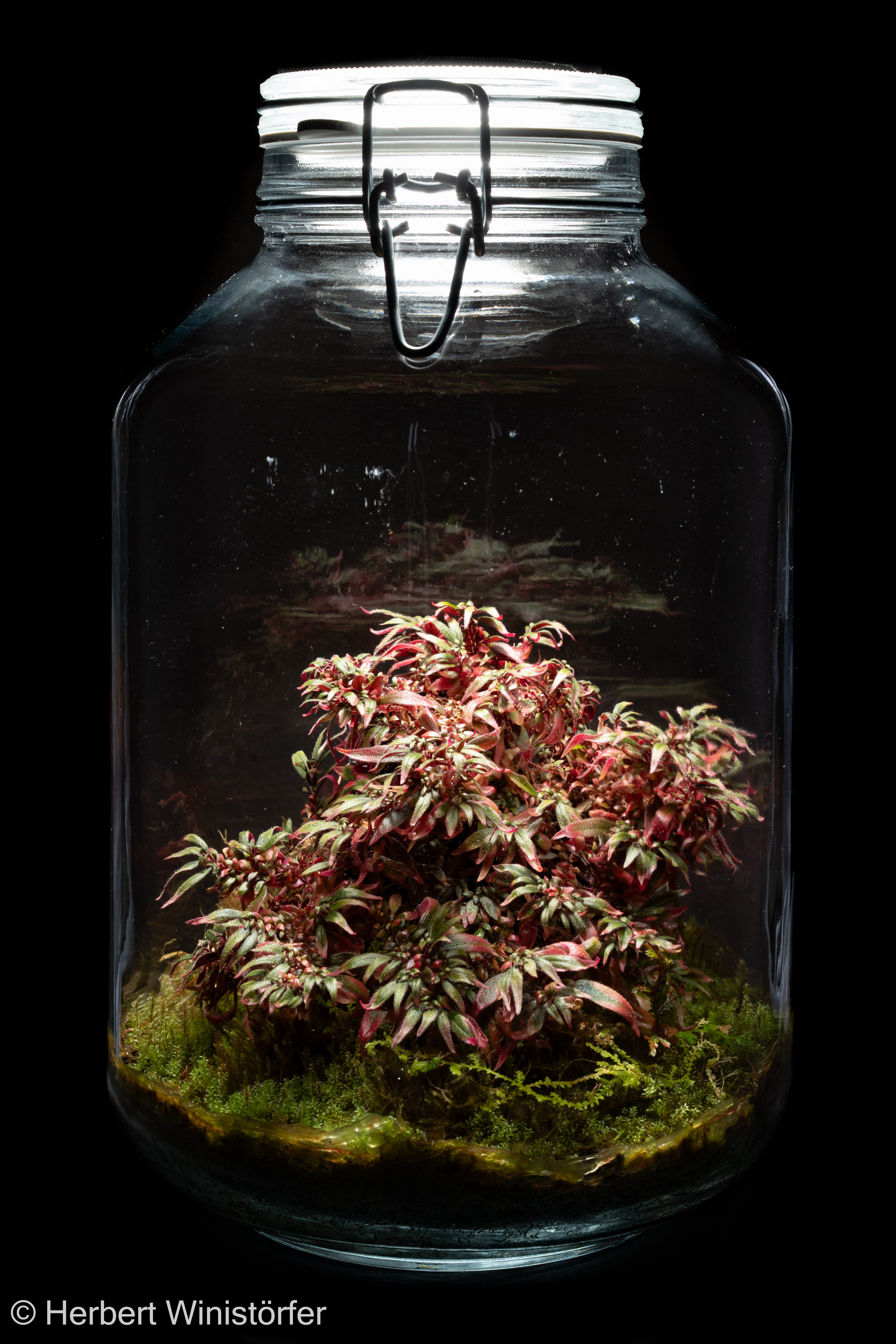
In the hermetosphere, the initial cutting has grown slowly but steadily over the past 15 months into a small shrub (see the two pictures below). So far I haven’t seen any flowers. They are described as white, often fading into pale pink, for the wild-type (which is most certainly what I have). If you see deep pink flowers elsewhere, this is probably a cultivar.

The genus Centradenia comprises four accepted species as per today with a native range from Mexico to Colombia (POWO 2026b).
For C. inaequilateralis, the most detailed description of the distribution and habitat comes from Almeda (1977: 85): “Widespread but localized at elevations of 200 to 1900 meters from southeastern Mexico to north-central Guatemala, east to western and central Honduras and south through central and western Nicaragua, to Costa Rica and Panama. […]. […] occurring most commonly on sheltered roadbanks, margins of streams and disturbed forests, or moist cliffs in the spray of waterfalls. Centradenia floribunda and C. inaequilateralis frequently maintain a foothold in the shallow soil accumulation of fissured boulders in or along streams. Field experience […] leads me to suspect that partial shade and high moisture are requirements for their optimal development.”
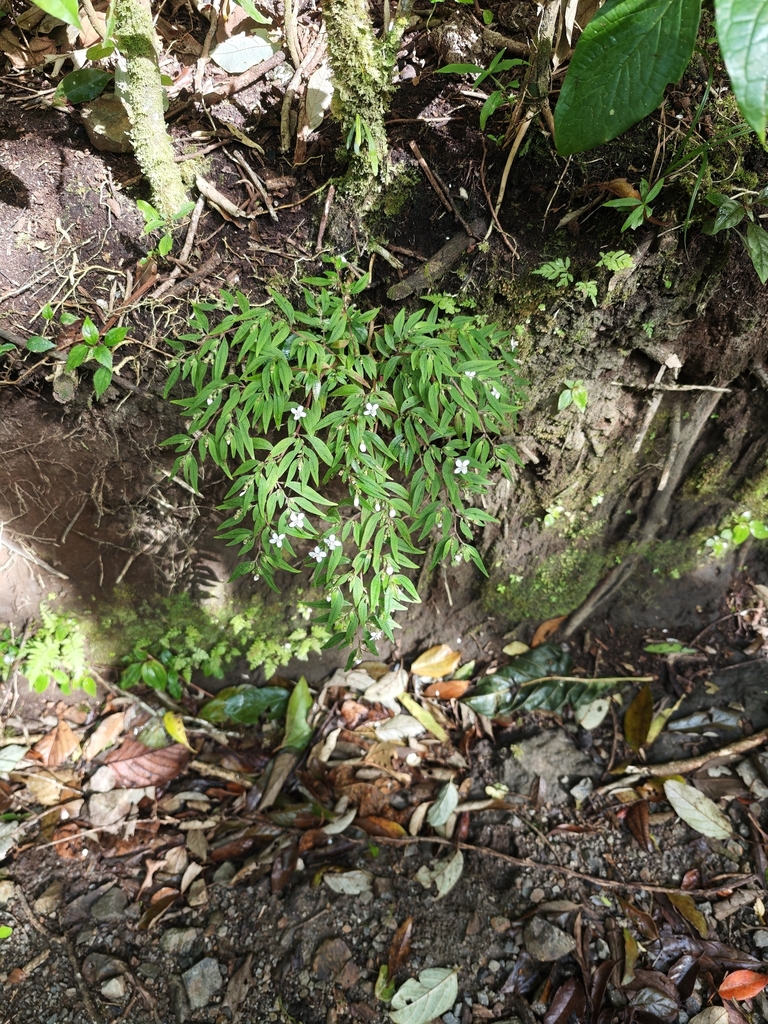
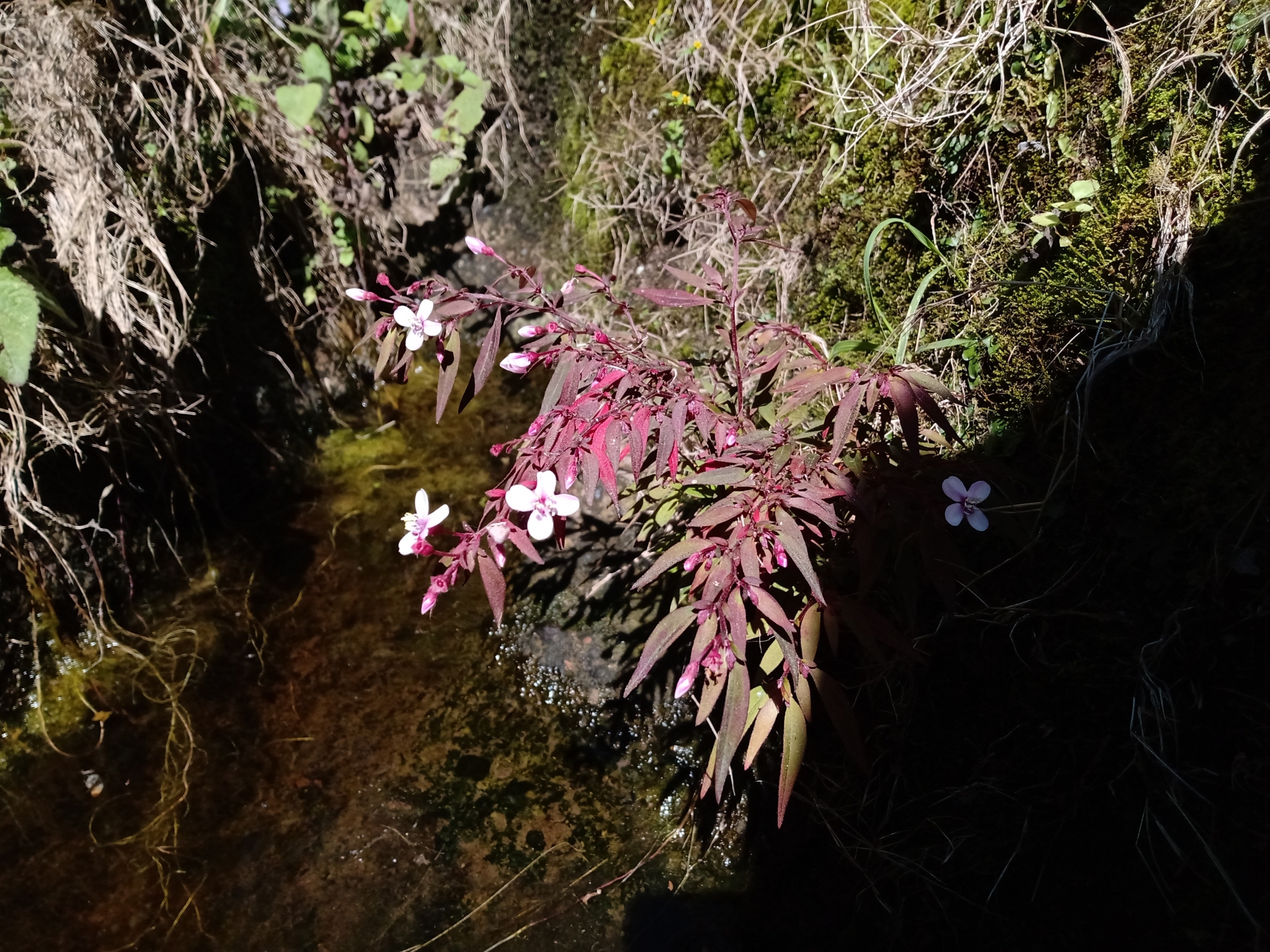
The plant can look remarkably different in the wild, or, in the words of Almeida (1977): “Centradenia inaequilateralis exhibits some intricate patterns of variation with respect to such features as stature, pubescence, foliar size, and the degree to which the asymmetry of foliar bases is expressed. Variation involving these characters often occurs in combinations that give individuals or populations a distinctive facies. Despite previous attempts to catalogue this variability, there is no justification for taxonomic fragmentation at any level since none of the variants can be correlated with any consistent geographical or ecological pattern.” The two in-situ images below may give an idea of the variability described.
According to (Almeda 1977: 76),”All [Centradenia] species are characterized by a pronounced size dimorphism of paired leaves (anisophylly) such that the larger leaves alternate from one side of the stem to the other at each successive node. In C. grandifolia, C. inaequilateralis, and C. paradoxa, the smaller prevailingly sessile leaf is frequently early deciduous, conveying a false impression of alternate phyllotaxy. Judging from its constancy in cultivated material, anisophylly in Centradenia undoubtedly has a genetic basis and is therefore of taxonomic value in characterizing the genus.”Anisophylly has been discussed on this blog before using the example of Triolena pileoides, another plant from the Melastomataceae family that is ideally suited to be grown in hermetospheres. The picture below gives a good impression of the different sizes of leaves as well as the red pigmentation which can occur on both sides, above or below (Almeida 1977: 88).
As the plant is generally described as ‘soft-shrub’, as ‘woody’ or ‘suffretescent’, we would assume its life cycle is doubtlessly perennial. There are, however, differing statements regarding this point. Almeda (1977: 76) writes that C. inaequilateralis is “[…] reportedly short-lived in cultivation, and […] has been observed to behave as an annual under greenhouse conditions […]. This may suggest that these species are facultative annuals or biennials, with some individuals dying after one or two years of growth and others becoming established as perennials.”
At least one Centradenia cultivar is available under the name ‘Cascade’. There are probably several, the origins of which are likely to have been plants from the two closely related genera Heterocentron and Centradenia (Blacquiere e.a. 2001). Experiments with one of these cultivars showed (Friis and Christensen 1989) that flower formation was independent of day length, but that the onset of flowering was influenced by temperature. A temperature of 12–15 °C over several weeks resulted in the most abundant flower formation, whilst no flower formation was observed at temperatures above 21 °C.
Can I still expect flowers to appear even when my indoor container hardly ever encounters temperatures below 21 °C? My plant is the clone of a wild type individual grown in the greenhouse of a botanical garden. Another clone of the same individual is 2½ years old now and has flowered twice so far. Unlike mine, it is grown in a place where winter temperatures well below 20 °C are common. Once I have daughter plants from cuttings available, I will test them in different locations and observe their life cycle. When flowers appear, I will report it here.

