Follow the two-year development of Hoya endauensis in the closed terrarium, from cutting to the first bloom, and learn what we can know about this particular wax plant.
When I bought my first Hoya plant for the hermetosphere, I opted for H. kanyakumariana. However, it was only after planting it in the jar that I realised I had received two different plants. Of the three shoots I had got, only one belonged to the specified species. The other two were shoots of H. endauensis. An expert would have spotted this immediately. I, on the other hand, took the different leaf shapes to be variation within a species.
The series of four images below show the container with Hoya endauensis at different stages from the same angle. This allows you to follow the plant’s development over nearly two years from the onset of the container to the first flowering. During this period, two shoot cuttings were removed to propagate the plant.
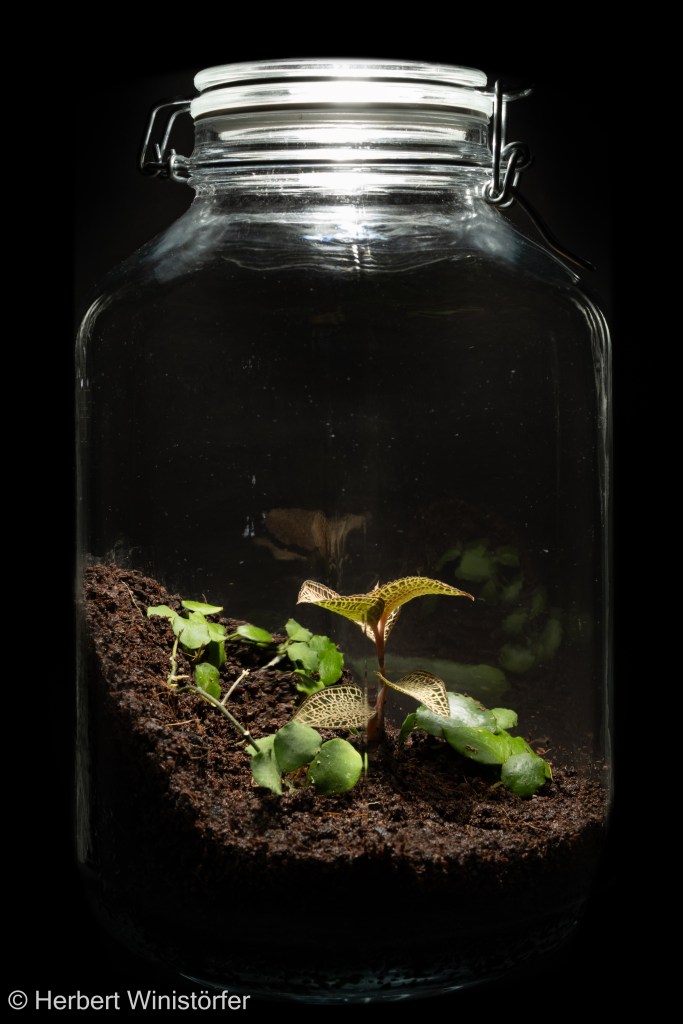
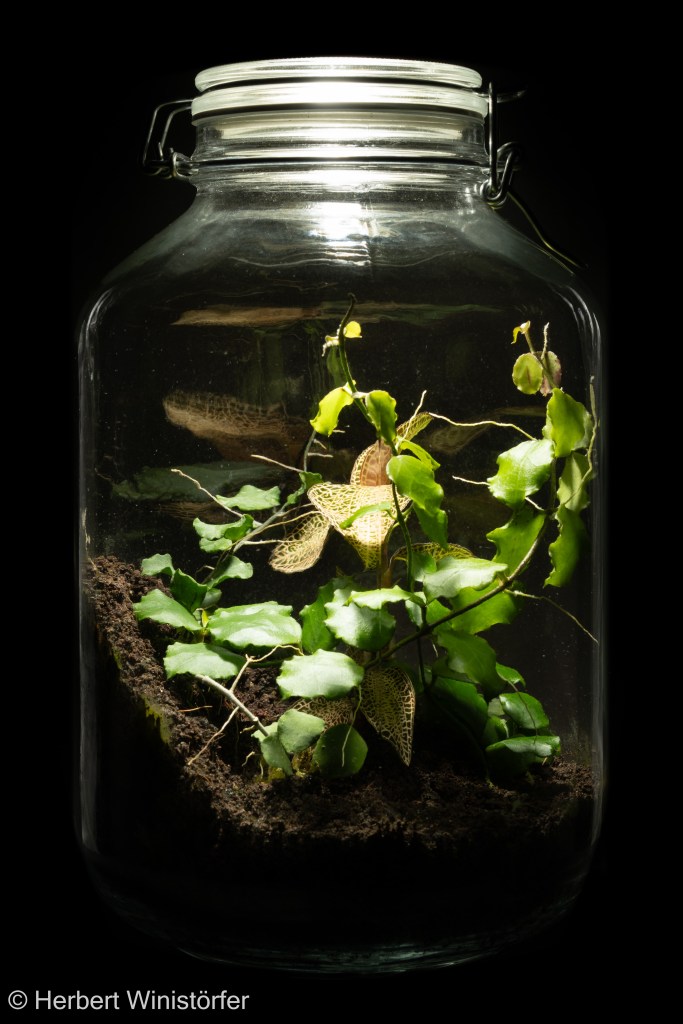
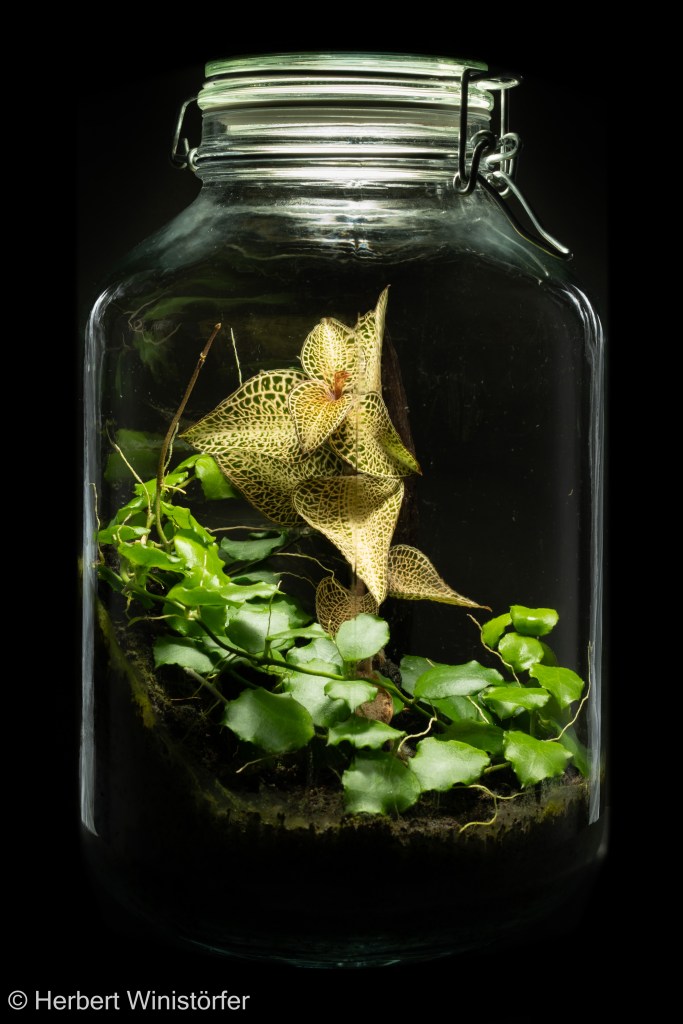
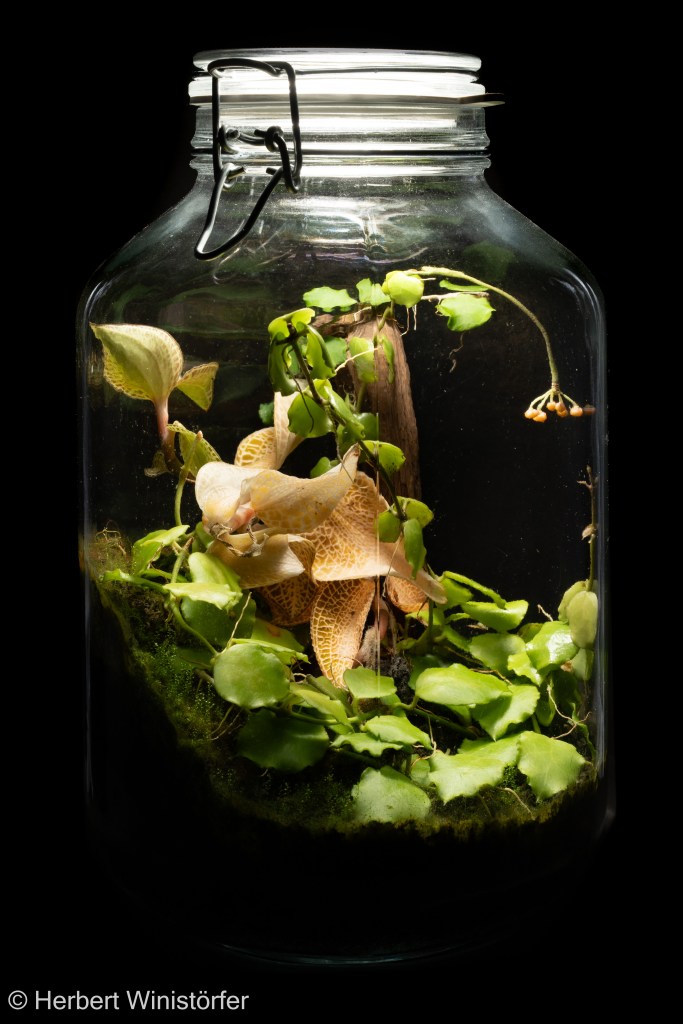
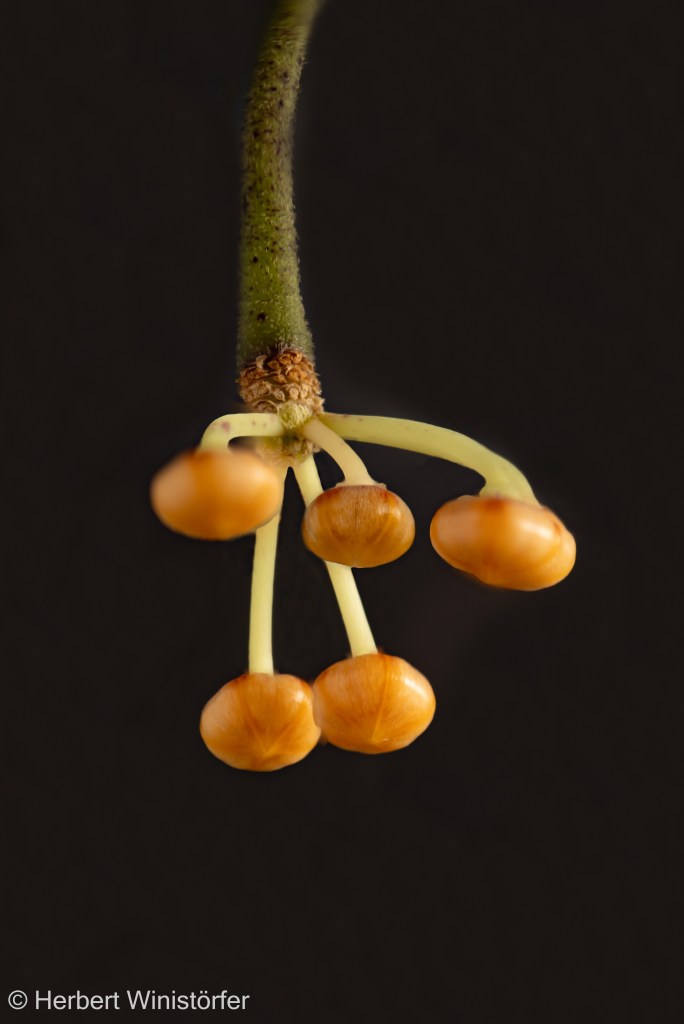
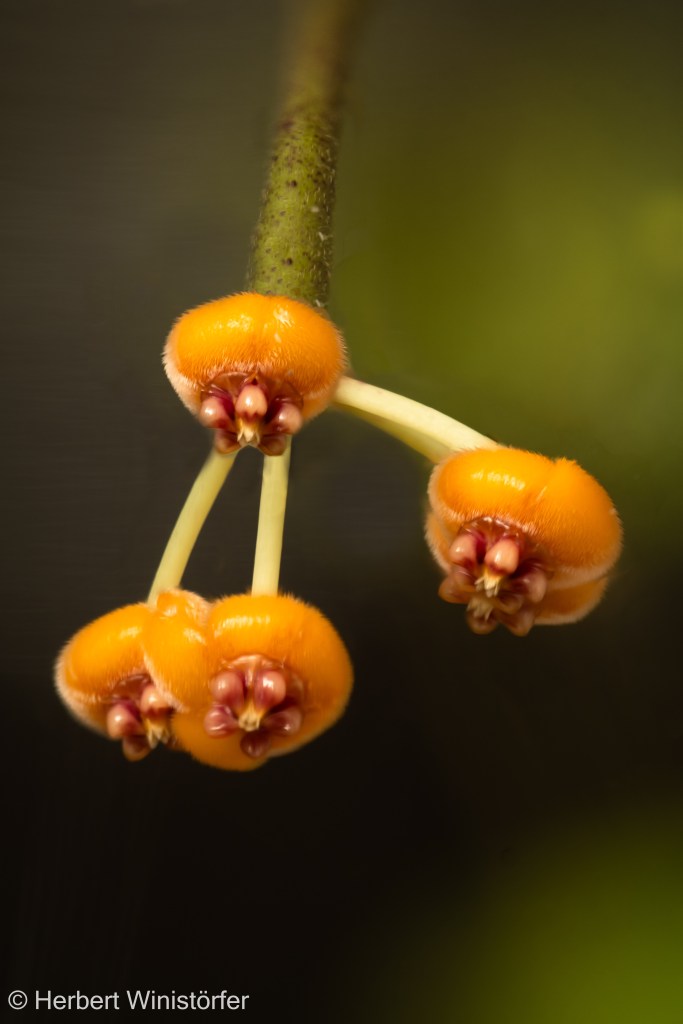
Unfortunately, many of the flowers in the first inflorescence fell off before anthesis. As to the cause of the premature dehiscence I can only speculate. It may be due to the run of very warm days (close to 30°C) at the end of flower formation. Interestingly, the five remaining flowers stayed in the flower umbel for days after the temperature had dropped to the usual 22-24°C. The two pictures below show the five remaining flowers before and after anthesis.
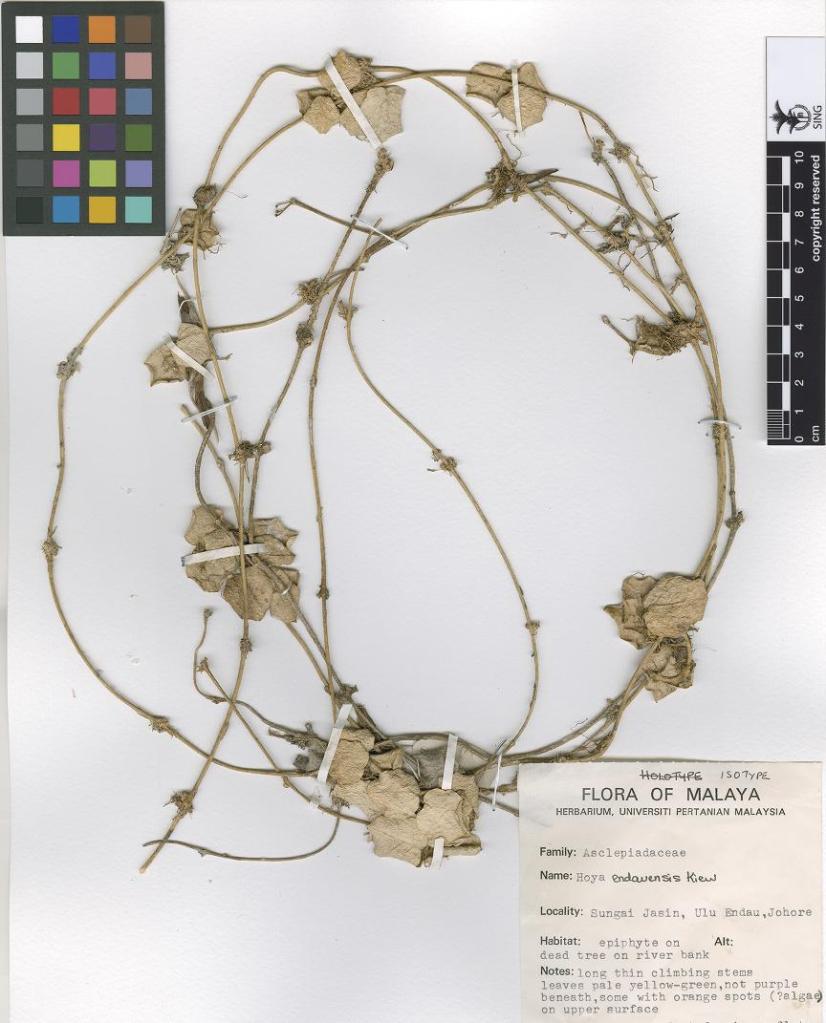
H. endauensis was scientifically described by Ruth Kiew (1989), based on plant specimens found in 1985, 1986 and 1988. One of the plants of the initial collection (isotype) is shown in the image below.
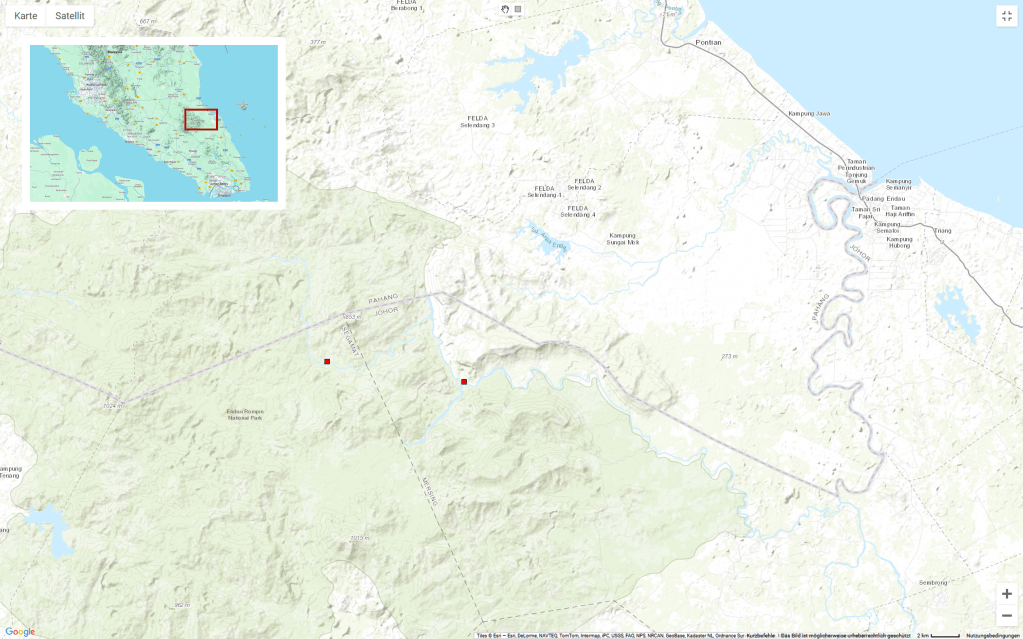
The map below shows two known locations where H endauensis was found, in the far north of Johor, the southernmost state of peninsular Malaysia.
The habitat is described as flollows. “It is an epiphytic climber growing in partial shade on trees on river banks at c. 75 m a. s. l.” (Kiew 1989). However, no information is available on the host plants of H. endauensis. The author, Ruth Kiew, assumed that the species was more widespread than the few recorded localities would suggest (Yap 2008: 7). In the region of the recorded localities, at the border of Johore and Pahang in Peninsular Malaysia, 48,905 ha of mostly virgin lowland tropical rainforest was gazetted as Endau Rompin National Park in 1989 (Aihara e.a. 2016: 168). It is therefore possible that the species is not under immediate threat of extinction. However, the protective function of the park is threatened by forest loss and fragmentation, especially beyond the 10-km buffer zone of the park, due to large-scale agricultural land conversion, particularly for oil palm plantation (Foo and Numata 2019). An IUCN conservation status has not been assigned to the species so far.
Derrick J. Rowe (2022) lists H. endauensis, based on an observation of fellow plant enthusiast Antone Jones, among 25 epiphytic Hoya species that live in a mutualistic association with ants.
Pictures of H. endauensis in-situ are difficult to find. The three images below were taken in Endau Rompin National Park in 2007 and give a good impression of the plant’s habit and its natural environment. Many thanks to Nadhanielle Simonsson for these.
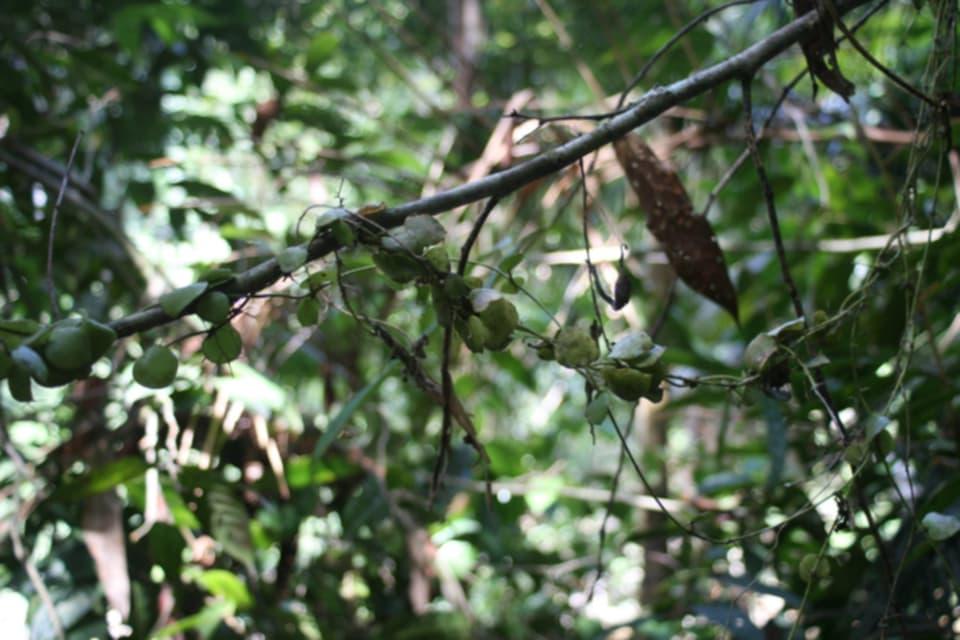
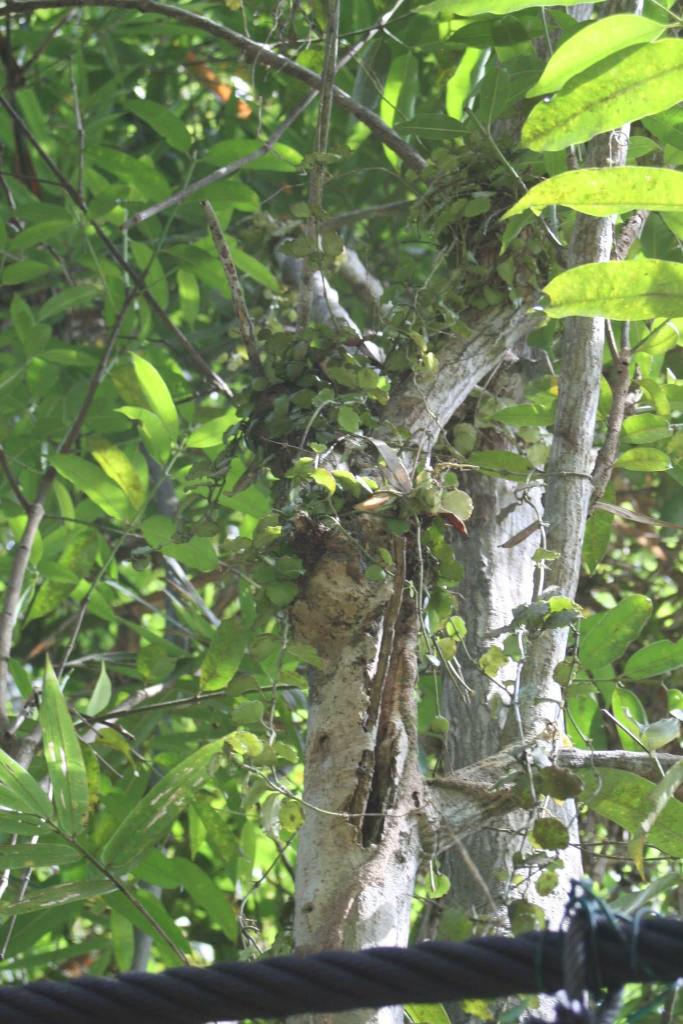
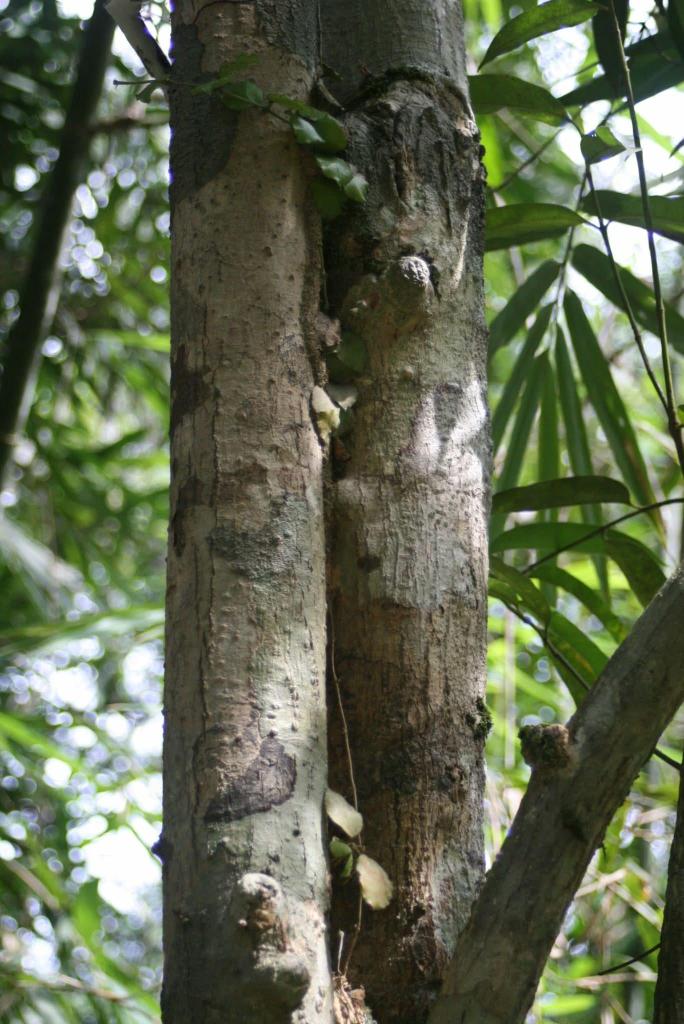
It can be assumed that H. endauensis became established among private collectors in the early 2000s. It is thought that there may be 2–4 different clones of this species in cultivation; so far, no differences have been identified between them (Nyhuus 2017: 11). Today it is commercially available as an ornamental plant and quite easy to obtain. Advice on the care of H. endauensis is not rare, but rarely more than anecdotal and, moreover, varies widely. A fellow blogger, youtuber and Hoya expert writes as a summary after describing how he had struggled with the plant: “If you are looking for a challenge, I can highly recommend this plant, as it will test your growing skills every step of the way. I cant really give this plant a thumbs up for beginners, […], unless you have grow tents or terrariums where you can give it the conditions that it requires.” (Chamberlain 2025)
My own summary so far is that all H. endauensis needs is a closed container, temperatures between 23 and 26°C year-round, indirect light, a bit of substrate and a piece of durable wood to climb on.
Change history: The three images of H. endauensis in-situ were added on 03 July 2026.

