Discover how the moss Bryum cf. moravicum spreads in a closed container without spores or wind or flowing water, just relying on threadlike propagules.
After various incidental experiences with bryophytes, I decided to take a more planned approach. To have a handful of suitable bryophyte species in permanent cultivation would allow me to inoculate the substrate in any new jar so that the moss can then spread on its own. Now, I got there with the first moss. It could be identified with reasonable certainty and grows reliably under closed container conditions.
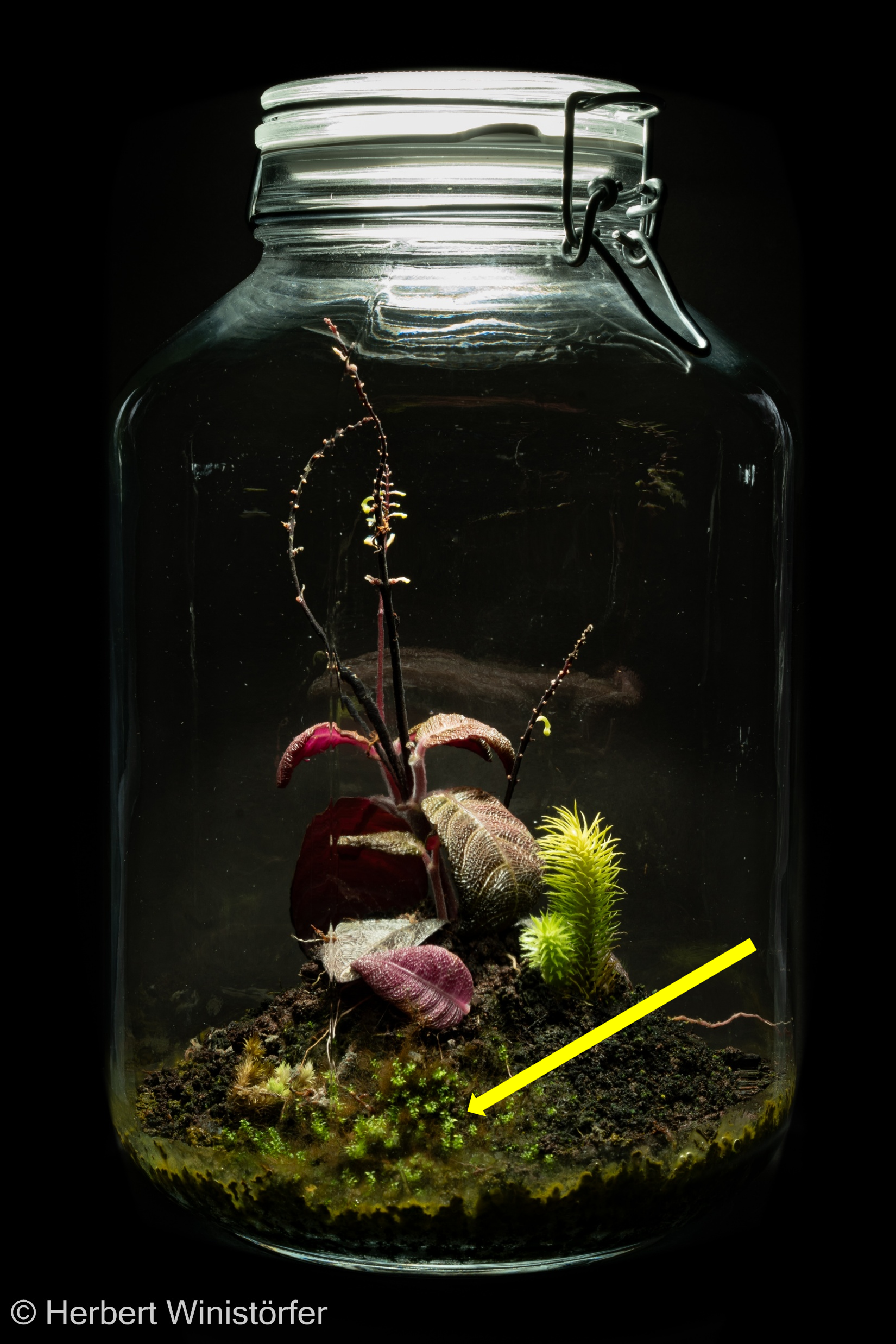
The moss was isolated from a container where it had appeared unintentionally on the substrate surface (see picture below). Six months after onset the plants in the container gradually got worse and were finally removed to be saved and reused.
A few patches of the moss were also saved and planted into a sealed glass tray with transparent lid, on substrate similar to that I use for my hermetospheres (see pictures below).
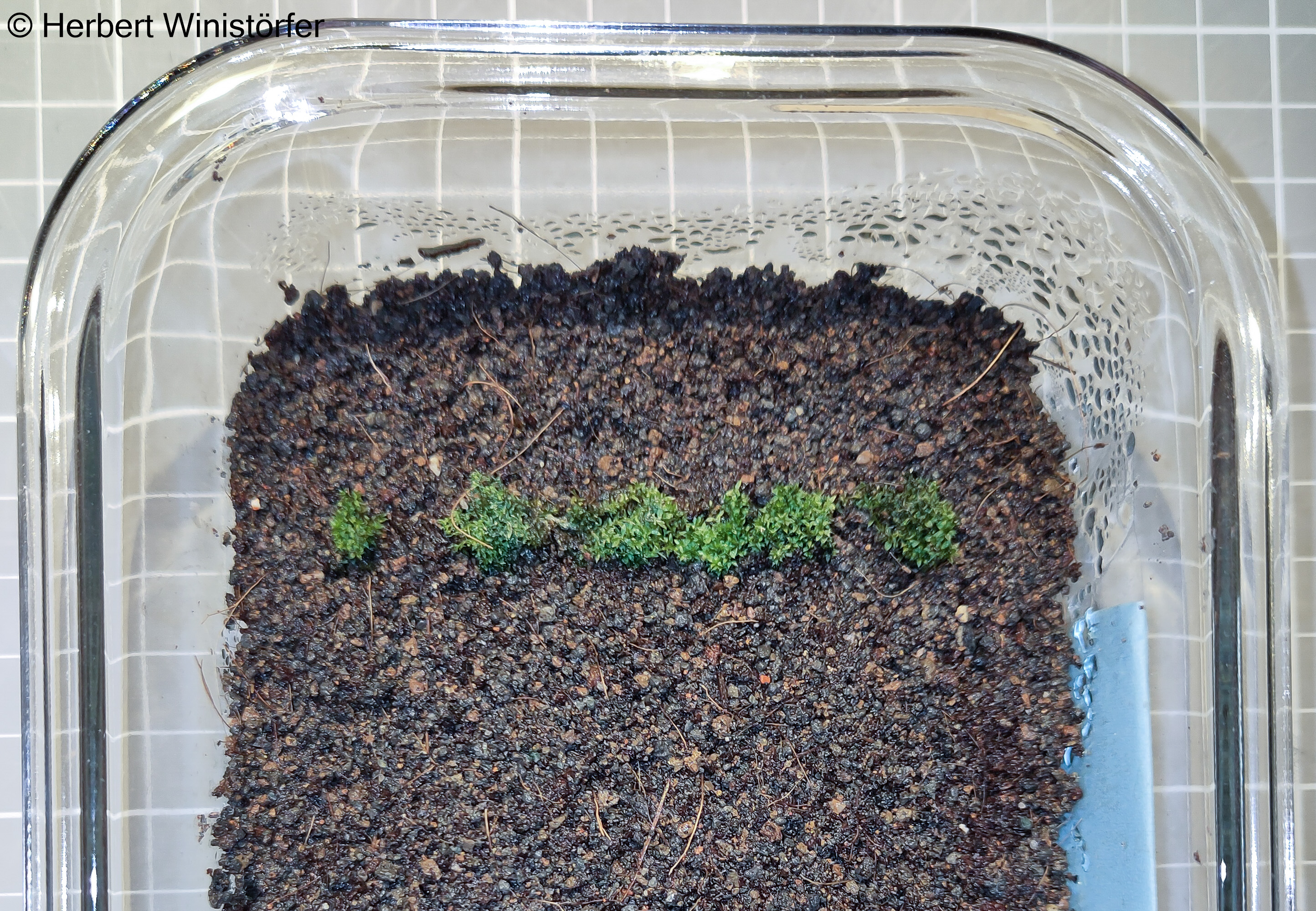
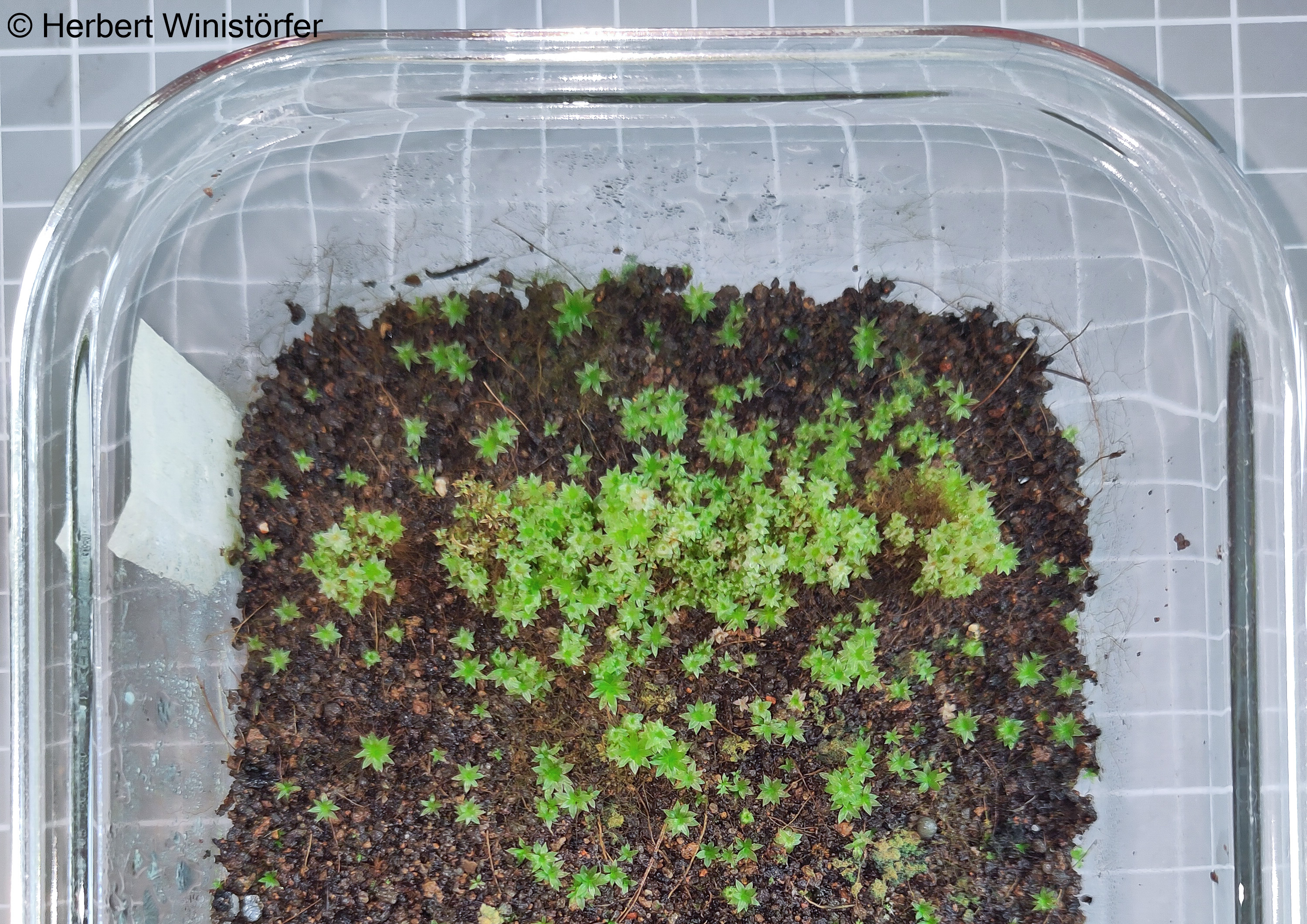
The moss spread over a distance of 5 cm within 18 weeks without spores or sporophytes, purely vegetatively, without wind or flowing water to disperse any part of the plant over the substrate surface. How has that been possible? At that point, my attempt to find an identification for the moss proved to be helpful.
Being a complete novice, identifying the moss species was a real challenge for me. I soon realised that without a transmission microscope, I wouldn’t get anywhere. So I bought a second-hand, trinocular Olympus Model E, the sort I was used to from the practical sessions during my biology degree. Once I had learnt what characteristics to look out for, I took the relevant photos (see below) and posted them in specialist social media groups to ask for advice.
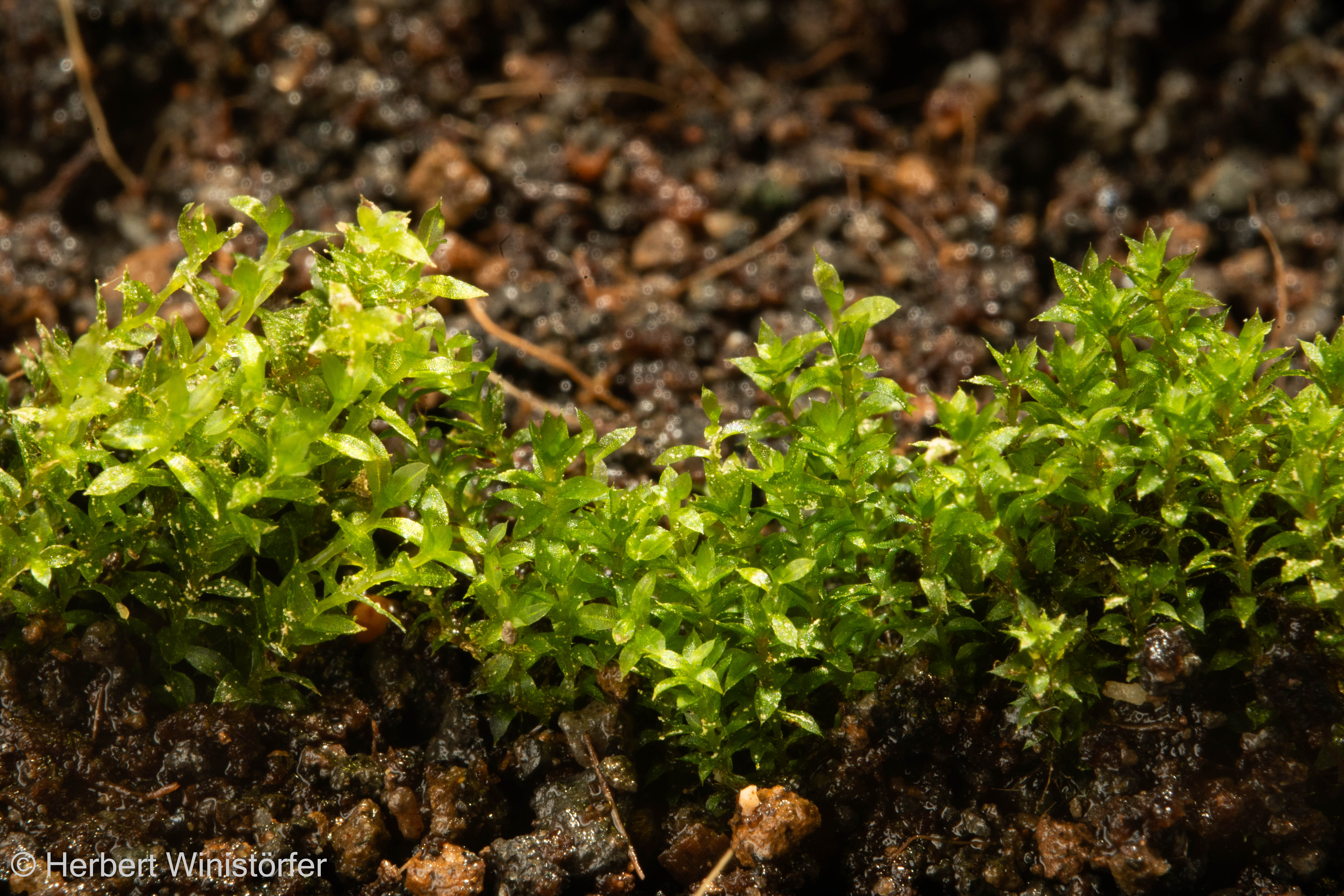
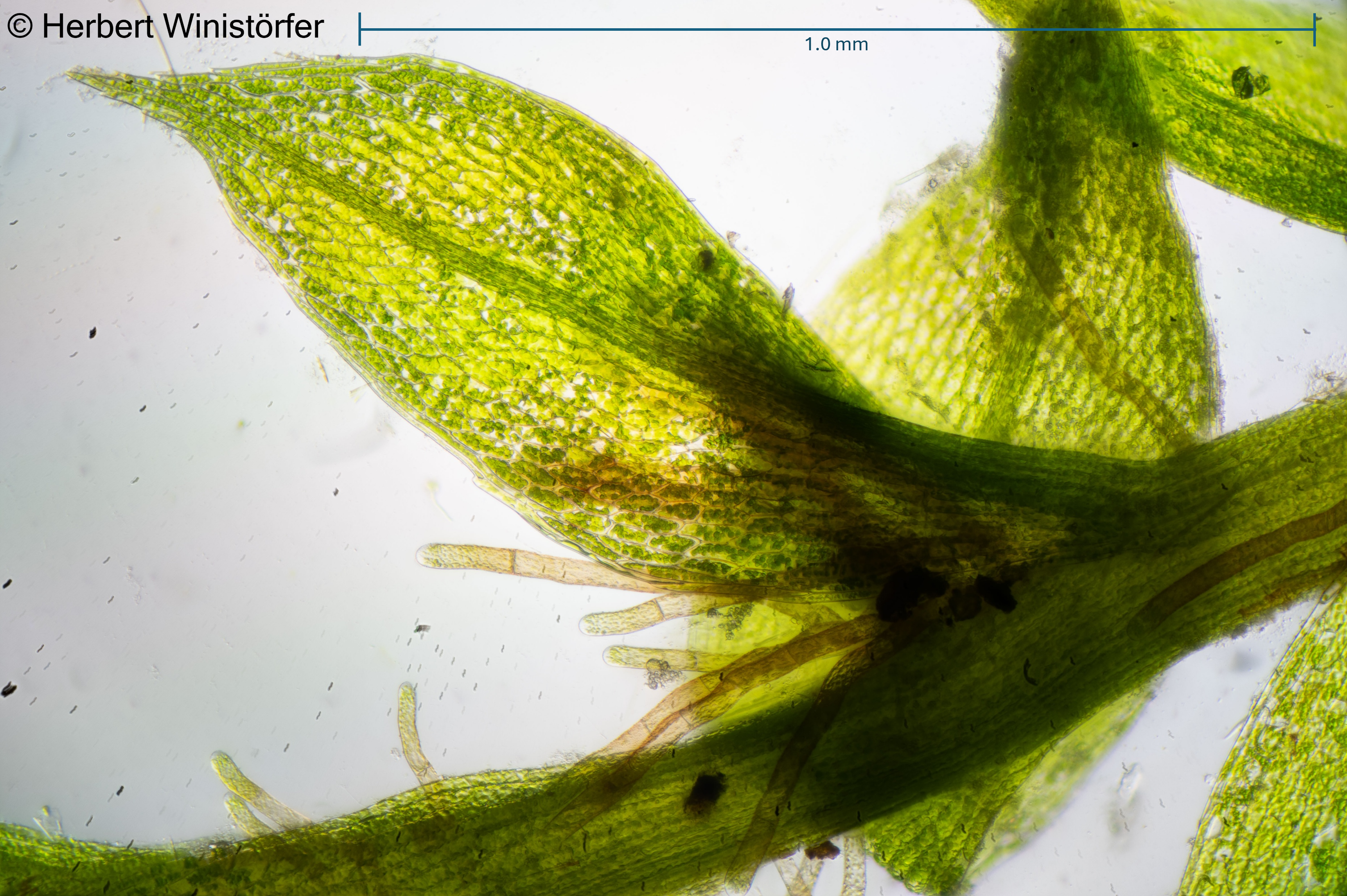
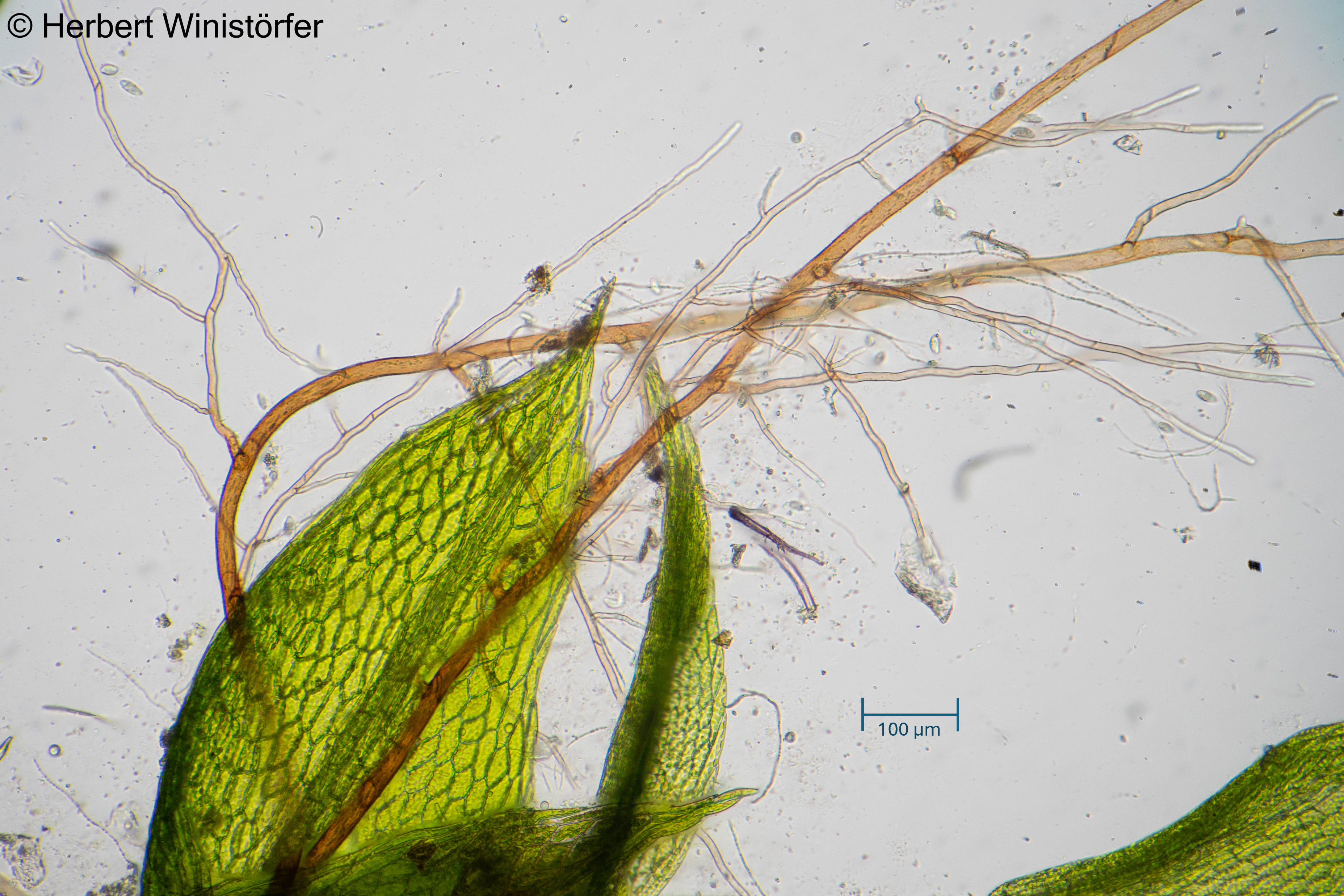

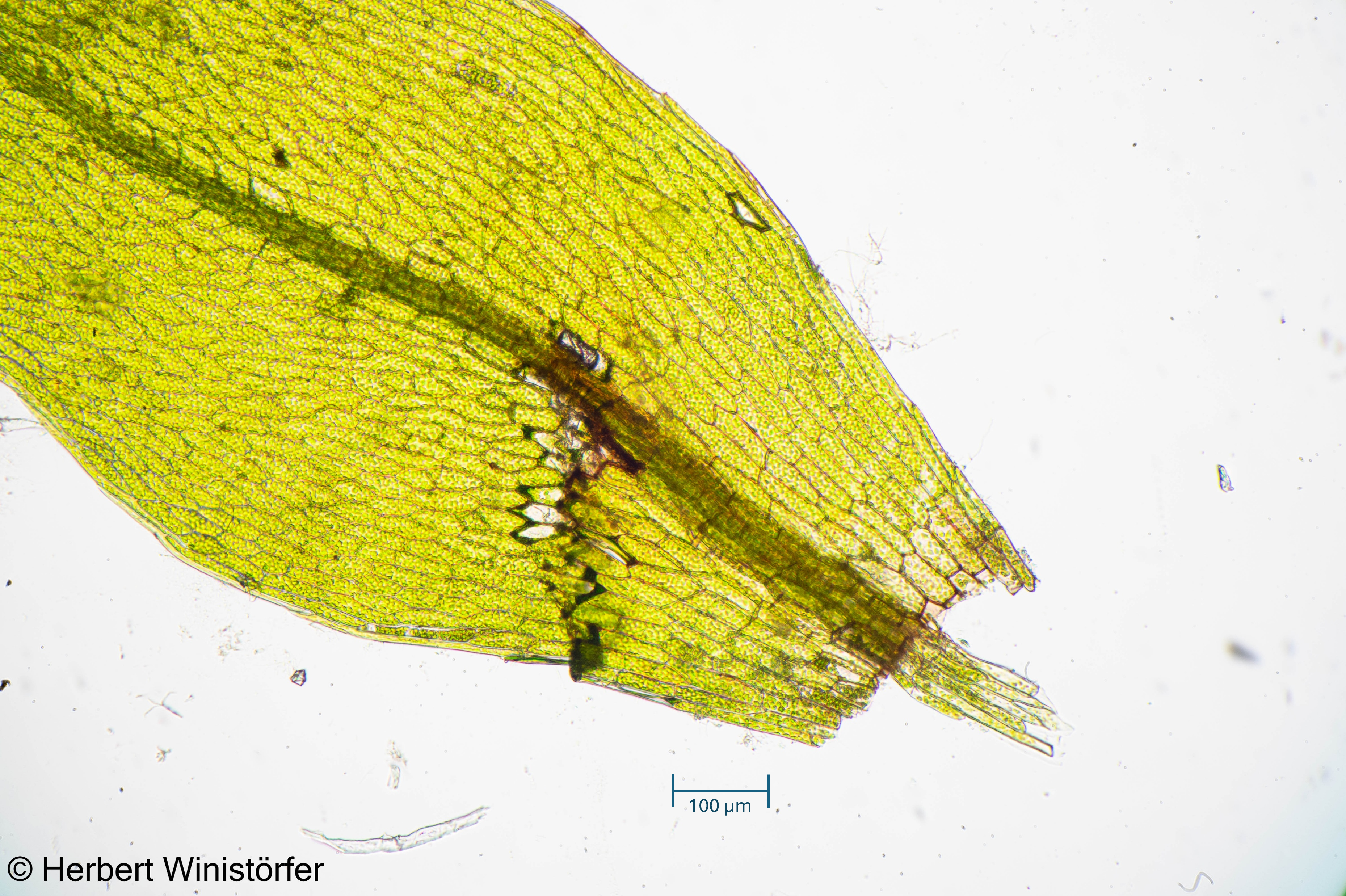
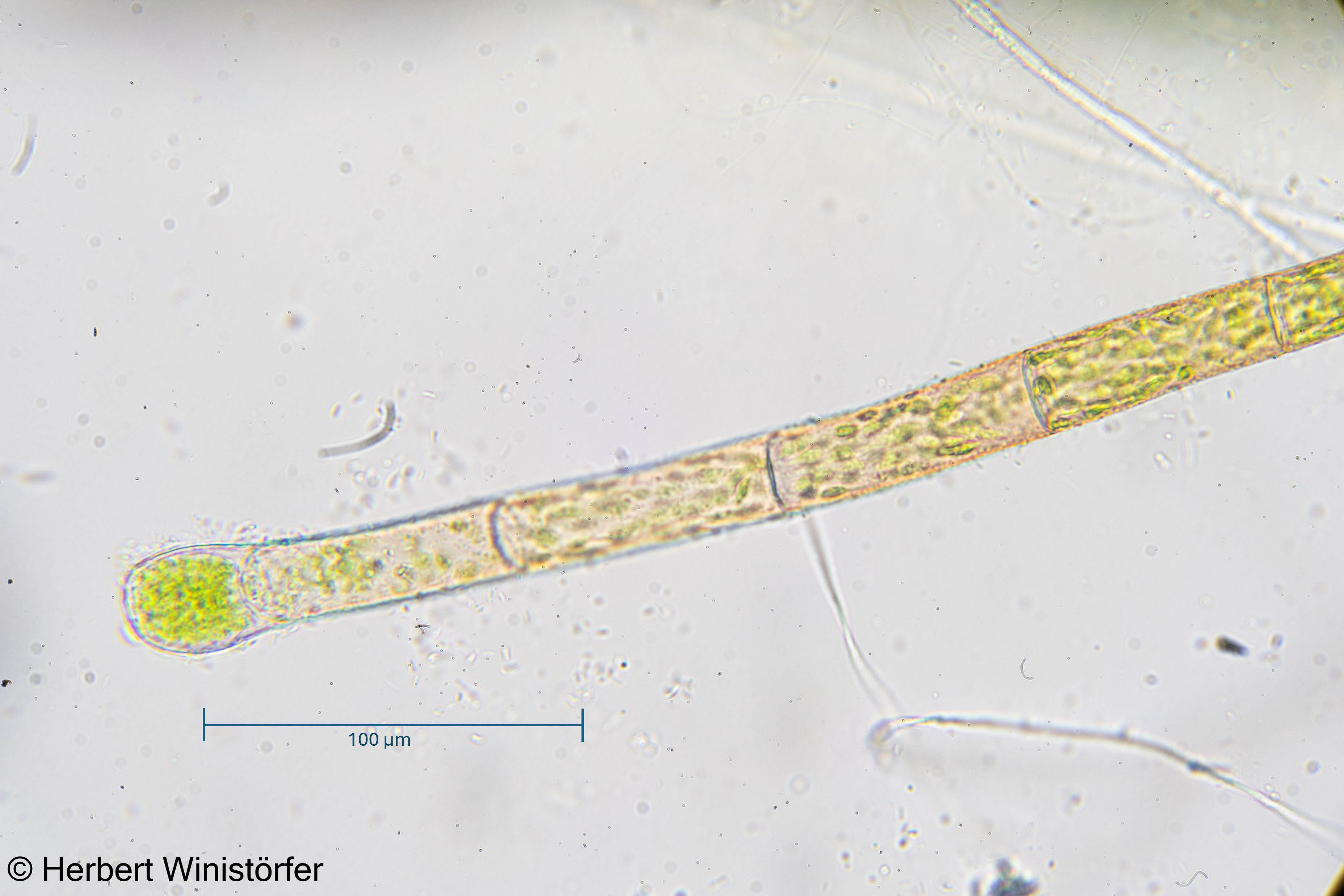
The community guided me towards the genus Bryum, some were even more specific and pointed towards B. capillare mentioning at the same time that the genus was particularly diverse and difficult regarding taxonomy. As turned out later, that was an understatement. However, two dichotomous keys (Holyoak 2013, University of California 2026) proved to be useful to narrow down the identification to a few species. A key characteristic turned out to be filiform gemmae present in upper leaf axils that I could identify very clearly (see picures above). When I compared pictures of the few remaining species with my moss, my best guess was Bryum moravicum Podp. (often treated as synonymous to B. flaccidum and B. laevifilum).
The following quote may give an impression of the difficulties around this group of moss species (Kučera and Holyoak 2005: 161): “Bryum moravicum was recently adopted (Holyoak, 2004) as the oldest name for the species named by Syed (1973), as Bryum laevifilum a European member of the Bryum capillare Hedw. complex with filiform axillary gemmae that commonly grows as an epiphyte on deciduous trees. The same taxon has also been incorrectly referred to in recent literature as B. flaccidum Brid. or B. subelegans Kindb.” As if distinguishing between these species were not tricky enough, it was suggested not so long ago (Ros e.a. 2013) on the basis of molecular data that the entire group should be removed from the diverse and oversized genus Bryum and reclassified under the genus Ptychostomum.
You can make your own mind on the fit between ‘my moss’ and the verified Bryum / Ptychostomum moravicum by comparing my pictures above with those below, where the moss was identified by true experts. For the time being I refer to this moss as Bryum cf. moravicum, ‘cf.’ (for Latin ‘confer’ = ‘compare with’) meaning strong resemblance without absolute certainty.
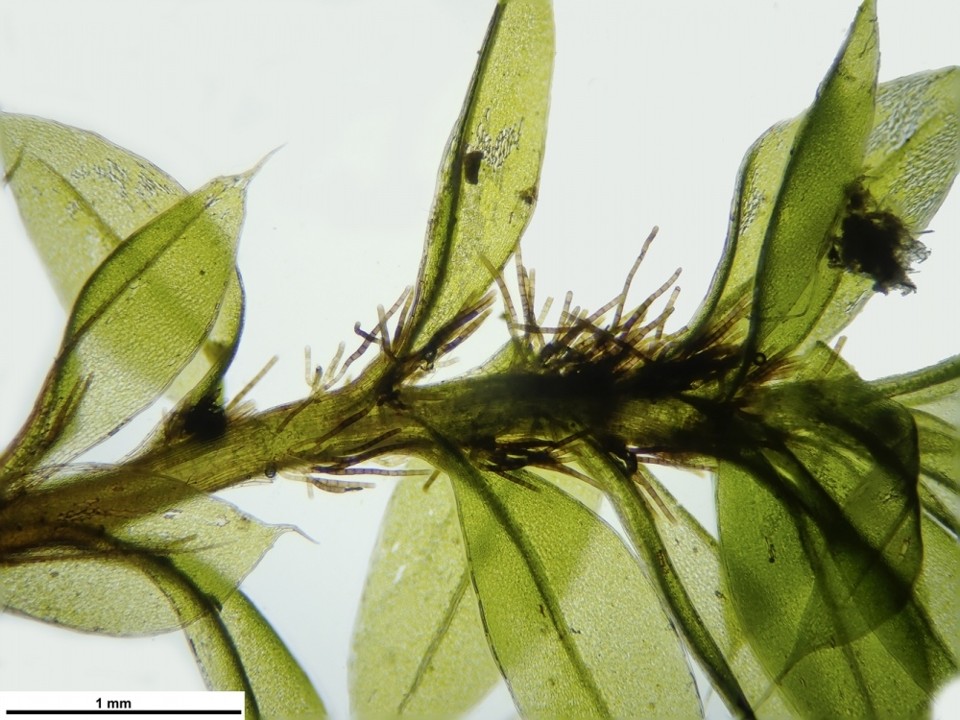
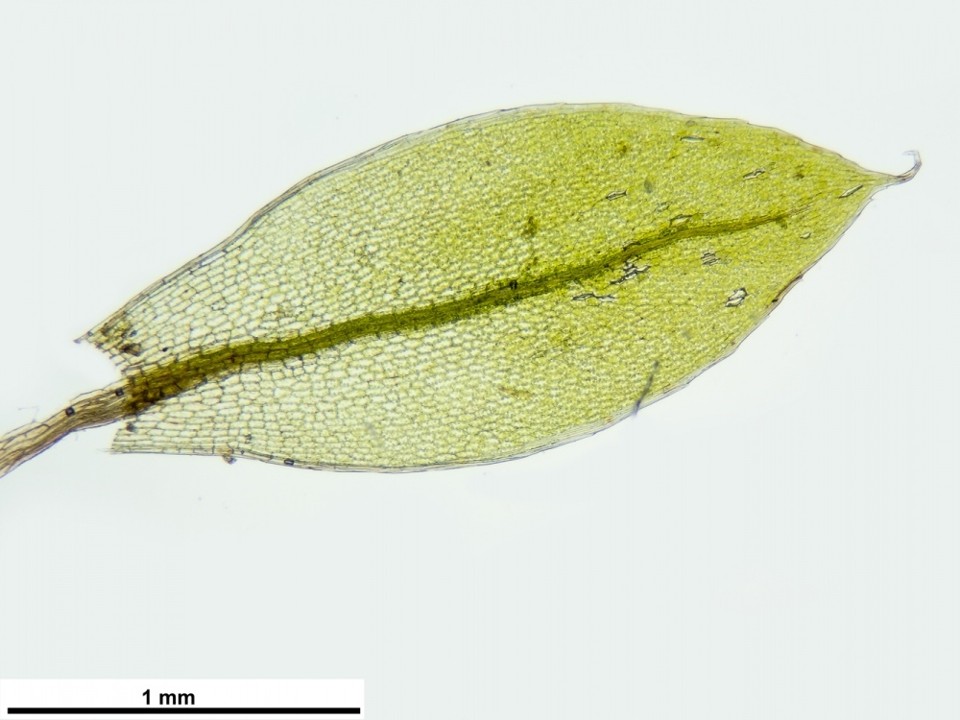
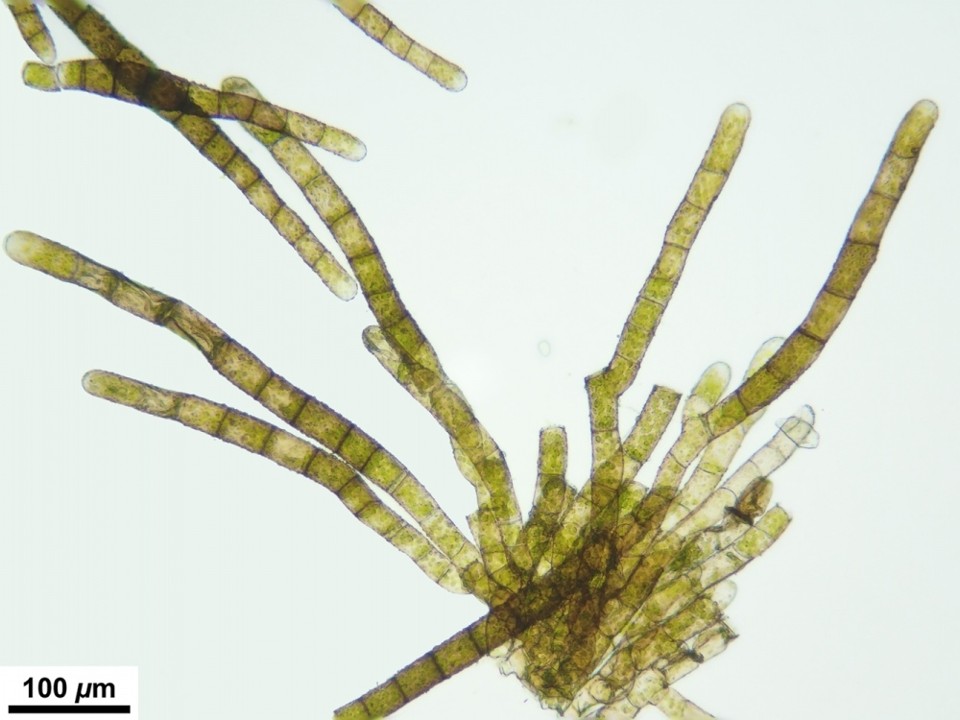
According to Holyoak (2021: 148ff.), the species is rather common in temperate regions of Eurasia, probably also in North America, growing on rock, soil as well as tree bark at altitudes up to 3.000m. Spore capsules, however, are very rarely observed. But how does it come to grow in my container as a hitchhiker? Either the earthworm humus I use in my substrate mix contained spores or I had introduced the moss with one of the plants coming from greenhouse cultures. There are actually records of the appearance of this moss in gardens and pot plants (Ros e.a. 2013, Elharech et.a. 2018), suggesting this route of introduction is a possibility.
The fact that the moss spreads so easily across the substrate surface without spores is likely due to a distinctive feature of this species: its filiform (thread-like) propagules.
 Hermetospheres