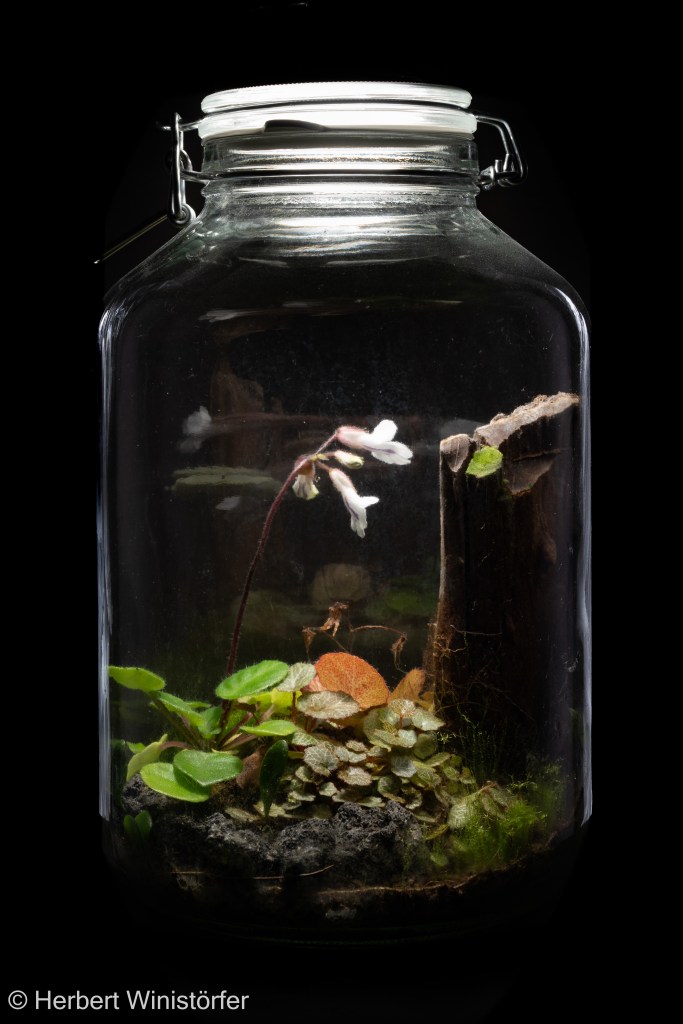
Saxifraga stolonifera, commonly known as the strawberry begonia or strawberry geranium, demonstrates that there are plants of non-tropical origin that can thrive in the closed terrarium. Not only can the plant grow under a wide variety of conditions, but it also exhibits great diversity in its appearance. Recent research findings shed light on the underlying biological processes.
Until now, I have almost exclusively used plants that are native to tropical regions for my hermetospheres. The reason for this is that I cannot offer any seasonality in my indoor jars. The humidity is permanently around 95%, the temperature is usually between 22 and 26 degrees Celsius, and there is a maximum difference of a few degrees Celsius between day and night temperatures. Saxifraga stolonifera, the strawberry begonia or strawberry geranium, demonstrates that there are plants from other than tropical origins that can thrive in the hermetosphere.
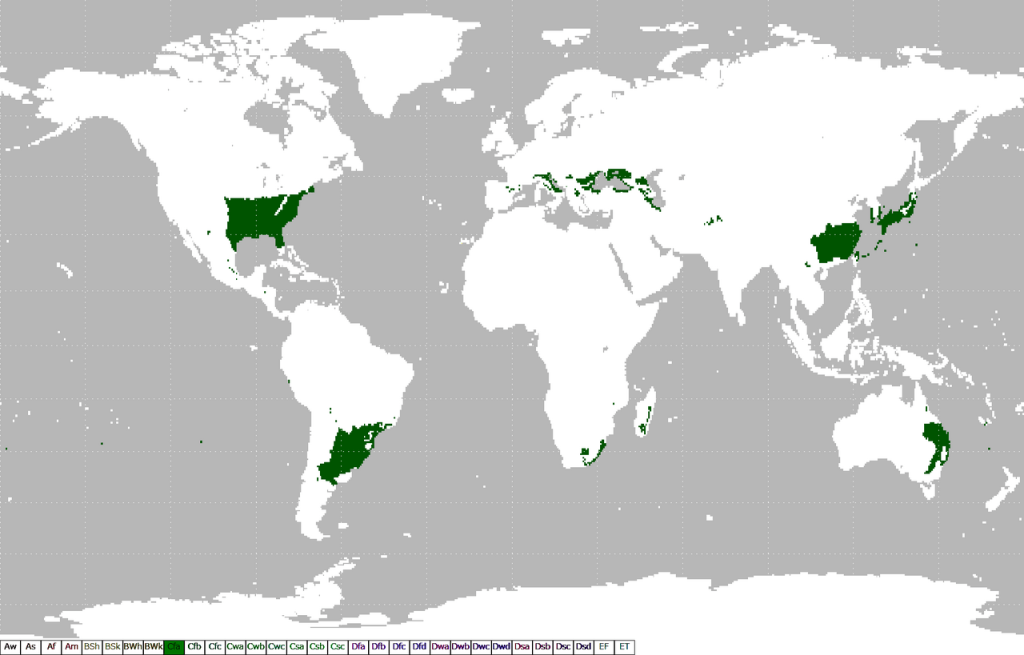
The plant’s common names are misleading: it is neither a strawberry nor a begonia nor a geranium. Instead, it belongs to the Saxifragaceae family. Species in this family are mainly found in the temperate zones of the Northern Hemisphere. The natural range of S. stolonifera includes parts of Japan, South Korea, China and Taiwan (POWO 2026a). In its natural habitat, S. stolonifera typically grows in forest understories, shrublands, and shaded, moist rock surfaces and crevices (Pan 1992). The plant has long been used as a garden and ornamental plant and has become naturalised in regions with a suitable climate. This applies for Southern Switzerland (Info Flora 2026), for example. However, it is not regarded as invasive there, i.e. it does not pose a threat to the native flora. The area of natural distribution in East Asia is dominated by climate type Cfa (according to the Köppen-Geiger classification; see map below). It is “characterized by relatively high temperatures and evenly distributed precipitation throughout the year. This climate type is found on the eastern sides of the continents between 20° and 35° N and S latitude” (Britannica Editors 2026).
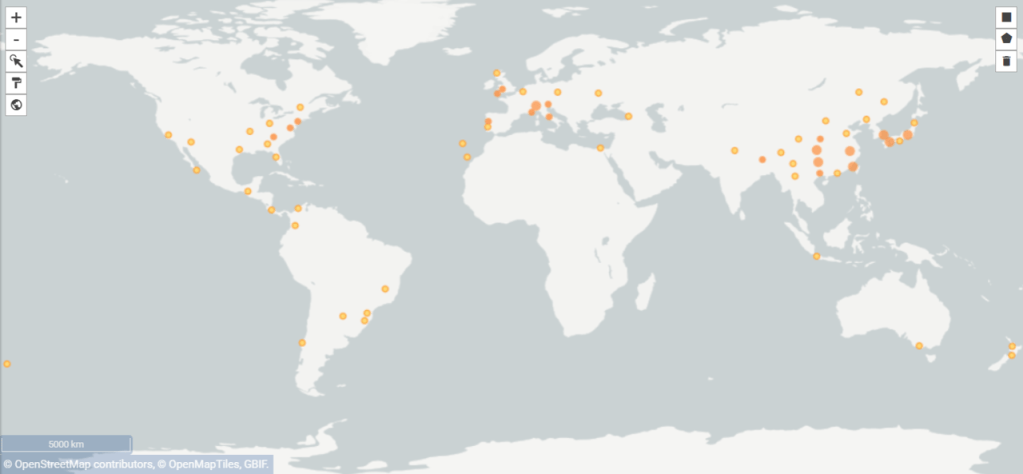
The area of the plant’s actual occurrence (natural as well as introduced, see map below) shows that this goes far beyond the Cfa climate type. This shows that S. stolonifera can cope with a broad range of conditions and may explain why it also feels comfortable in a hermetosphere.
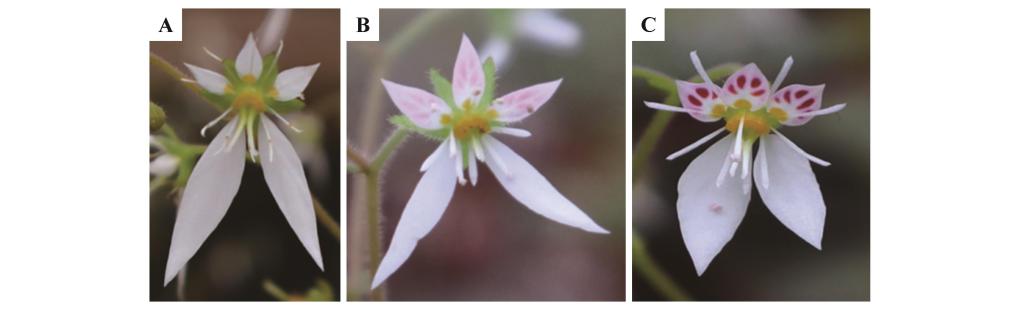
S. stolonifera is not only known for a broad range of suitable growing conditions but also for the natural diversity of its appearance. Leaves as well as petals can look rather different (see the two illustrations below by Tang e.a. 2024).
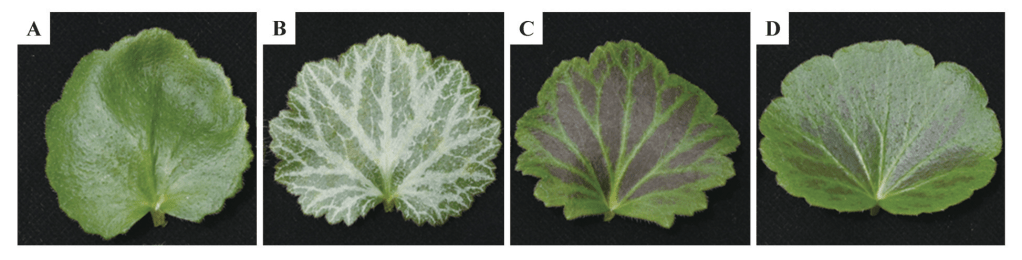
The different leaf patterns are also known as variegation and are often hereditary. This appears to be the case with S. stolonifera. A very recent study (Zhang e.a. 2026) examines in detail the genetic and biochemical mechanisms behind the different leaf patterns. According to the study, the white zones along the leaf veins (type B in the figure above) are caused by tiny air chambers beneath the epidermis. The formation of these air chambers appears to be caused by an increased concentration of plant hormones of the gibberellic acid type. The situation is different for the reddish-coloured zones between the leaf veins (types C and D in the figure above). These are caused by anthocyanins in the cells of the palisade tissue in those zones. According to the study, this is linked to an increased concentration of enzymes responsible for the biosynthesis of anthocyanins. The method that allows such conclusions to be made is called multi-omics. It refers to the combination of data from different ‘omes’, such as the genome, transcriptome, proteome and metabolome. In this study, the authors analyzed various S. stolonifera plants that differed solely in their leaf variegation. By comparing the ‘omes’ of one variegation type with an other, they were able to draw conclusions about the genetic, regulatory and biochemical processes involved in leaf variegation.
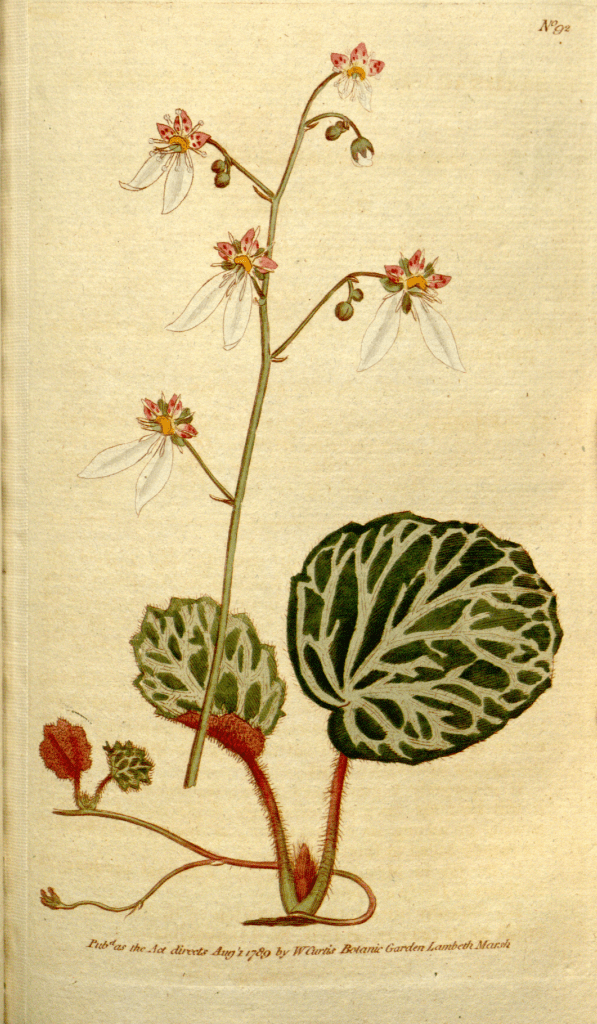
Variegated leaves have always fascinated plant lovers and botanists. In an early illustration of S. stolonifera dating from 1790, the artist has specifically highlighted this feature (see picture below). This makes it abundantly clear what type of variegation the plant depicted exhibits.
What type of leaf variegation does the plant in my hermetosphere belong to? Well, I can see more than one of the types described above represented in the picture below. How can this be?
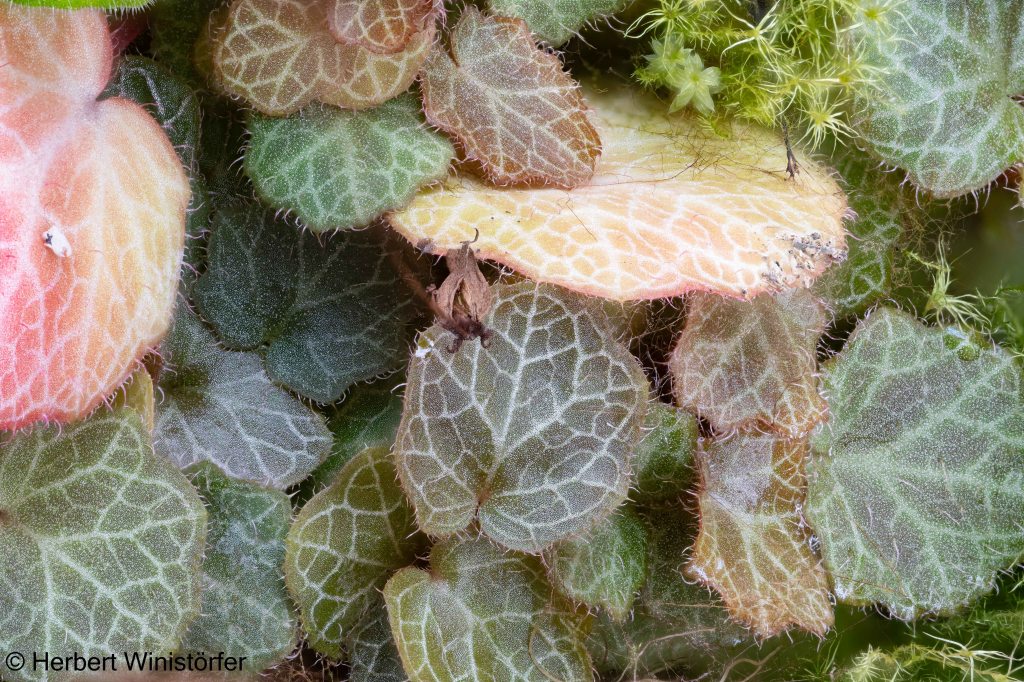
As is usually the case, the reality is somewhat more complex. Another very recent (not yet peer reviewed) study on the genetic diversity of S. stolonifera populations (Tang e.a. 2026) found, that “[plants] with the same type of leaf variegation repeatedly emerged across multiple clusters […]. Based on our field observations, there are certain differences in leaf coloration and variegation patterns among leaves of different ages in this species, and even within the same population, different variegation types can be observed. We propose that this may be attributed to several factors: gene flow and hybridization; gene mutation and genetic drift; and similar environmental pressures that may have promoted the independent evolution of the same adaptive traits in different populations.” In addition to the naturally occurring variety, there are also at least three registered cultivars of S. stolonifera (Tang e.a. 2023). Since I don’t know the exact origin of the plant in my hermetosphere, it could contain genetic components from all of these populations and, as a result, also exhibit leaf patterns found in all of them.

