Sometimes, a container just heads towards decline, and you don’t know why. Even if you think you have found the ideal conditions for closed terraria after years of experience and dozens of tries. Here are two examples where, after a promising start, none of the plants simply would thrive.
For both projects, the initial setup was the same that worked fine with other containers for years: substrate, moisture, light, all based on sound experience.
Project A was inspired by the flora of Ecuador. I combined the following four plants around a piece of mangrove root: Philodendron sp. ‘Mini Santiago’, the epiphytic orchid Restrepia cymbula and the two creeping plants Peperomia prostrata, Selaginella microphylla. The latter two were cuttings from plants that thrive perfectly in other containers.
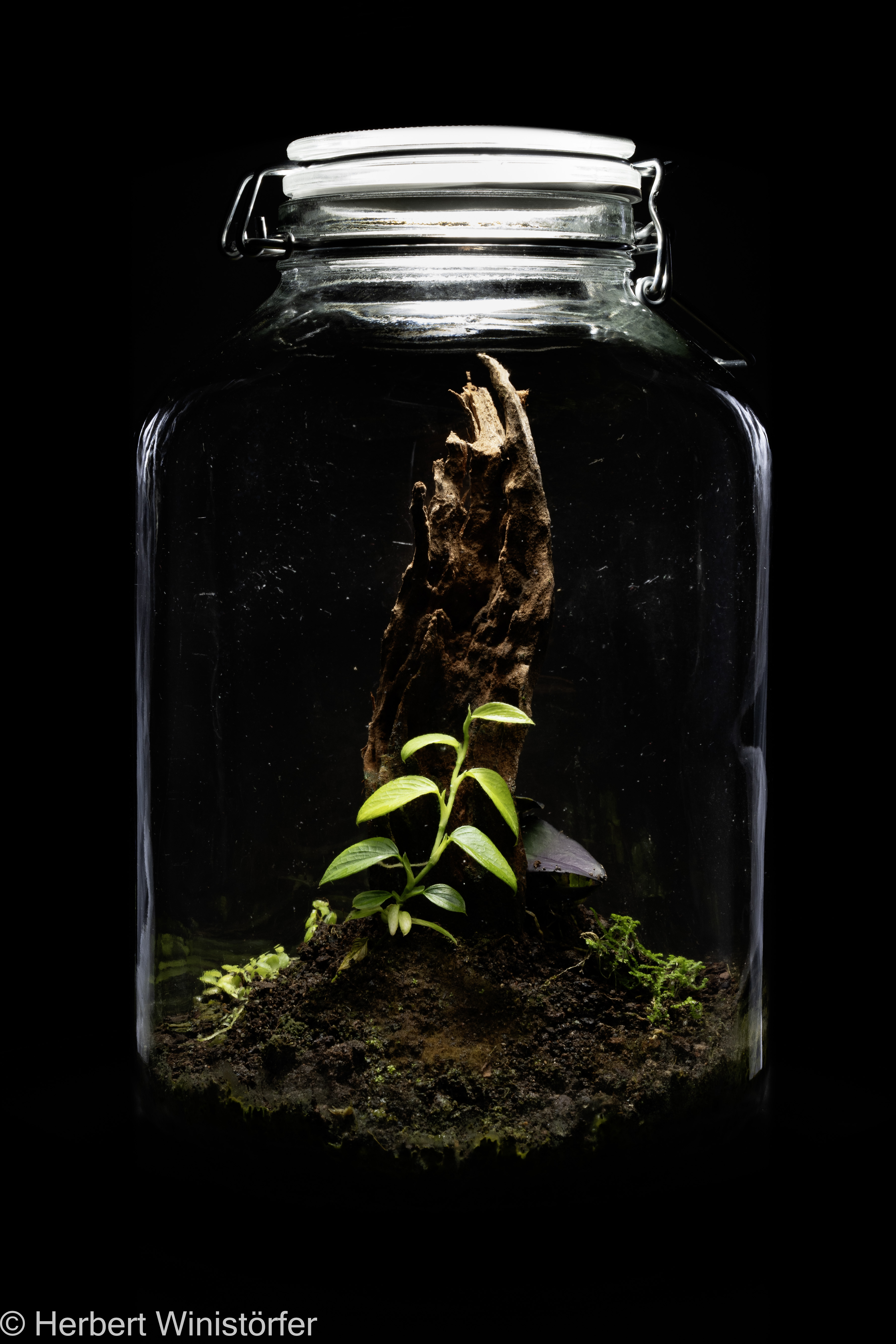
For the first months, things looked promising. The orchid produced a new leaf, the two small, creeping plants began covering the substrate surface, the Philodendron shoot climbed up the piece of wood. Only the brighter green colour of the new Philodendron leaves made me worry slightly.
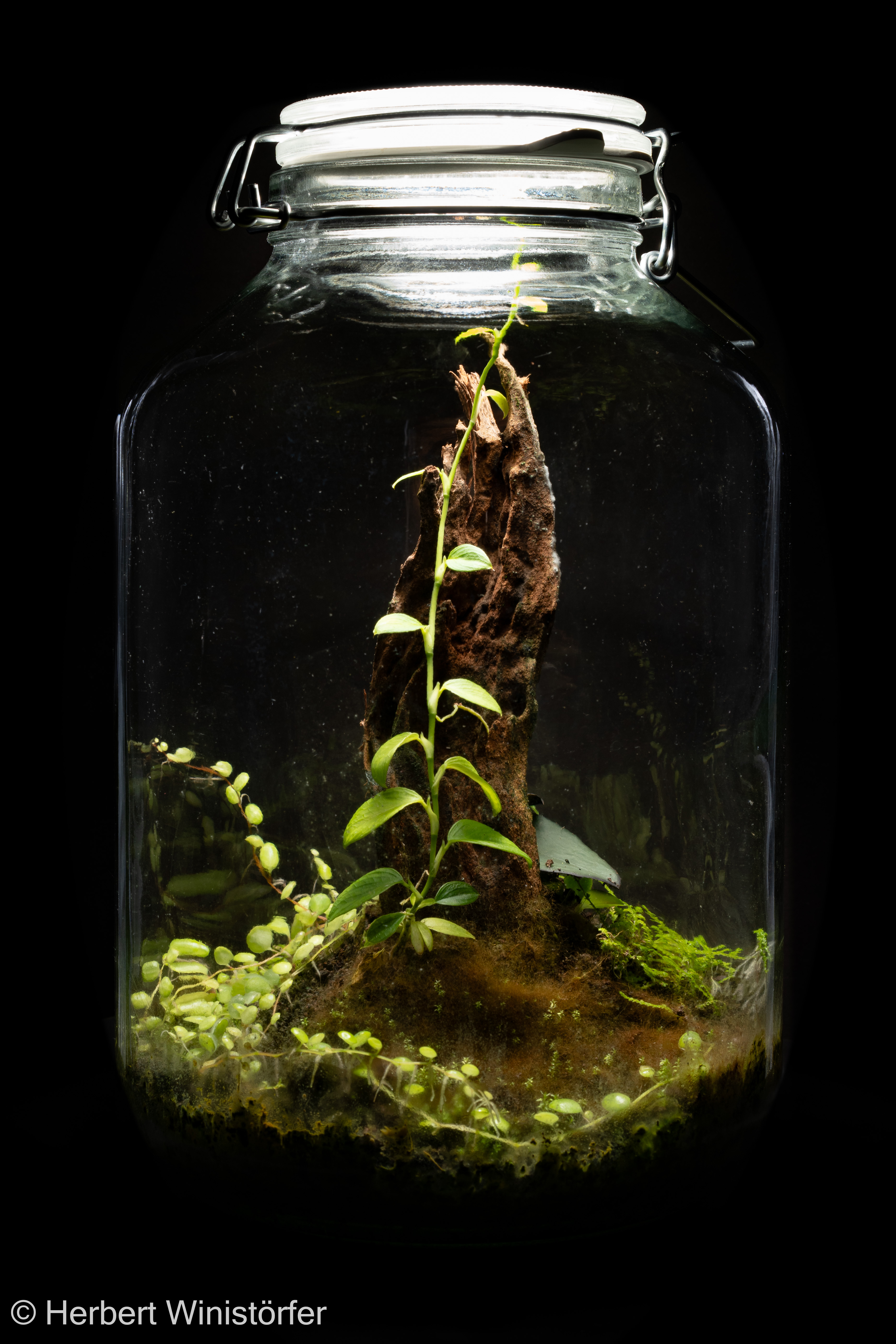
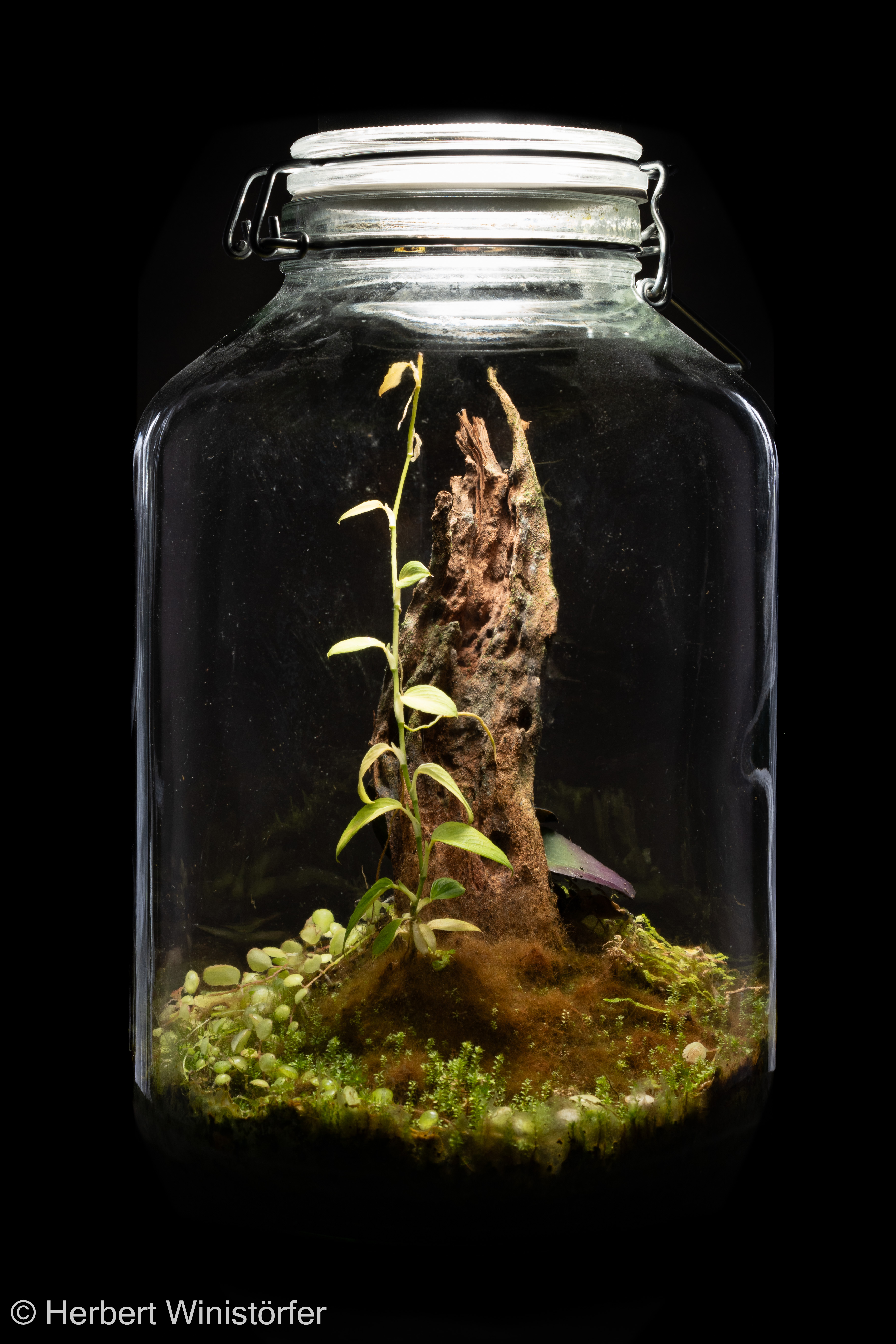
The first picture below shows the container 4½ months after onset. From then on, the state of all four plants got worse and worse. The internodes of the Philodendron shoot got longer and new leaves stayed small and yellowish. The orchid leaves turned purple, and growth stopped. The two creeping plants continued growing, but produced more and more chlorotic leaves of yellowish colour instead of the deep green that is a sign of good health. Picture two and three show the container 7½ and 13 months after onset. The gradual decline is obvious.
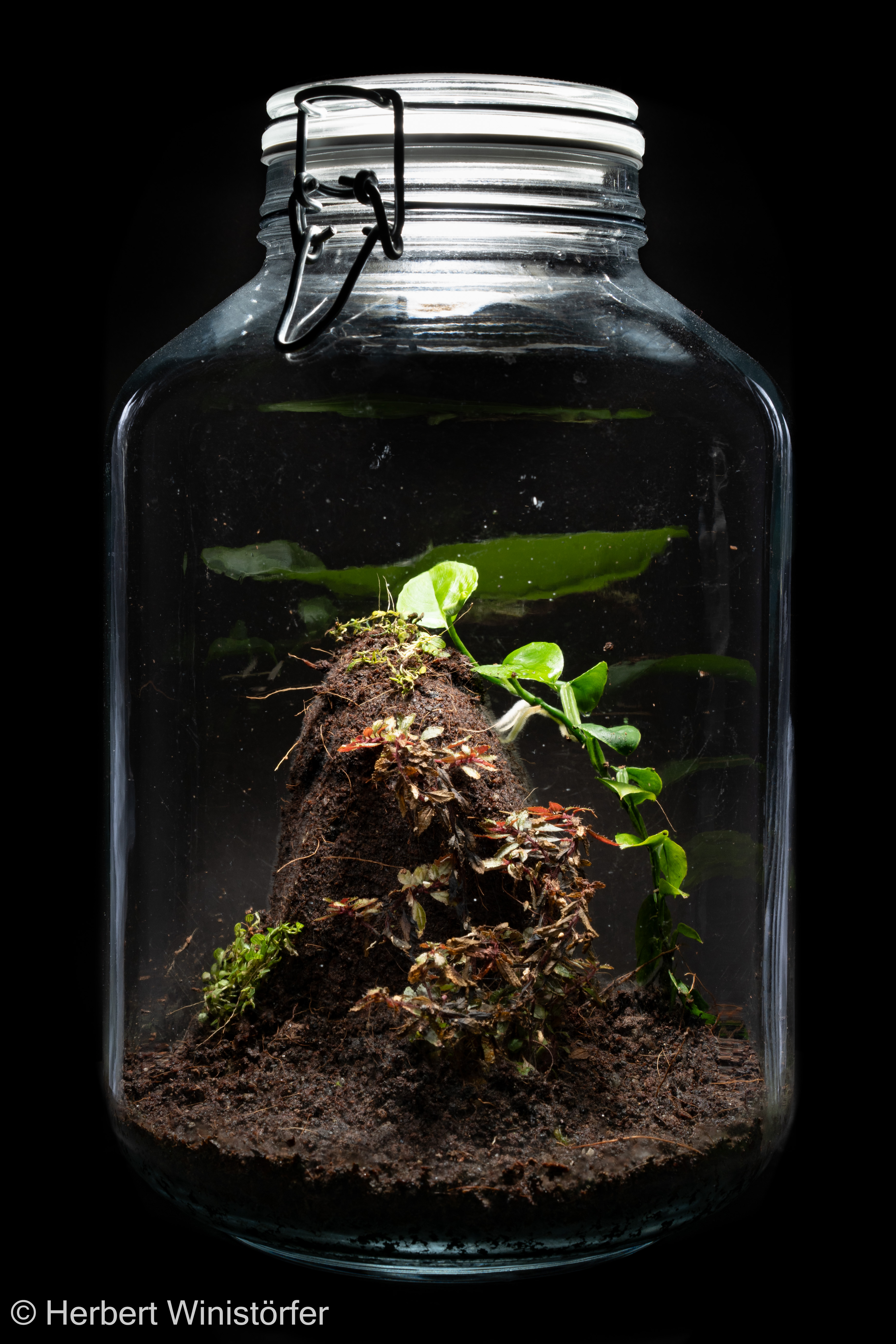
Project B was designed to test a new hardscape component: a piece of lava rock was coated with a wet mixture of cocopeat and earthworm humus so that it should serve as a substrate for epiphytes. The epiphytes tested were the miniature orchid Pleurothallis dressleri and the climber Philodendron sp. ‘Nano Panama‘. In addition, Triolena pileoides was planted in the substrate next to the lava rock, a manner that works well in other containers. This melastome is listed as epiphyte (Renner 1986) but is often grown in terraria like a terrestrial. The experiment failed spectacularly. Not only did the Philodendron and the Pleurothallis refuse to colonize the coated rock in the centre of the substrate surface. T. pileoides, which thrives perfectly in two other containers set up at the same time, never established, was getting worse and worse until it eventually died.
The two pictures below show Project B one and six months after onset. Within six months Philodendron has become chlorotic and covered with mould in places. Triolena and Pleurothallis have both died with no obvious illness.
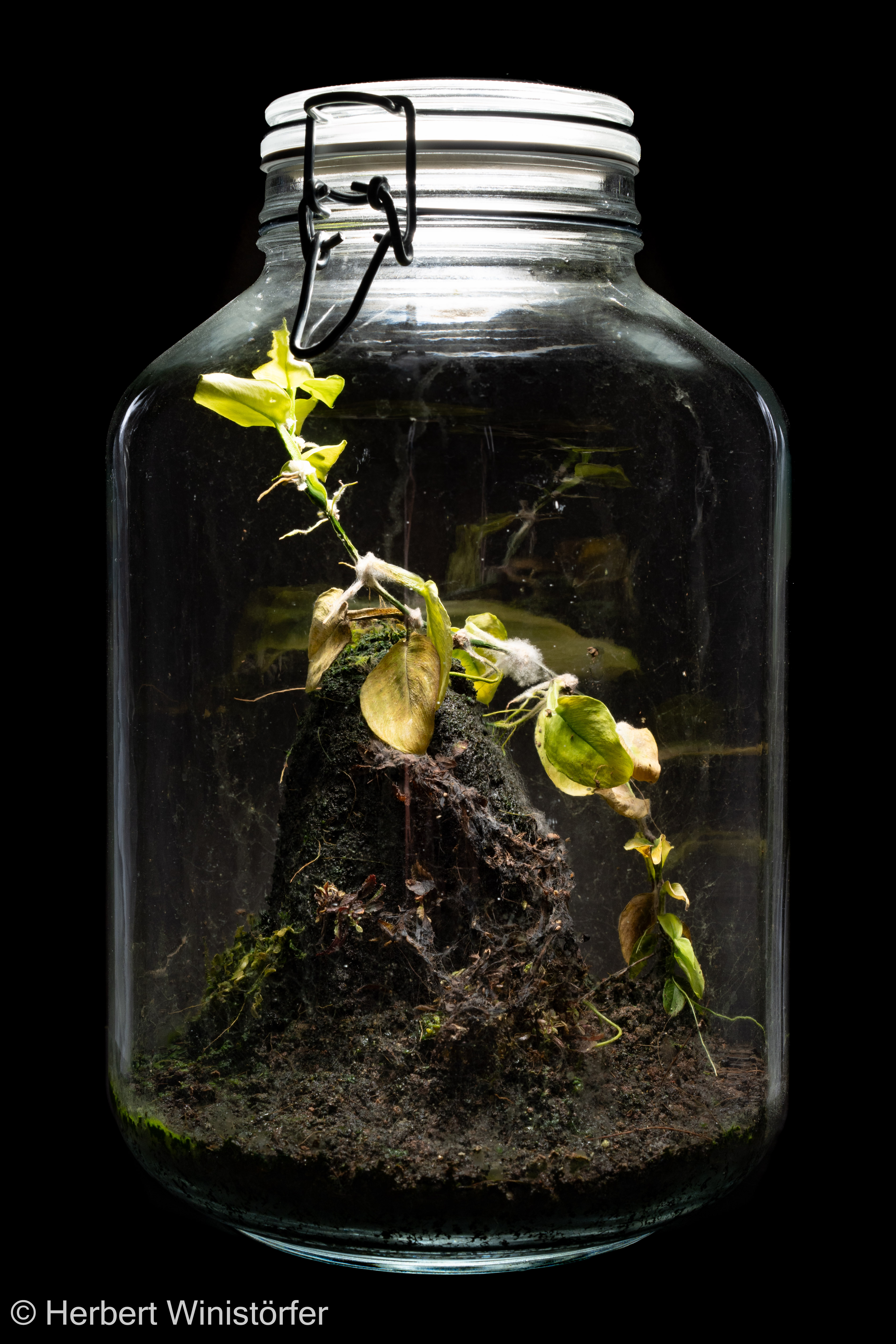
What could be the reasons for these two breakdowns? Using wood in a very humid environment always bears a risk of fungal infections. Could it be that the mangrove root caused the decline in project A? However, other containers with mangrove wood do well. In project B, the mould on the Philodendron is obvious. Could the same fungus have killed the two other plants as well although there are no direct signs of an infestation visible on the plants? We know that fungal mycelium can be harmful long before it is recognizable with bare eyes.
Can we learn any lessons from these two failed projects, even though we can only speculate as to the reasons? My personal insights emerge when I consider these two projects in the context of other experiences with similar projects.
- Without a convincing new substrate idea for epiphytes, small creeping Philodendrons like P. sp. ‘Nano Panama’ and P. sp. ‘Mini Santiago’ have little chance of thriving in the hermetosphere.
- The same applies to any miniature epiphytic orchid of the Pleurothallid subtribe like Restrepia cymbula and Pleurothallis dressleri.
- It may be too early to generally dismiss the attempt to provide epiphytes a suitable substrate within a closed container, but this kind of coated lava rock does not seem to work.
Have you had similar experiences and learnt your lessons? Let me know.

