Here is how Peperomia prostrata, the ‘string of turtles’, is doing in my hermetosphere.
Within the pepper family (Piperaceae), species of the genus Peperomia are also known as ‘dwarf pepper’. They are found in tropical and sub-tropical regions around the world. Some of them have long been popular with horticulturists in Europe, including this particularly small as well as pretty species.
“[…] a pretty slender-growing plant, with round variegated leaves, produced on long thread-like rhizomes […].” (Williams 1879: 717) With these words, Peperomia prostrata was introduced into the world of gardening and botanical science on 7 June 1879 by English nurseryman Benjamin Samuel Williams (1822 – 1890). The accompanying illustration (see below) is still considered today to be the type that defines the species. It also reveals where the name ‘string of turtles’ comes from: the round shaped leaves with their distinct pattern of light-coloured veins.
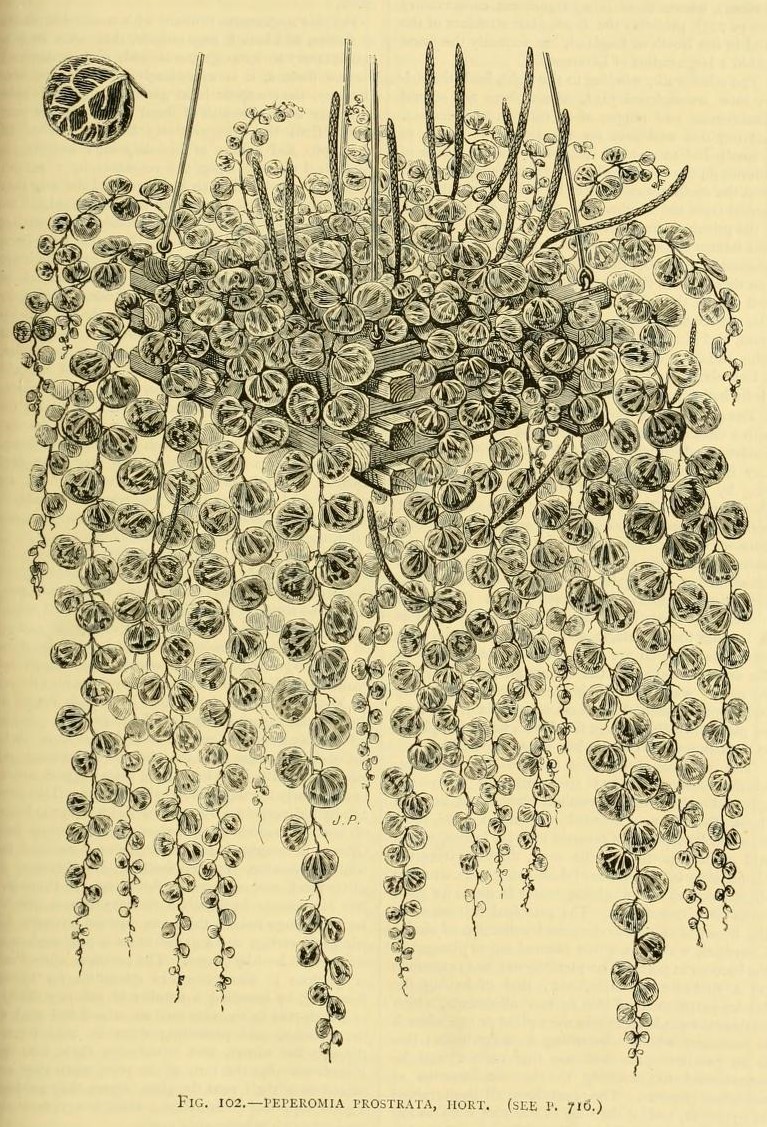
The species has been treated as a synonym of Peperomia rotundifolia for a while (Callejas 1999), but later regained its status: “Typical for P. prostrata are the dark green leaves with the distinct lighter reticulate nervation pattern. Although this feature tends to fade in herbarium specimens it still may be observed in most cases. The internodes in P. prostrata are usually shorter than in P. rotundifolia, giving P. prostrata specimens a sturdier look.” (Mathieu and Callejas-Posada 2006: 357)
As per today, Tropicos.org lists specimens from three georeferenced locations in Ecuador (see map below). However, based on observations documented on www.inaturalist.org it can be assumed that the natural range includes at least Peru and Panama. According to labels on herbarium specimens, the plant grows as an epiphyte or epilithe in forests and/or along streams at altitudes of up to 600 metres above sea level.
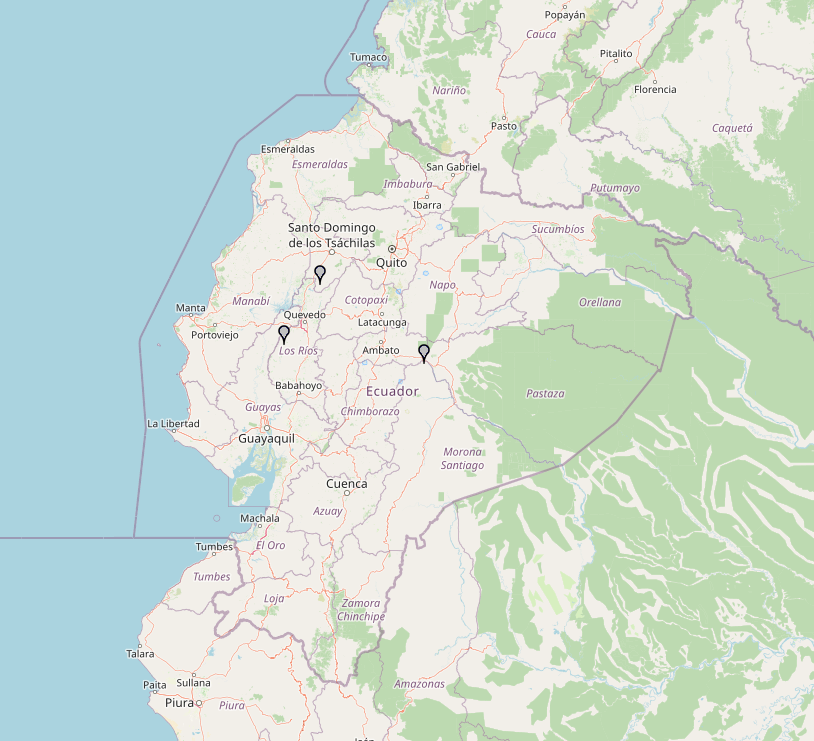
© OpenStreetMap contributors.
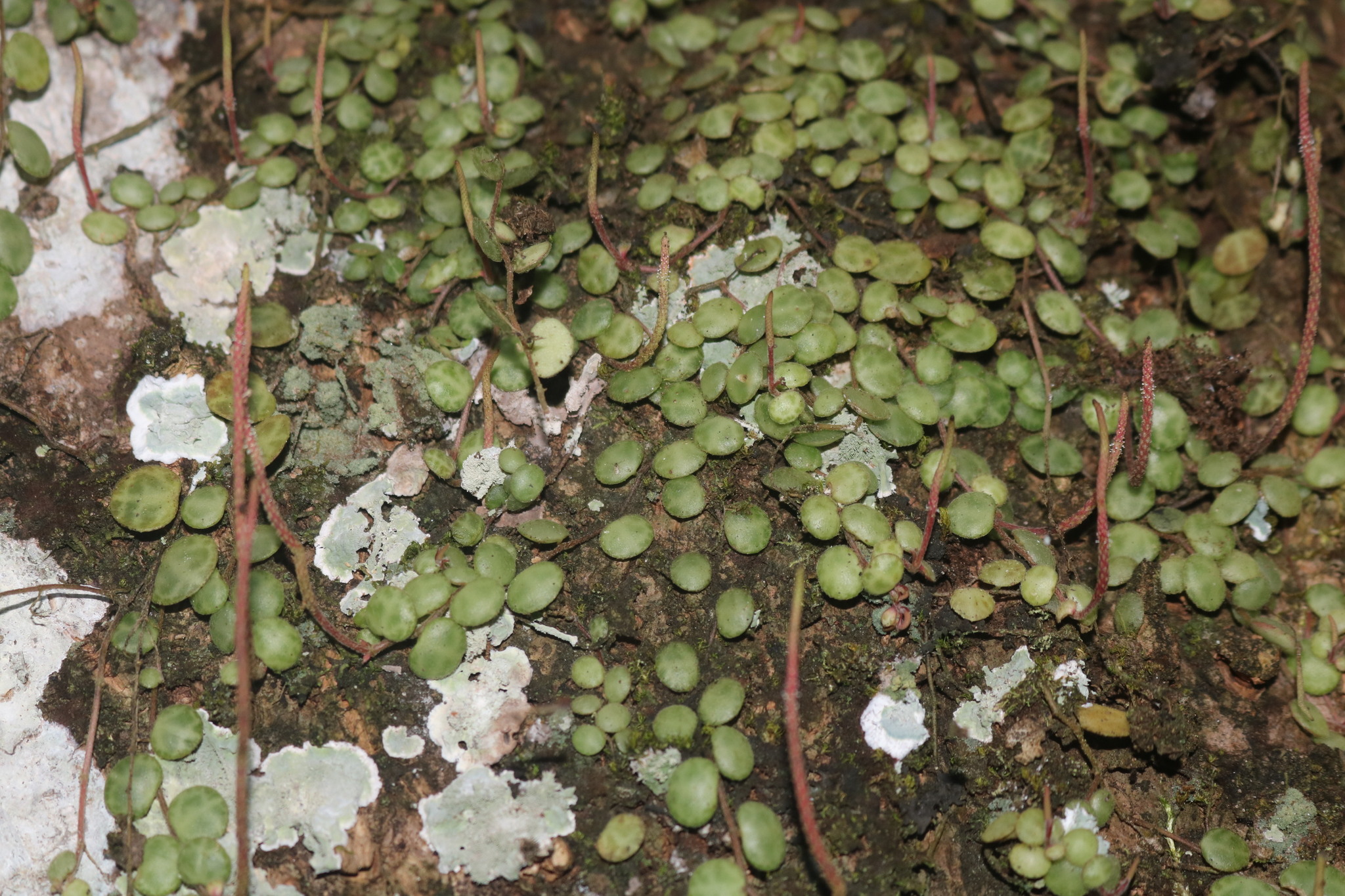
The picture below shows P. prostrata in its natural habitat.
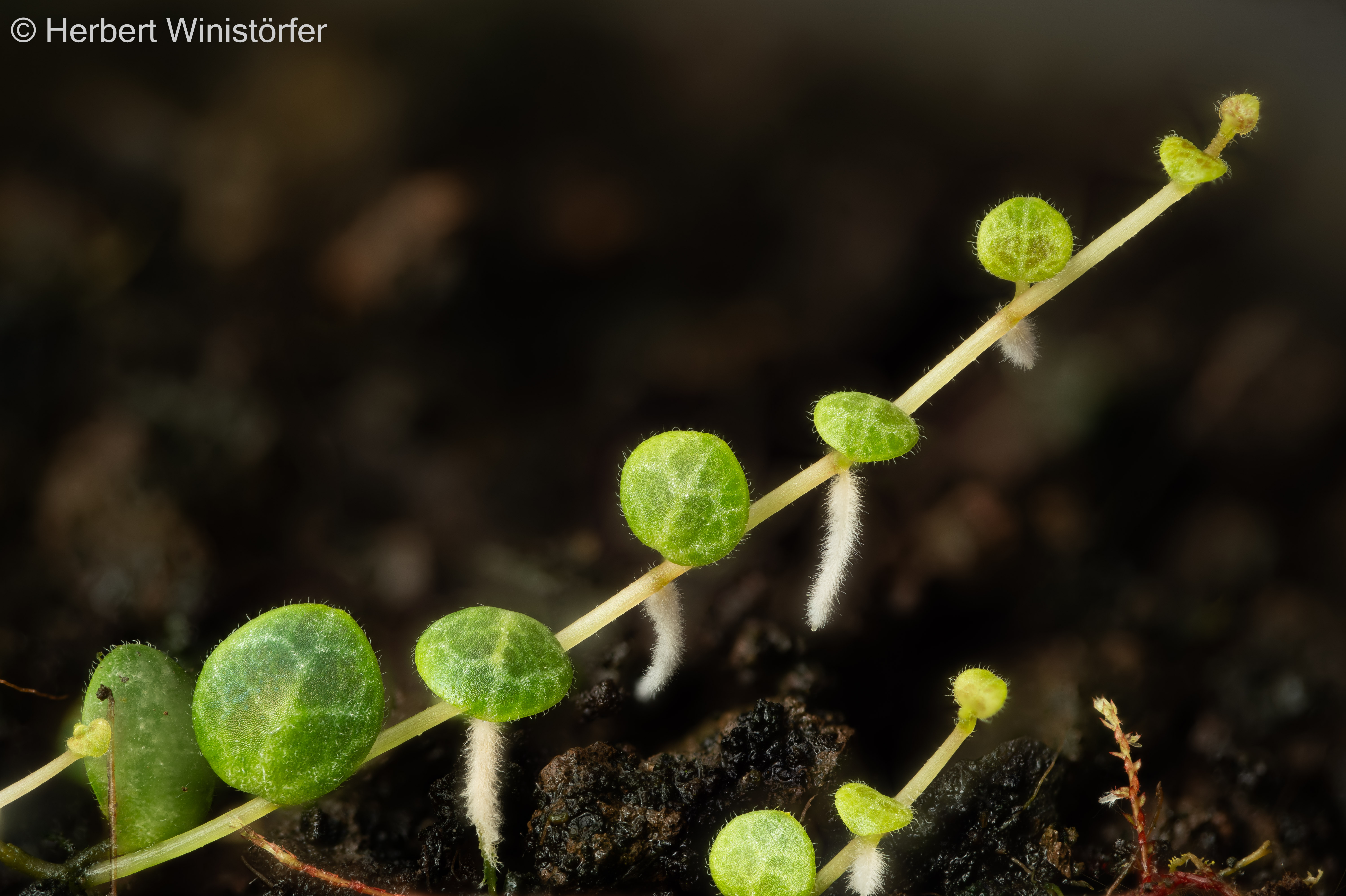
The plant immediately settled in well in the closed terrarium and spread its vines both across the substrate and over the lava rocks. On closer inspection of the leaves, the characteristic venation can be seen (see illustration below).
The pair of pictures below were taken six months apart and give an indication of the plant’s growth rate.
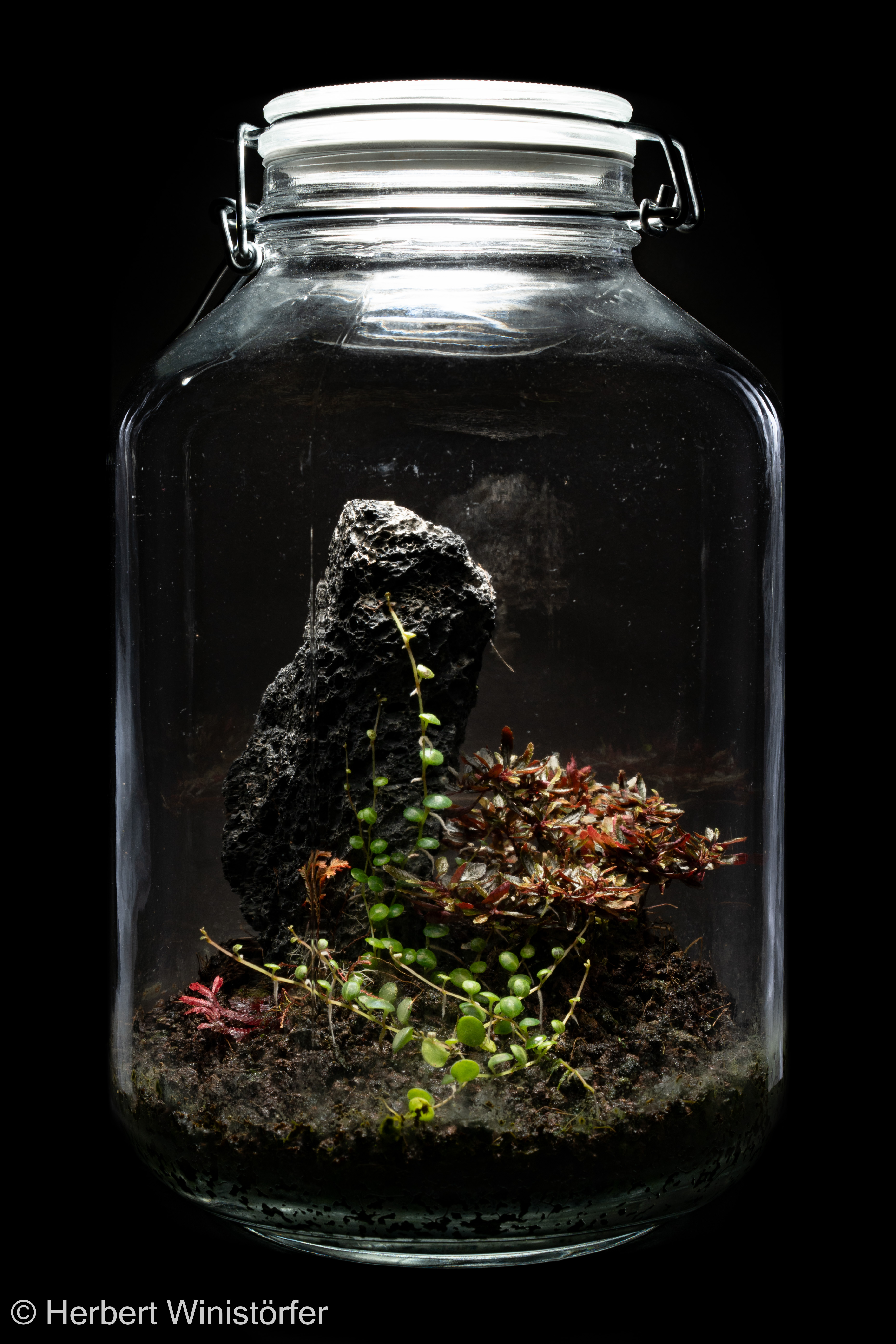
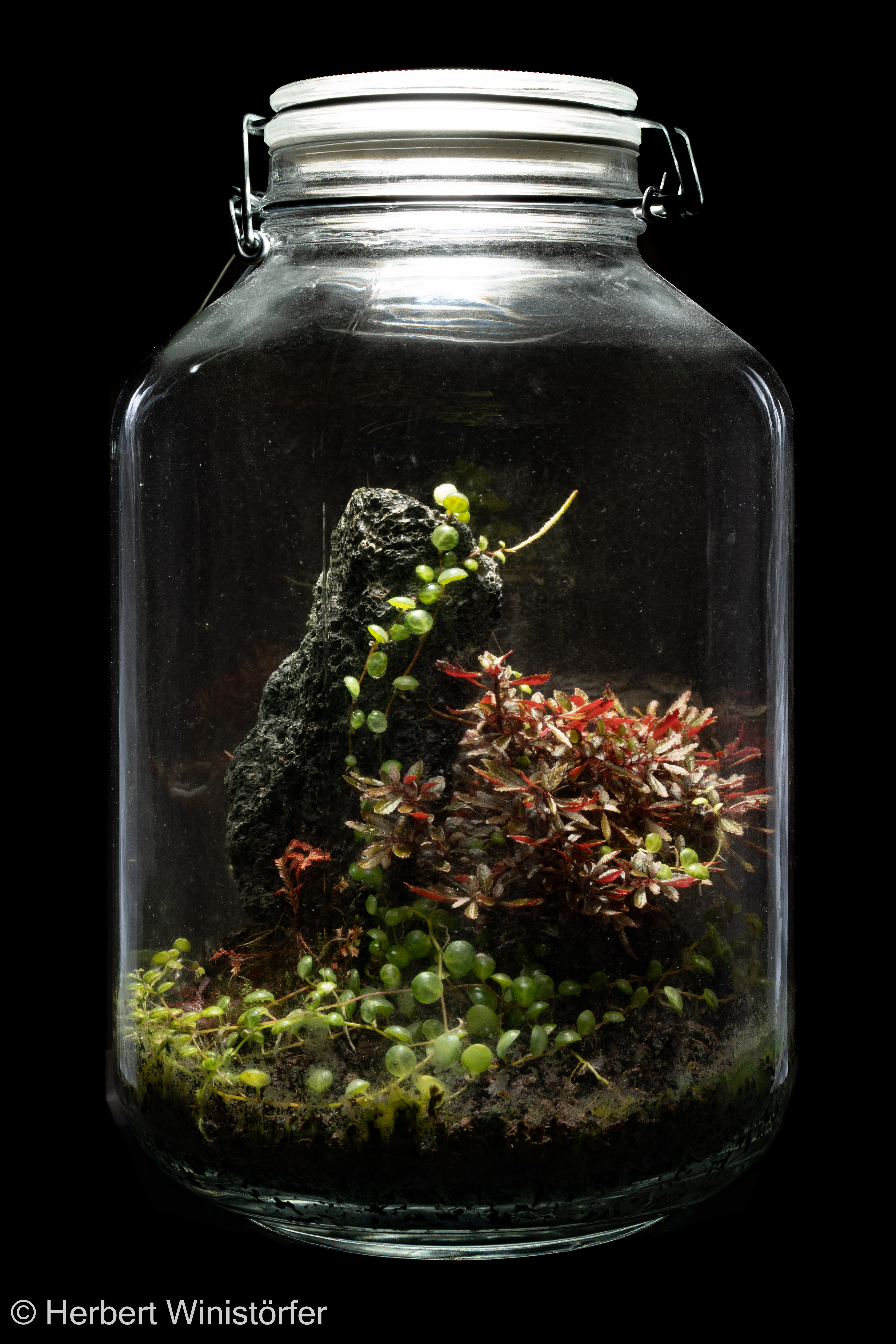
Seven months after two shoot cuttings of P. prostrata had been planted in the new container, two inflorescences formed on shoots that were growing over the central lava rock. This prompted me to take a closer look at the rather unusual Peperomia flowers.
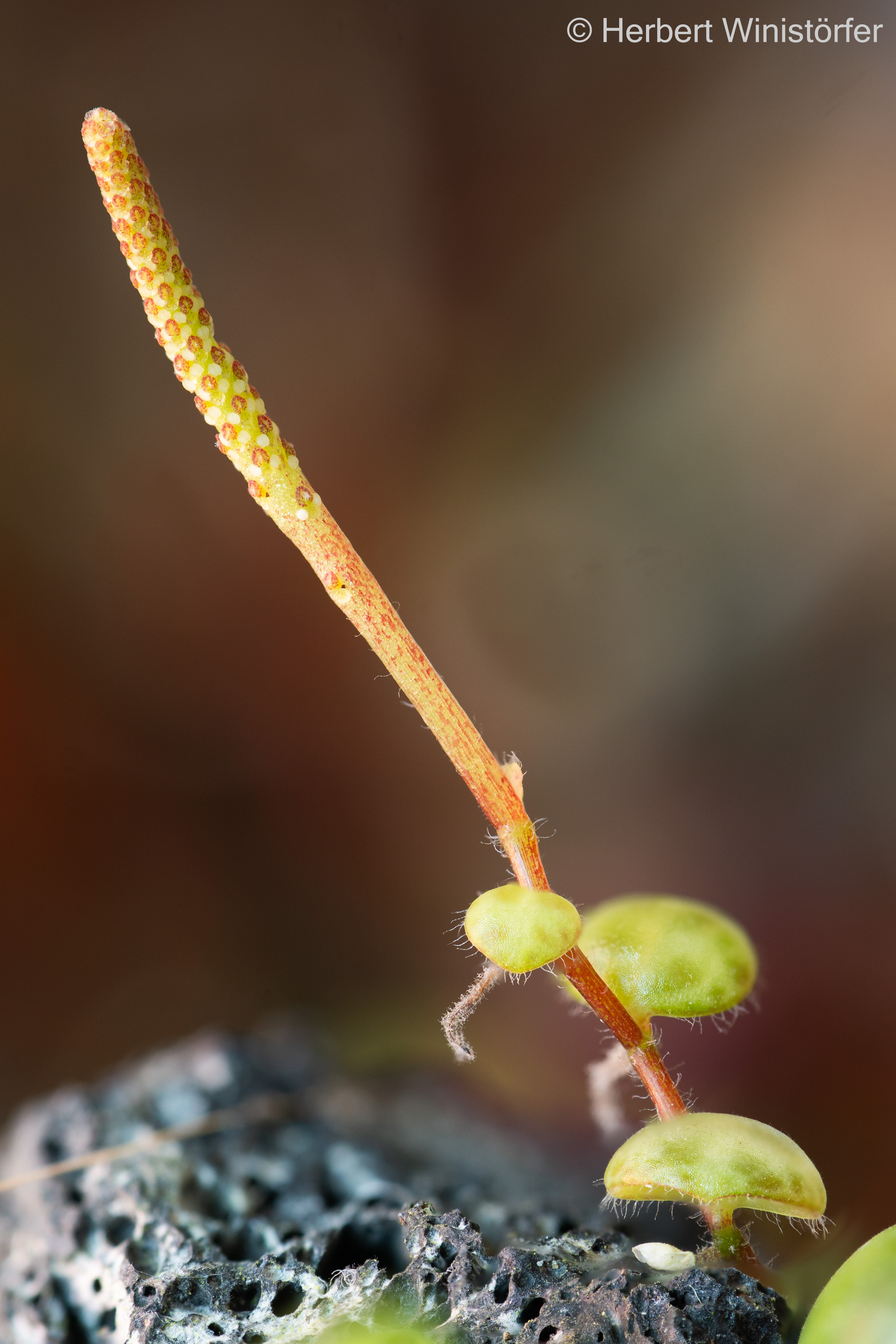
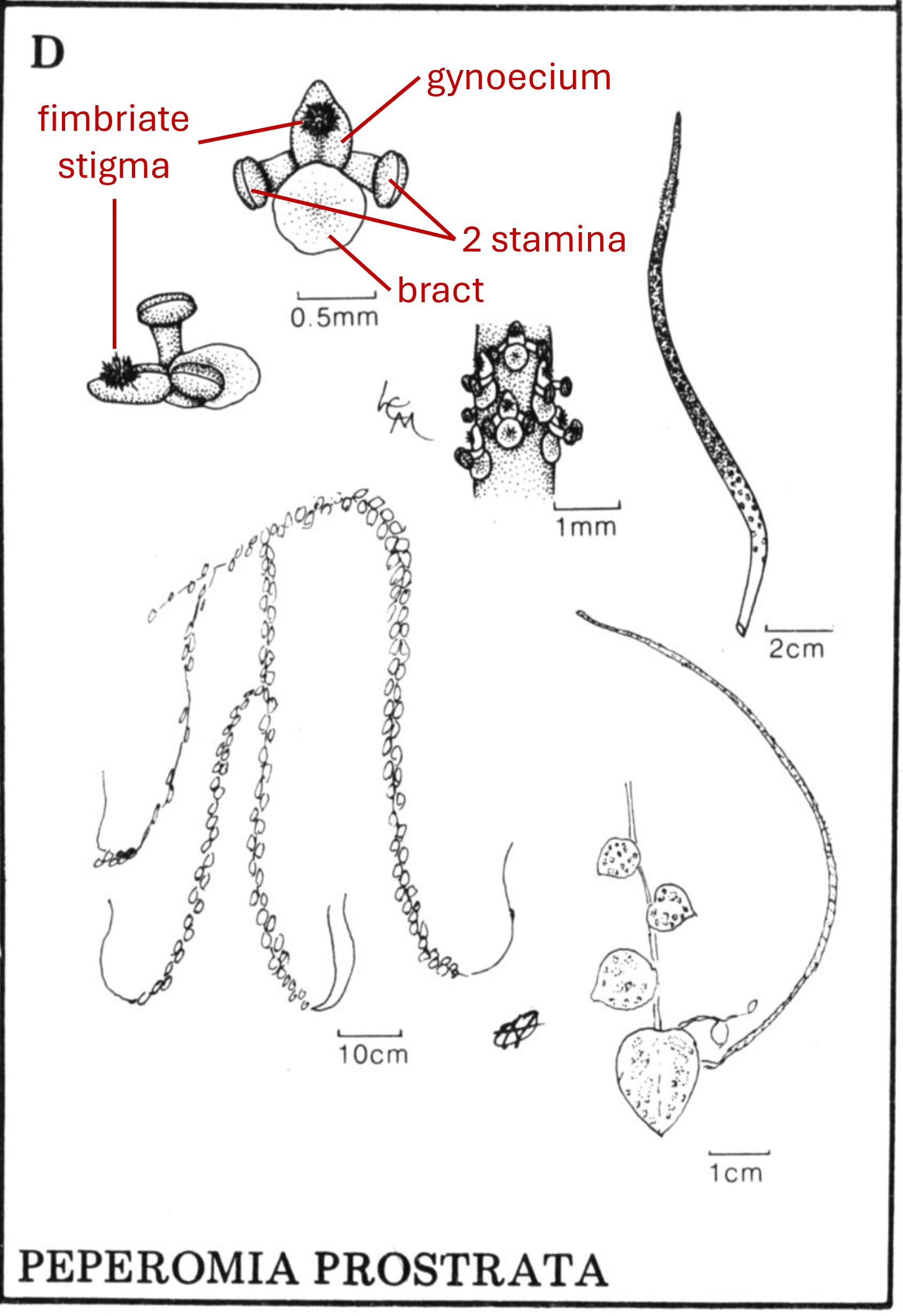
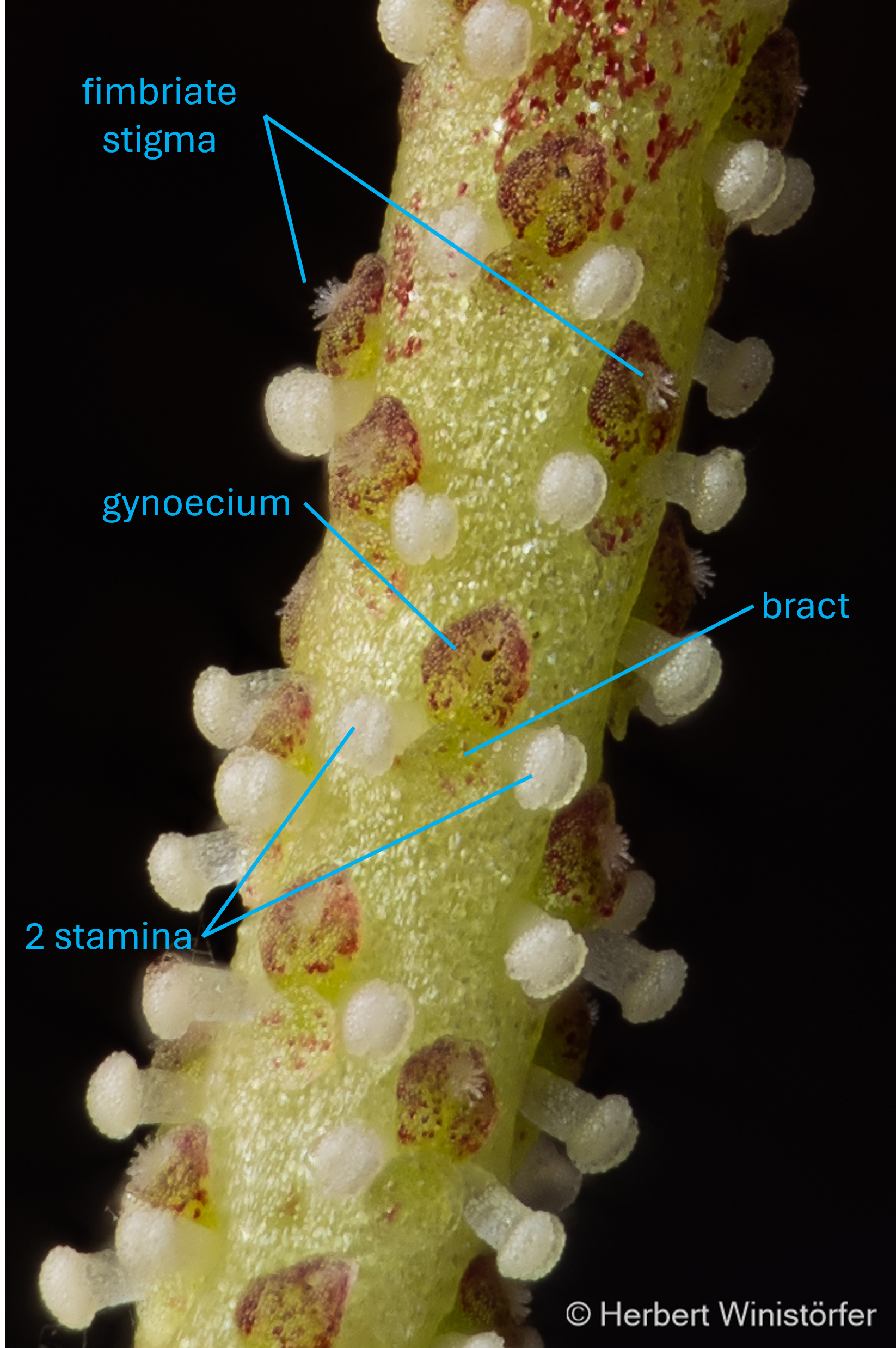
We are used to admiring large flowers with elaborate corollas and colourful petals. Why don’t we turn our attention to the exact opposite for a change: Arranged on a spike inflorescence are numerous minute, highly reduced bisexual flowers. Each flower lacks a perianth (calyx and corolla) but consists of only a red coloured gynoecium (female folwer part) and two stamina (male flower parts) with bilocular anthers arising from the axis near the base of the ovary, and a bract (modified, leaflike structure) positioned beneath the reproductive organs (Sastrapradja 1960). The entire flower has a diameter of not more than 1 mm (see illustration below).
Surprisingly little is known about the floral biology of most Peperomia species. Seed production without fertilization (agamospermy), self-pollination (autogamy) as well as cross-pollination by wind or insects are discussed (De Figueiredo and Sazima 2008).
It is understood that P. prostrata is not self-pollinating. I guess I will find out soon if this applies to the individual in my container. However. It is easily propagated by shoot cuttings.

