Discover how Plectranthus rosulatus, a Madagascar endemic belonging to the Deadnettle Family, found its way into science and cultivation, and how the plant is doing in the hermetosphere.
When my local nursery offered me a plant of a family I had never tried before, I could not resist. Being familiar with the Lamiaceae from my neighborhood in the temperate zone, this was my first encounter with a representative of the tropics. Plectranthus rosulatus proved so far to be well suited for cultivation in the closed terrarium.
How the plant found it’s way into science and cultivation is nicely described by Hedge (2005: 323): “The first collection of the new species was made by Ralph MANGELSDORFF (University of Frankfurt) in March-April 1997 when he collected nutlets of an unknown Lamiaceae in northern Madagascar; he visited the same site in March-April 1998. Nutlets were sent on to Josef BOGNER at Munich Botanic Garden who raised flowering specimens in 2000. He […] recognised that it was possibly a distinct new species. He contacted me at Edinburgh, sent photographs and cuttings for growing at the Royal Botanic Garden Edinburgh and suggested that it should be formally described. In due course, the plants at Edinburgh established themselves and flowered. It proved to be easy to grow under warm greenhouse conditions and flowered freely over long periods. It is visually attractive with potential as a house-plant because of its neat habit, unusual colourful leaves, long flowering time and bright lilac-blue flowers.” While I was not lucky enough yet to see the flowers in my container, the pair of pictures below of plants in-situ may give a good impression of what I am hoping for.
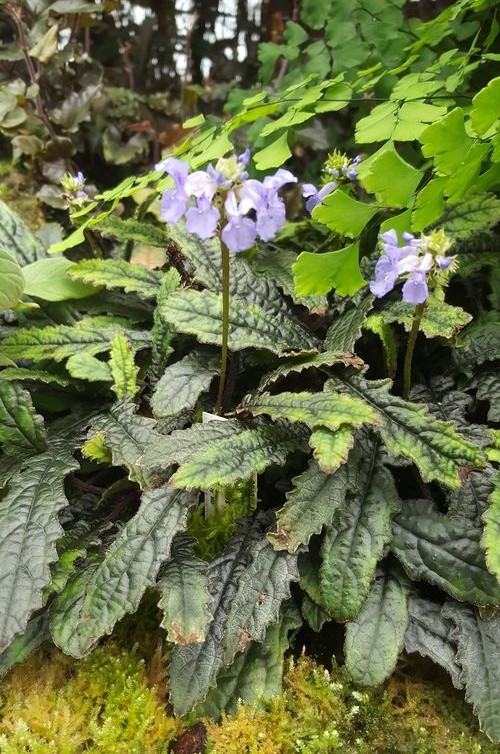
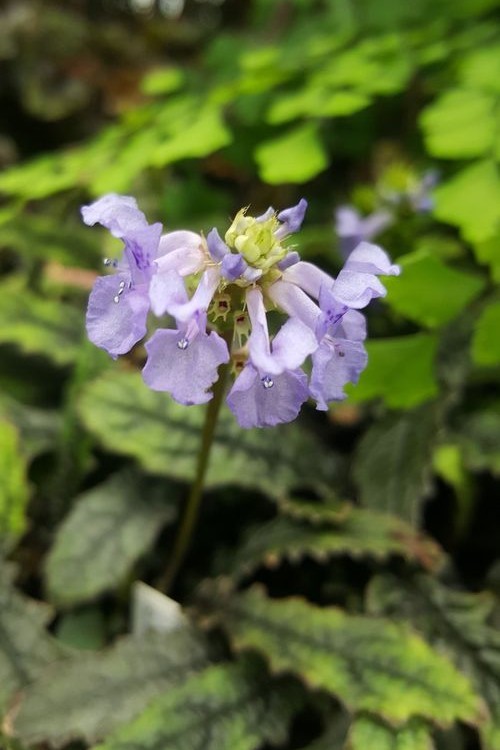
Known occurrences of P. rosulatus are located in the Northeast of the island of Madagascar within a narrow range.
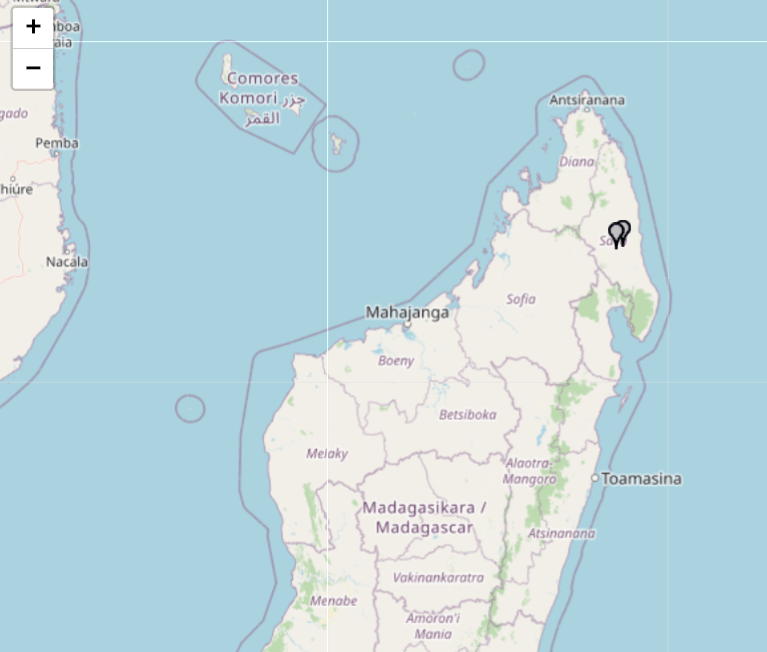
The description of the plant’s natural habitat given by Hedge (2005: 323) is not only illuminating with respect to the plant, but also to the dramatic threat to biodiversity Madagascar is facing: “Most of the primary vegetation between Sambava and Andapa is either destroyed or, if still persisting, very inaccessible. Mounting up the road at c. 300-400 m, there was a typical lowland rain forest that thinned out towards the steeper areas. Here a deep moss layer covered the ground and most basal parts of the trees. Many terrestrial orchids, such as the rare Callanthe millotae, Gastrorchis pulchra var. perrieri, a new species of Streptocarpus, Cynanchum leucantheum subsp. elongatum and a possible new Begonia grew here. The Plectranthus was growing in the moss, sometime on stones or on the steep ground. Visiting this area a year later, it was very difficult to re-locate the habitat because heavy logging had completely altered the environment. But at higher altitudes in stony areas which had been spared, most of the interesting plants could be found again”.
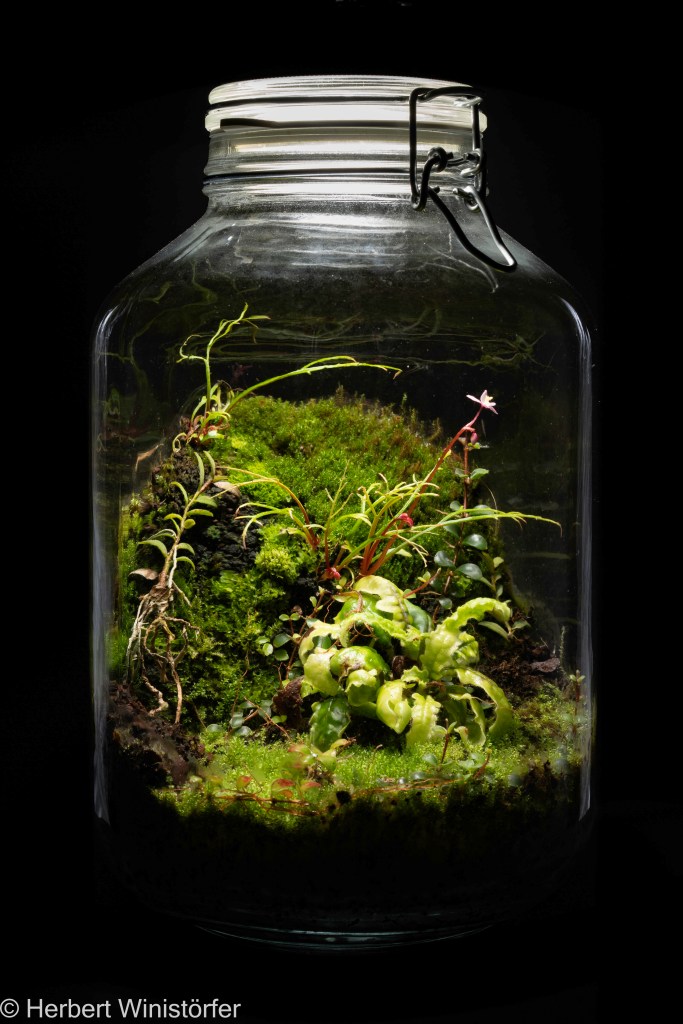
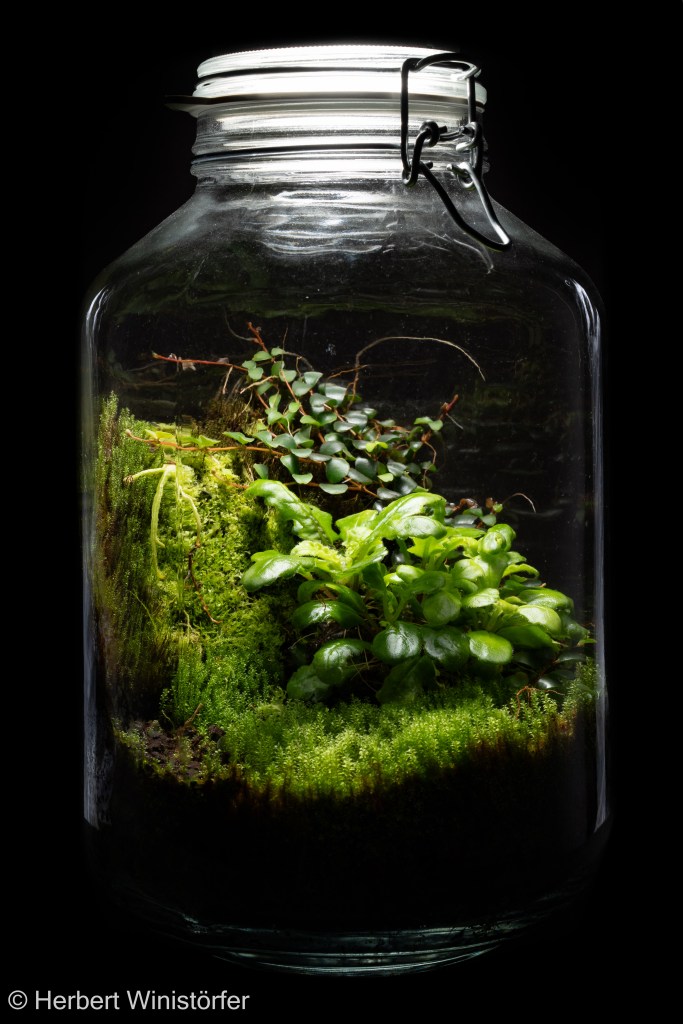
After I had transferred the plant to the closed container, it seemed to struggle at first. For months it barely grew and lost several leaves to rot. But then its condition stabilised and it began to look increasingly vigorous, producing new rosettes of leaves (see picture below).
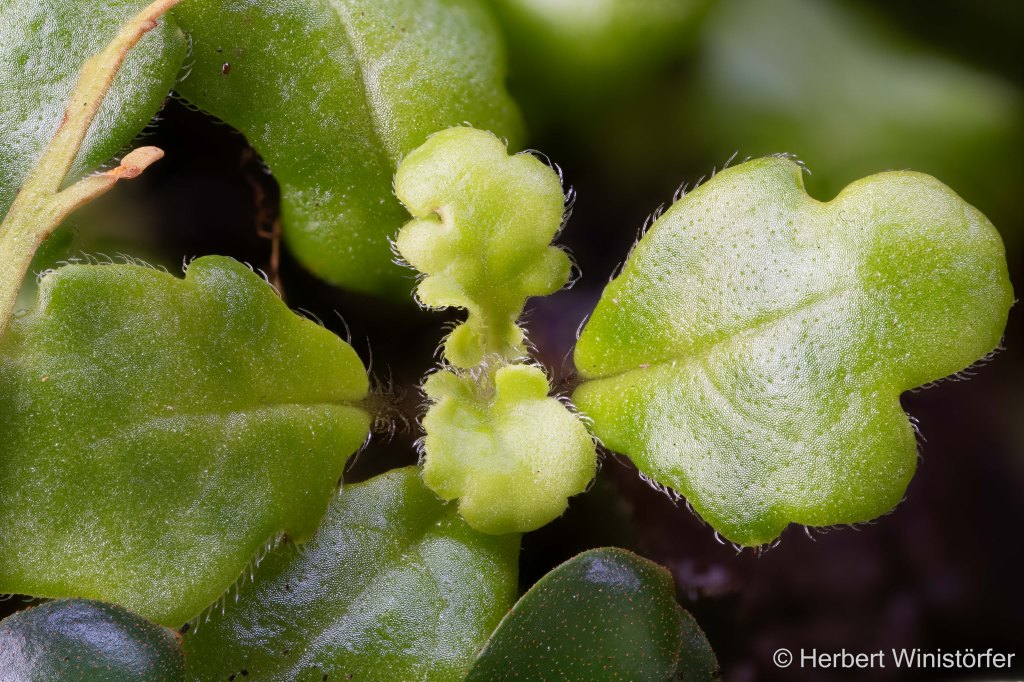
The pair of pictures show the development of P. rosulatus in the hermetosphere between month three and month twelve after onset.
I look forward to seeing an inflorescence emerging and those beautiful lilac flowers opening.

