At first glance, hardly any other group of plants seem as well-suited to cultivation in hermetospheres as filmy ferns: many have leaves that grow to just a few centimetres in size, grow slowly and, above all, are highly adapted to a life in high humidity. Now that I can report on initial experiences, it is time to introduce these plants here.
What we call filmy ferns are plants that belong to the family of Hymenophyllaceae. According to studies based on molecular phylogeny, it is one of the most ancient fern families. This means that the latest common ancestor that Hymenophyllaceae share with other fern families presumably lived at least 250 million years ago (Nitta e.a. 2022). The following, general information on Hymenophyllaceae is taken from Zhao (2026: 23ff.).
Although some of the currently close to 600 accepted species can be found in temperate regions, the main diversity centres of Hymenophyllaceae are in Central America, Northern South America, and Southeast Asia, followed by the Brazilian Atlantic Forest and Madagascar. Filmy ferns typically occur in shaded environments such as forest understories, ravines, and cloud-covered areas, where light levels are generally low and relatively stable. Most filmy ferns grow epiphytically on tree trunks, branches, and lianas, but many also occur on rock surfaces, in rock crevices, and on moist ground. Moisture appears to be the primary factor influencing the distribution and diversity of Hymenophyllaceae. This dependency is closely linked to the morphology of filmy ferns: their leaves are extremely thin, typically composed of a single cell layer, and lack developed cuticles and functional stomata. These traits facilitate direct water absorption across the leaf surface but also increase susceptibility to water loss, thereby restricting most species to constantly humid habitats.
This lacking ability to control water loss is called poikilohydry. In contrast, “most vascular plants are homoiohydric, meaning that they can internally regulate their water status using a cuticle-covered epidermis and stomata, delaying desiccation during periods of drought stress […].” (Aros-Mualin and Kessler 2024: 1139) Interestingly, poikilohydry in filmy ferns is secondary: It is thought today that despite their relatively old phylogenetic age, Hymenophyllaceae are descendant of ancestors that possessed stomata and thus were homoiohydric. In the words of Proctor (2012: 1026): “The filmy ferns stand out as the most notable example of a family that has shifted its whole adaptive commitment across the divide between the homoiohydry of the vascular plants and the poikilohydry most typically seen in bryophytes.” This kind of loss of traits and abilities over the course of evolution, which are of crucial importance to closely related organisms, is also referred to as reductive evolution (Harris e.a. 2020).
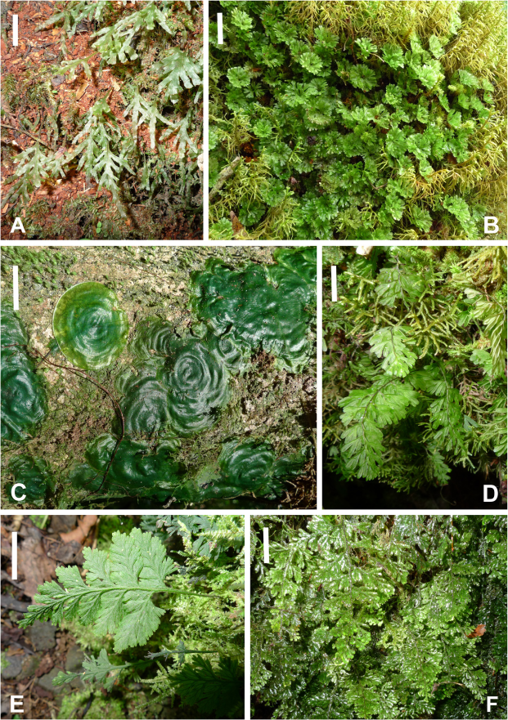
A nice overview on the diversity of filmy ferns is given by Said e.a. (2017) for the tropical archipelago of the Comores (see the figure below).
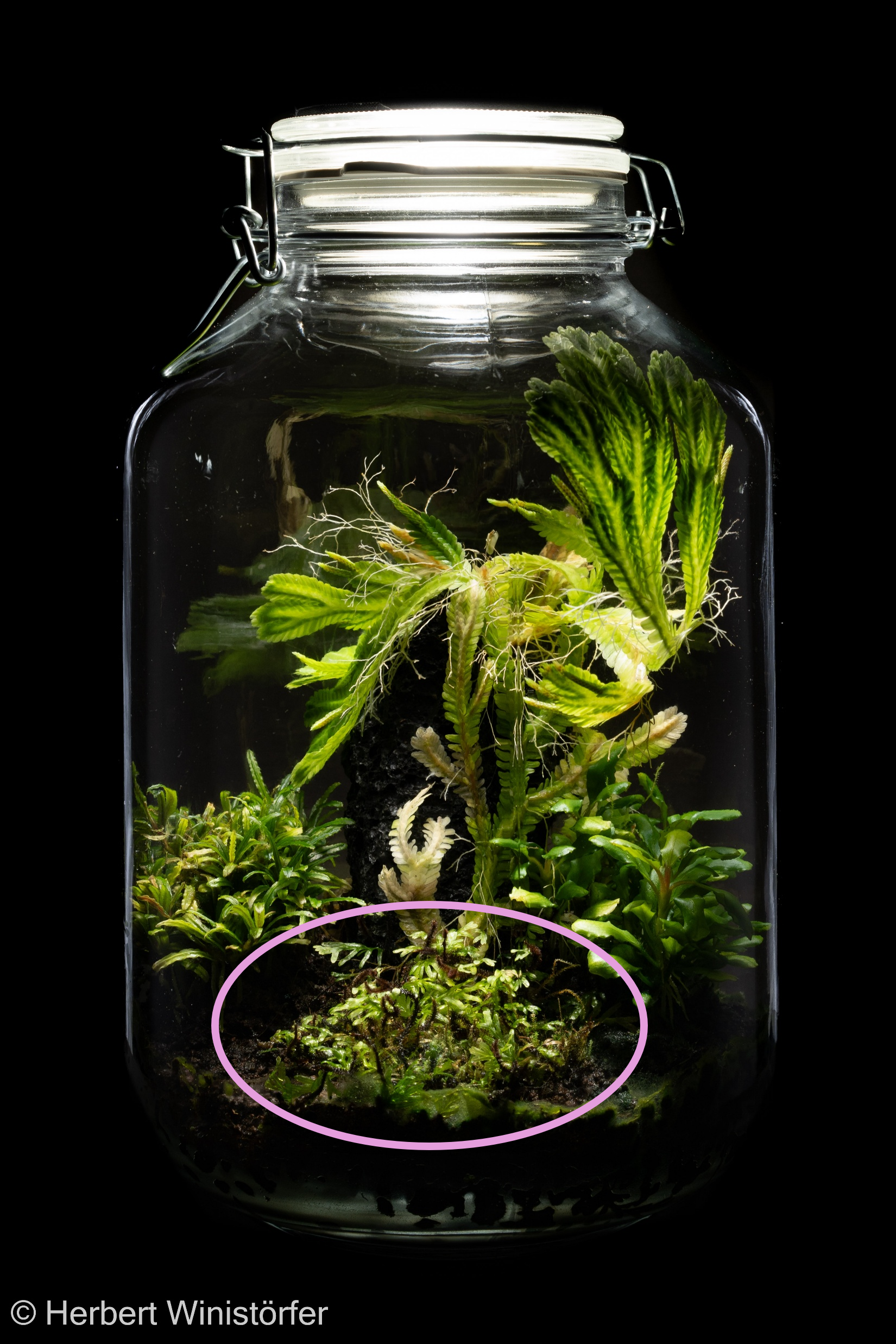
On 11 November 2025, I planted a piece of rhizome with a few fronds from a newly purchased filmy fern into a freshly prepared, sealed container. The fern had been labelled by the retailer as Crepidomanes sp. ‘Borneo’. I left a bit of space so that the fern could grow and planted two Bucephalandra species on either side of the fern. These are known to grow very slowly and would therefore pose no immediate threat to the fern. After ten months, the filmy fern had grown considerably and seemed to be thriving (see picture below).
Now that I was certain that this filmy fern could cope with my standard set-up of closed containers, I wondered whether I was able to confirm the genus identification of my fern or maybe even go further. To begin with, I took the best photos I could to document the morphology of the fern (see the three pictures below) and began to delve into the relevant literature.
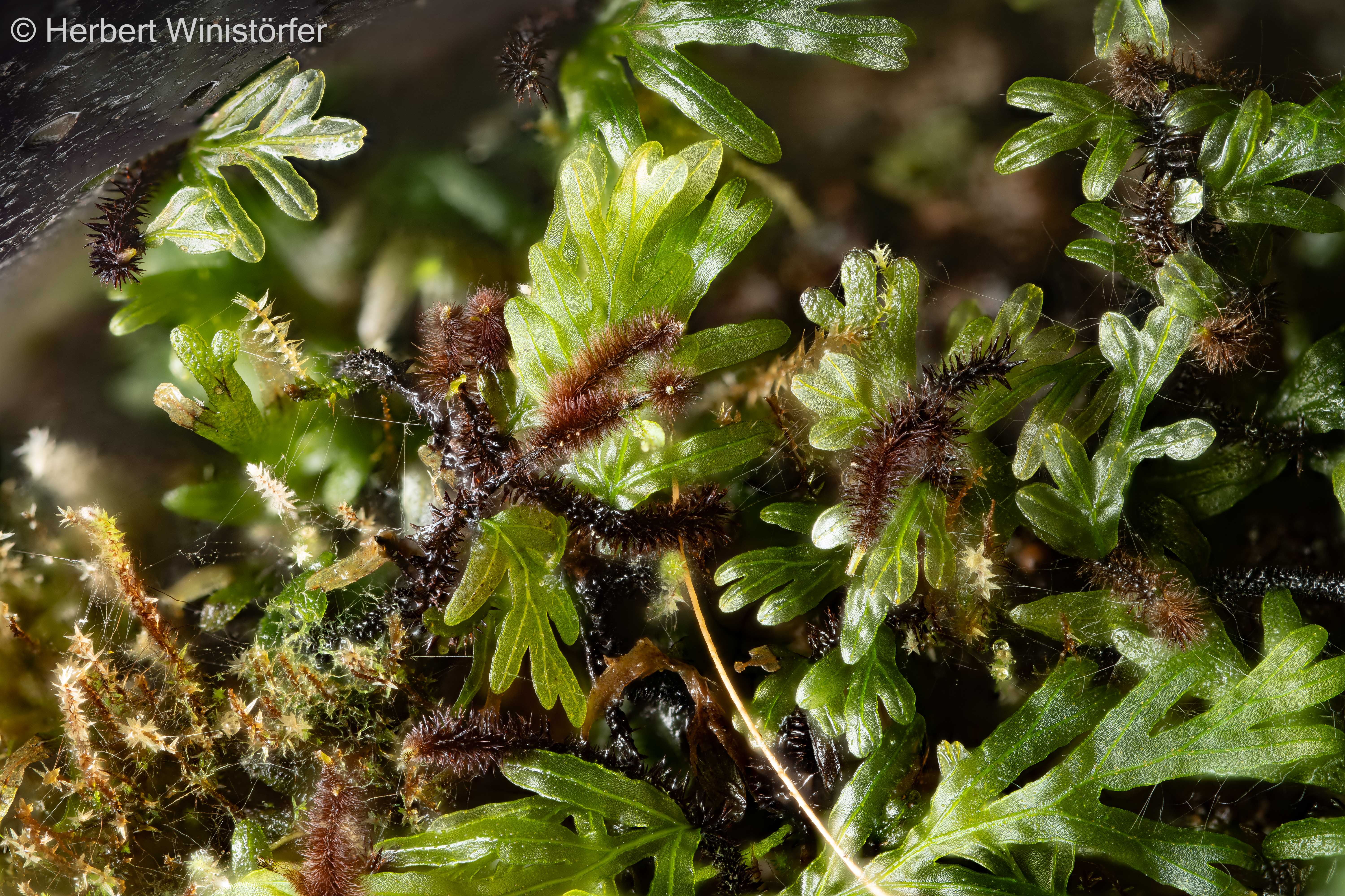
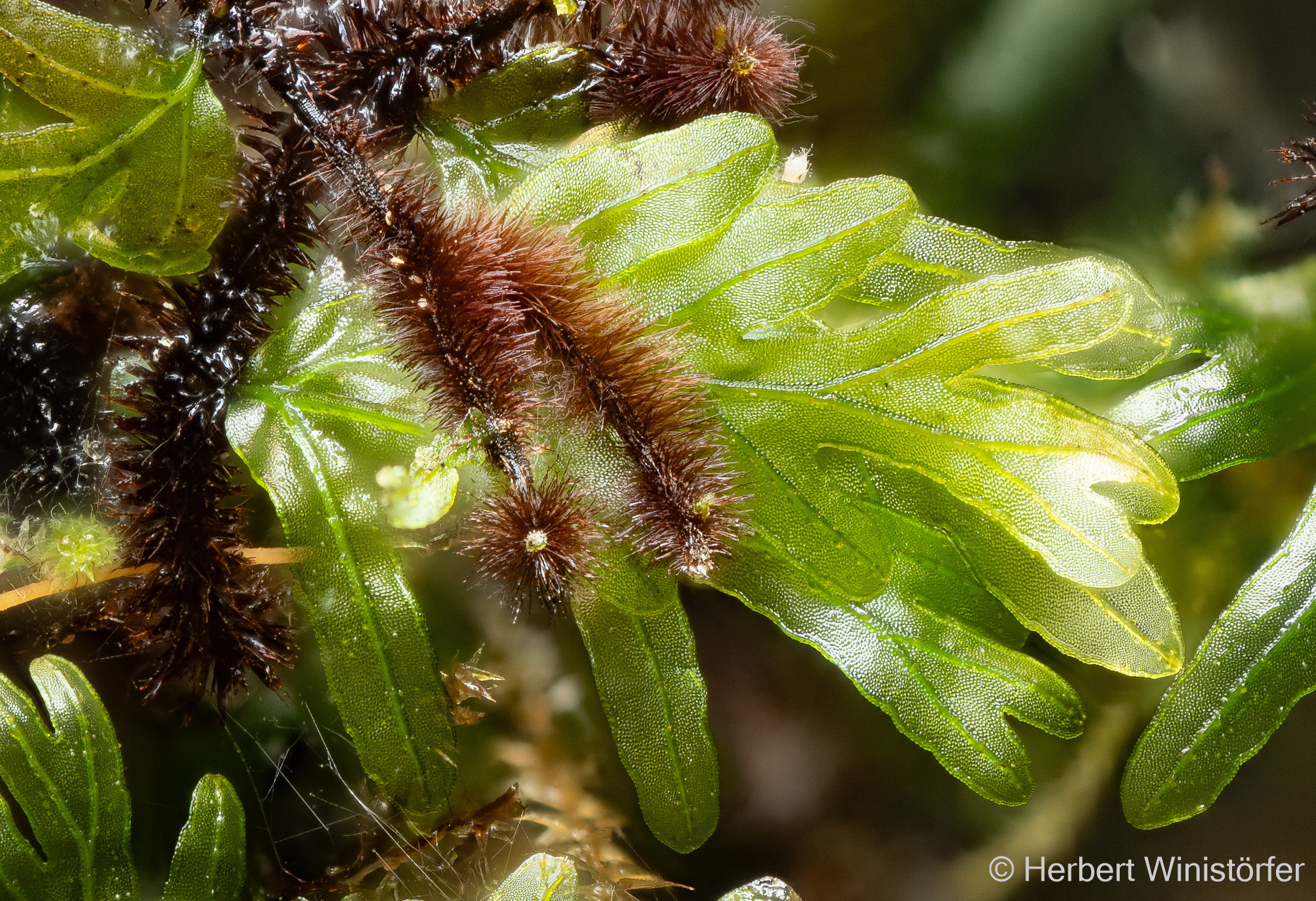
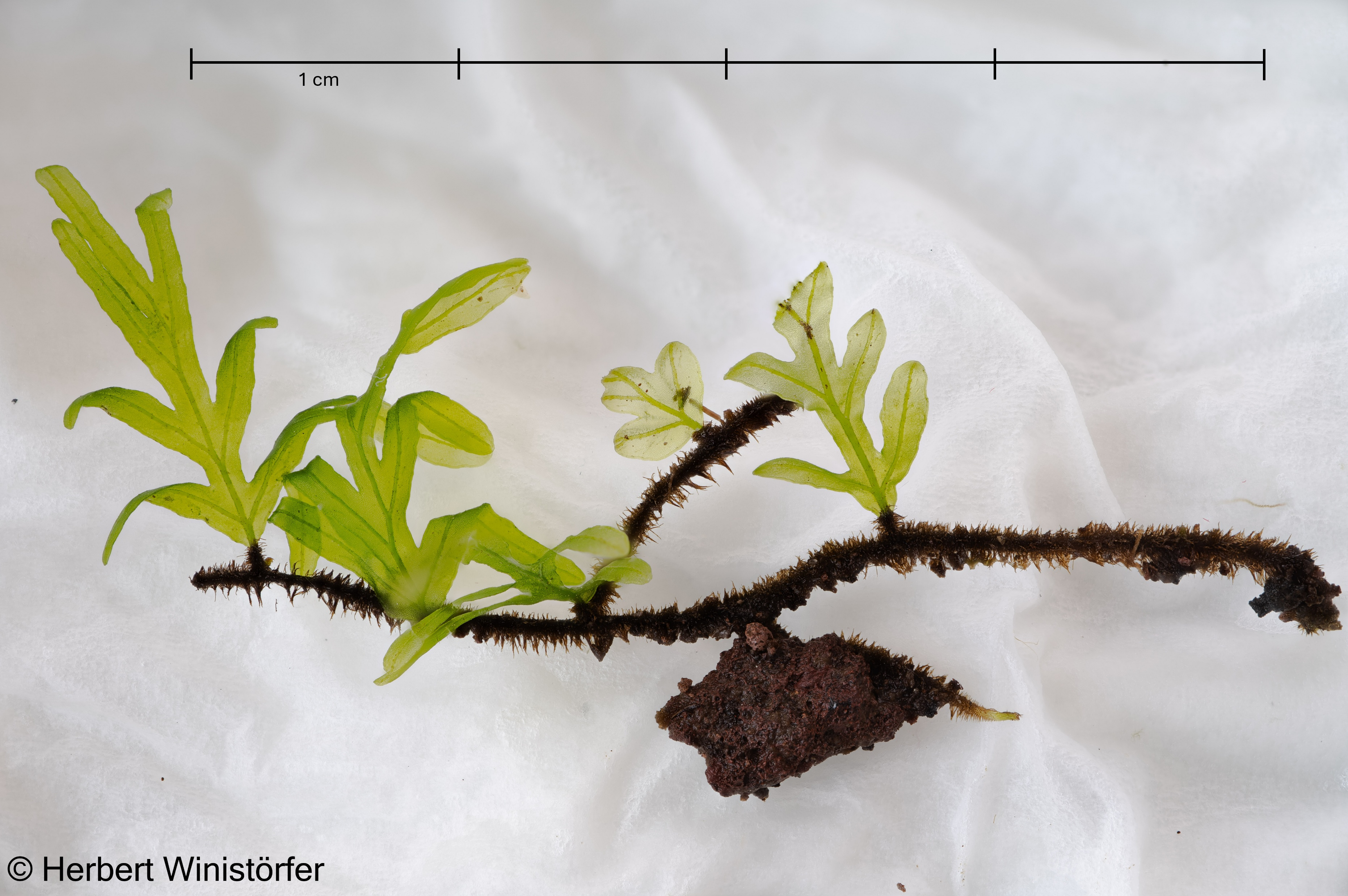
Phylogenetic analyses have shown that the family Hymenophyllaceae is divided into two clearly distinct clades. On the one hand, the hymenophylloid clade comprises solely the genus Hymenophyllum, with approximately 140 species. On the other hand, the trichomanoid clade comprises the genus Trichomanes, which, since a revision by Ebihara e.a. (2006), has been divided into the genera Abrodictyum, Callistopteris, Cephalomanes, Crepidomanes, Didymoglossum, Polyphlebium, Trichomanes and Vandenboschia, totalling approximately 160 species. For the less experienced observer, even distinguishing between the genera is difficult or impossible, particularly when no sexual reproductive organs are visible. A useful guideline is that plants with short-creeping or erect rhizomes without hairs or sparsely covered with light-coloured hairs point to the genus Hymenophyllum, whilst in the other case (a long, creeping rhizome with reddish to dark-coloured hairs) the specimen is likely to be a member of the trichomanoid clade (see the dichotomous key in Ebihara e.a. (2006: 225ff.). This is why I am confident that the filmy fern shown here belongs to this latter group of genera. I wouldn’t go any further with the identification now, especially as there is a possibility that the species has not yet been described and named.
Nevertheless, the rhizome, with its strikingly dense reddish-brown hair, is so distinctive that I hope to be able to make a more thorough identification on this basis at some point.

