Does it matter? Why I strive for reliable identification of the plants I use in my hermetospheres.
Is it important to know the correct names for plants to be used for hermetospheres? Not necessarily, if you limit yourself to a handful of plants that are well established and often used for this type of culture, such as Fittonia. If you want to experiment with plants that have not been tried and tested in this form of cultivation for long, correct identification can be helpful.
Before I use plants for the first time, I try to gather reliable information about its cultivation and its natural habitat. Both kinds of information can help to decide whether the plant is suitable for a closed terrarium or not. Take, for example, the altitude: If a plant’s natural habitat are low-lying tropical forests, the chances are good; if it only occurs at higher altitudes, it is less likely to thrive, because it is probably adapted to greater daily or seasonal temperature change. These are conditions that indoor cultivation in the hermetosphere usually cannot offer.
However, I can only obtain correct information with the correct name of the plant. If a plant has only been on the market for a few years, there is a high probability that it will be traded under fantasy names or even false scientific names. One plant genus for which this is particularly evident is Bucephalandra, Borneo endemics belonging to the Araceae family. Although many Bucephalandra are now grown by commercial nurseries, some even in vitro, false names are often in use. One reason is that some of the plants in cultivation have not yet been scientifically described and named. If this is the case, or if a proper identification has not been made yet, Bucephalandra sp. is the best choice. It means that the species-specific epithet is unknown.
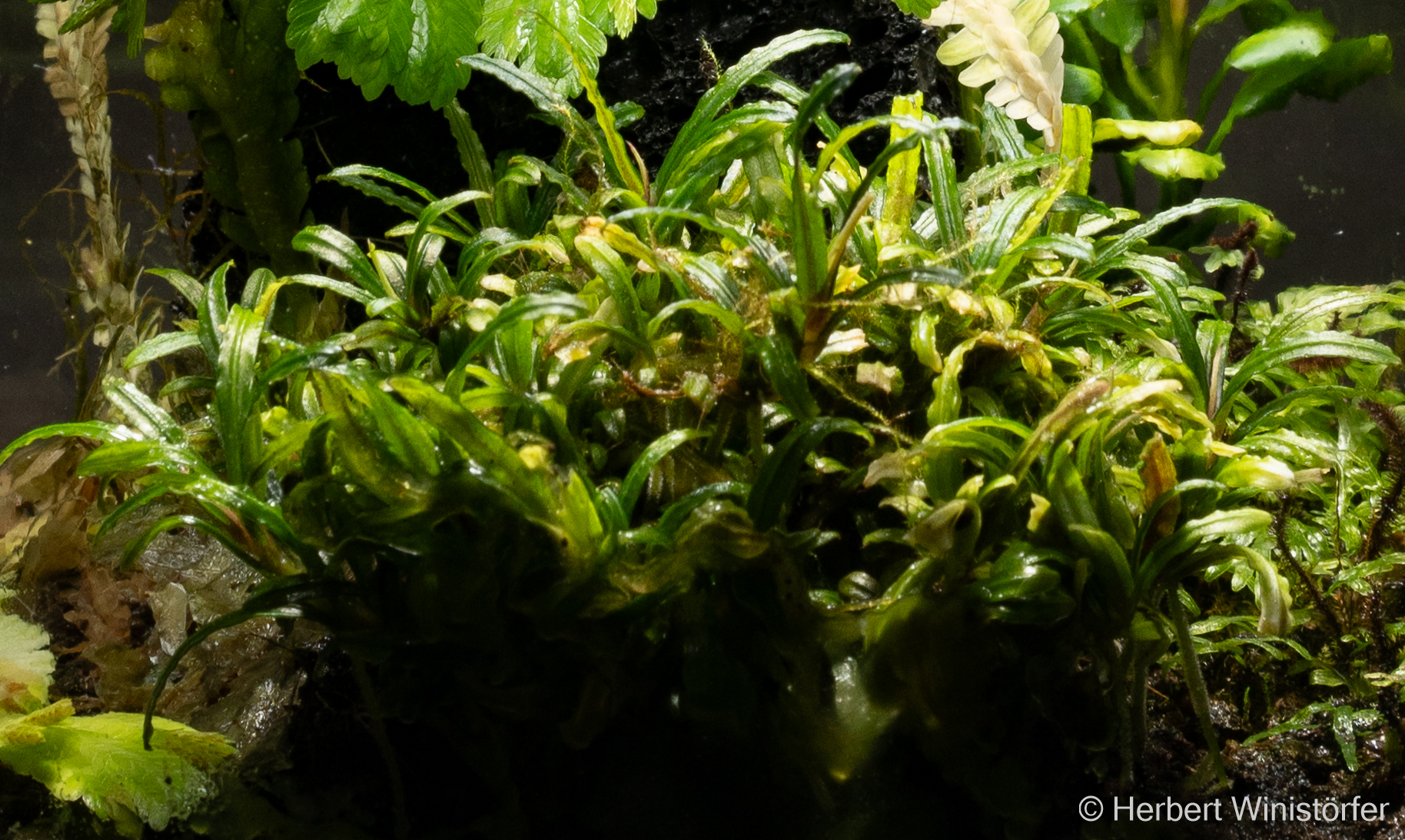
When I bought a small Bucephalandra offered under the name of Bucephalandra filiformis, I had not done my research properly before. Otherwise, I had realized that the plant in question could not be B. filiformis. This became obvious when I looked at the pictures and the description of the plant given in the original publication of the species (Wong and Boyce 2016). Among the Bucephalandra species already described and named, one came particularly close to what I observed with mine, and this was Bucephalandra belindae. Apart from the details of the inflorescence, which are essential for a reliable identification, the following characteristic features stand out: the small size, the strongly wavy (undulate) leaf margin and the stalk of the inflorescence (peduncle) with distinct red speckles and protruding far beyond the leaves. To be more confident on the identification, I cut off one of the inflorescences, removed the spathe with a scalpel and so exposed the spadix with male (staminate) and female (pistillate) flowers and compared it with the respective picture in the original publication (Wong and Boyce 2014, p. 156, fig. 3G). I think the two pictures look quite similar. If you like, make up your own mind based on the two pictures below (for the basics on Aroid inflorescences see this previous post). As someone who is far from being an expert on Araceae, I am not qualified to make a definitive judgment. That is why I am calling my plant Bucephalandra cf. belindae for the time being. The addition cf. refers to the Latin word “conferre”, which means “to bring together” or “compare with” and is used when an identification is uncertain.
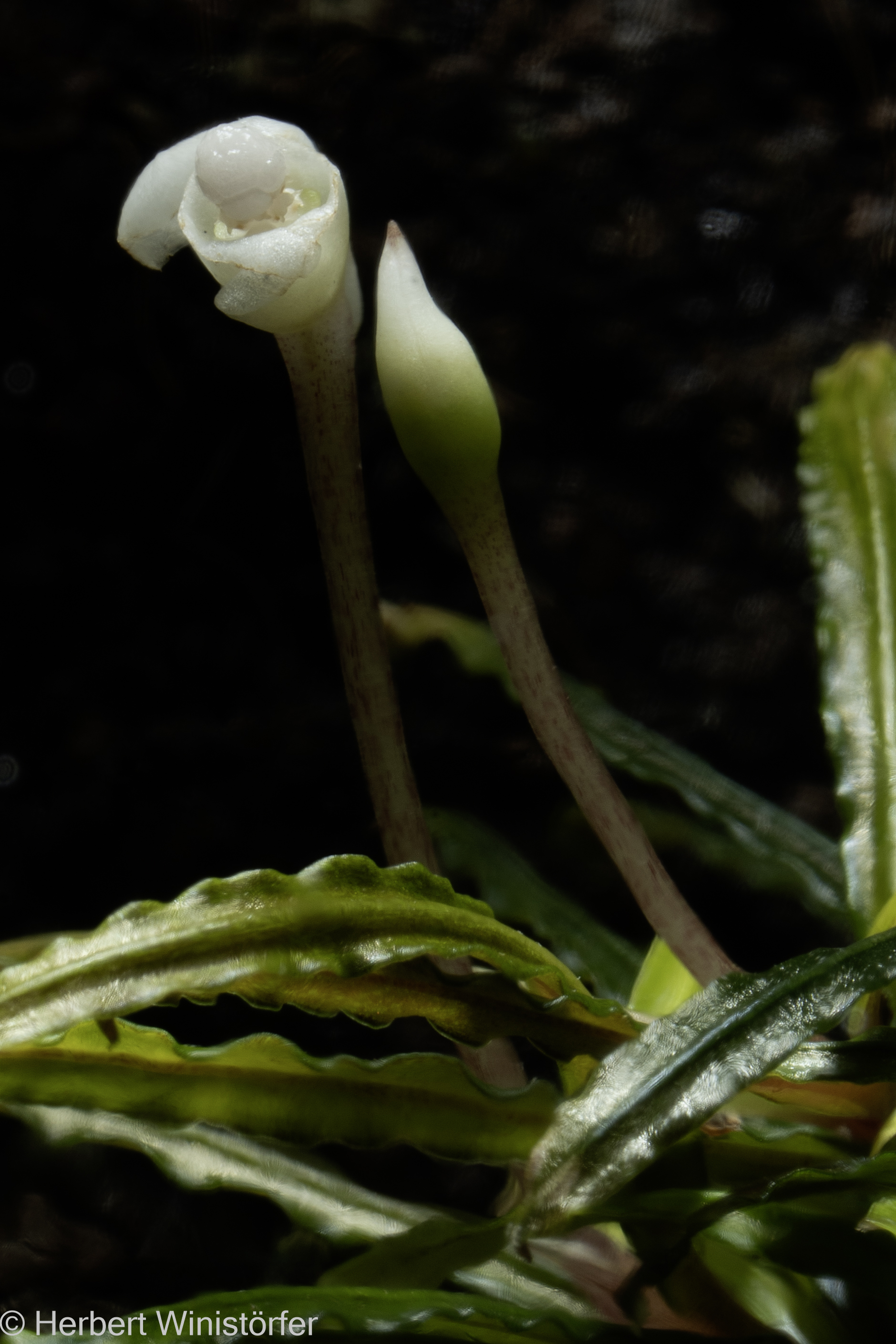
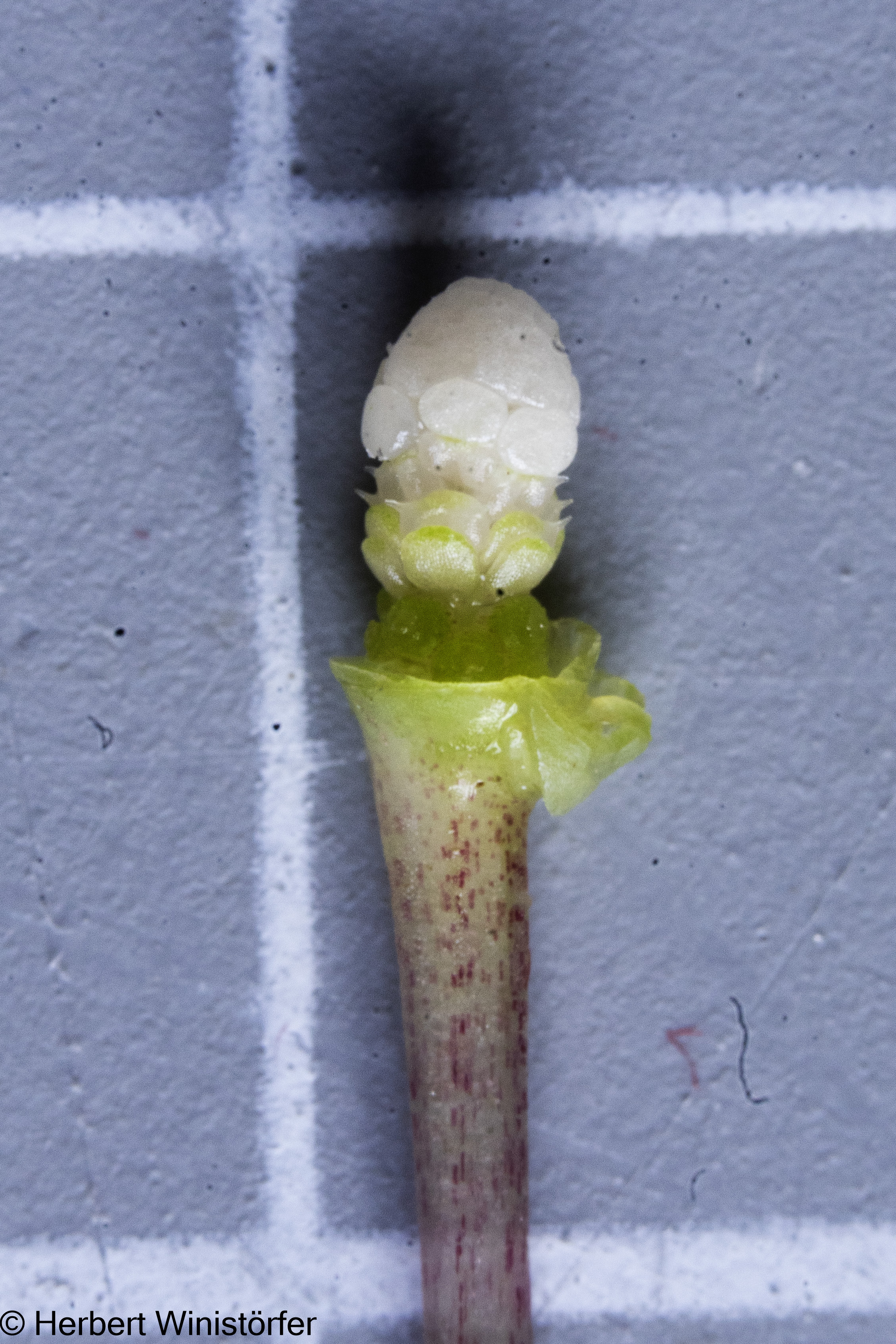
Does the identification – assuming it is correct – help for the cultivation of the species in the hermetosphere? Reliable information on the natural habitat of B. belindae can be found in the original article by Wong and Boyce (2014: 157): “Ecology — Bucephalandra belindae occurs solely on granite cascades with constant flowing water under perhumid lower hill to hill forest, recorded between 260 – 350 m above sea level. Distribution — Known only from the type locality, where it is restricted to a single cascade a little more than 100 m long.” If solid information on cultivation is lacking, it is usually a good idea to imitate the natural habitat of a plant as closely as possible.
B. belindae‘s habitat on granite cascades tells me that my substrate does not (as some sources suggest) have to be limestone-enriched; granite soils tend to be slightly acidic, while limestone soils are alkaline. Permanent humidity is certainly given in the closed container. Flowing water, however, not. The best I can offer is a stony substrate with stagnant water, and a place that allows the roots to be covered with water and the shoots to rise above the water line. The history of cultivation of Bucephalandra has long shown that most species can grow without flowing water. Why then is their occurrence in the wild almost entirely restricted to habitats in or close to regularly or permanently flooded riverbeds? We can assume that all neighbouring ecological niches are occupied by plants that have a competitive advantage there and will suppress Bucephalandra offshoots or seedlings should they reach such places. On the other hand, most plants are swept away by the currents in the very places where the Bucephalandra, as a rheophyte, clings on with its specialized roots. In the hermetosphere, I can reduce competition for my Bucephalandra by careful selection and placement of other plants.
As the picture below shows, my first choice was to place the Bucephalandra at the bottom of the container, on lava substrate, close to the water line. The companion plants included Cosmianthemum sp., Sonerila sp. and Selginella brooksii. All of them – maybe except the Selaginella – I considered then having a small tendency to agressively spread and overgrow other plants. In addition, I placed them one level above the Bucephalandra in the expectation that they would not spread downwards.
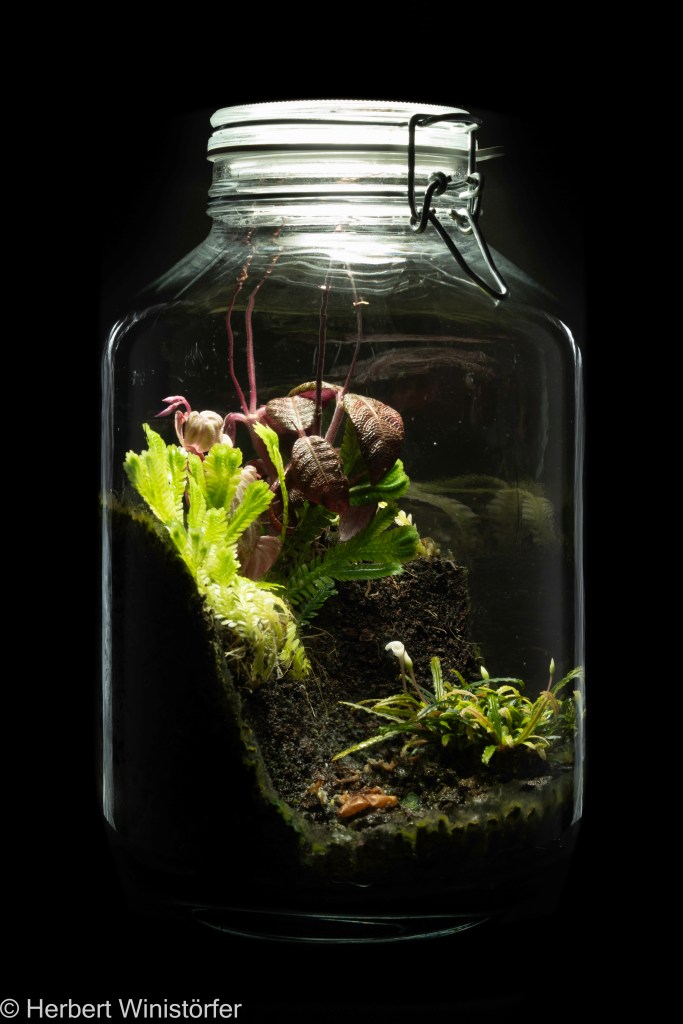
For the first months, this initial setup seemed to be working. Bucephalandra has spread considerably in its position and was not threatened by the other plants. The two pictures below show its development during the initial seven months.
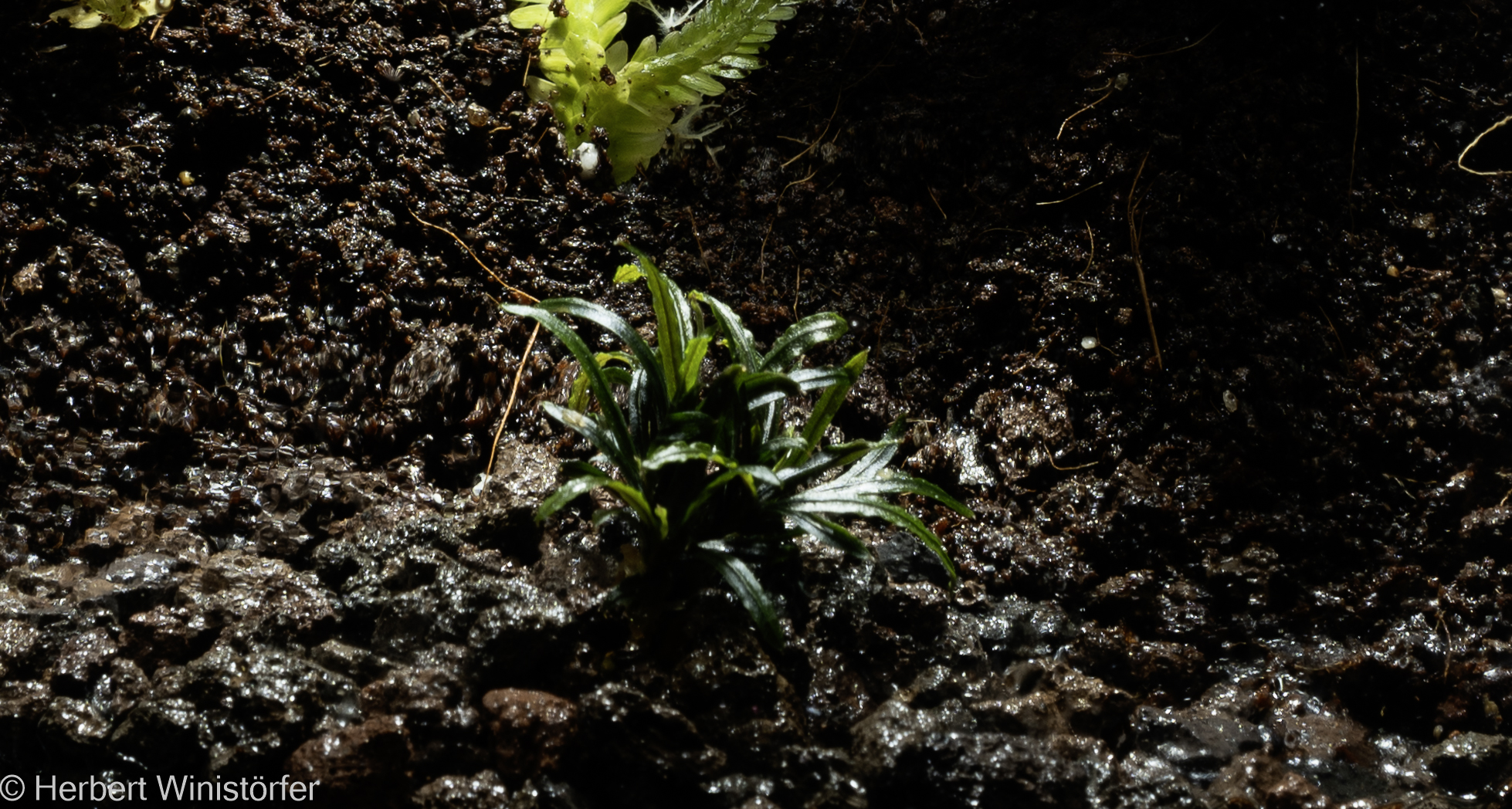
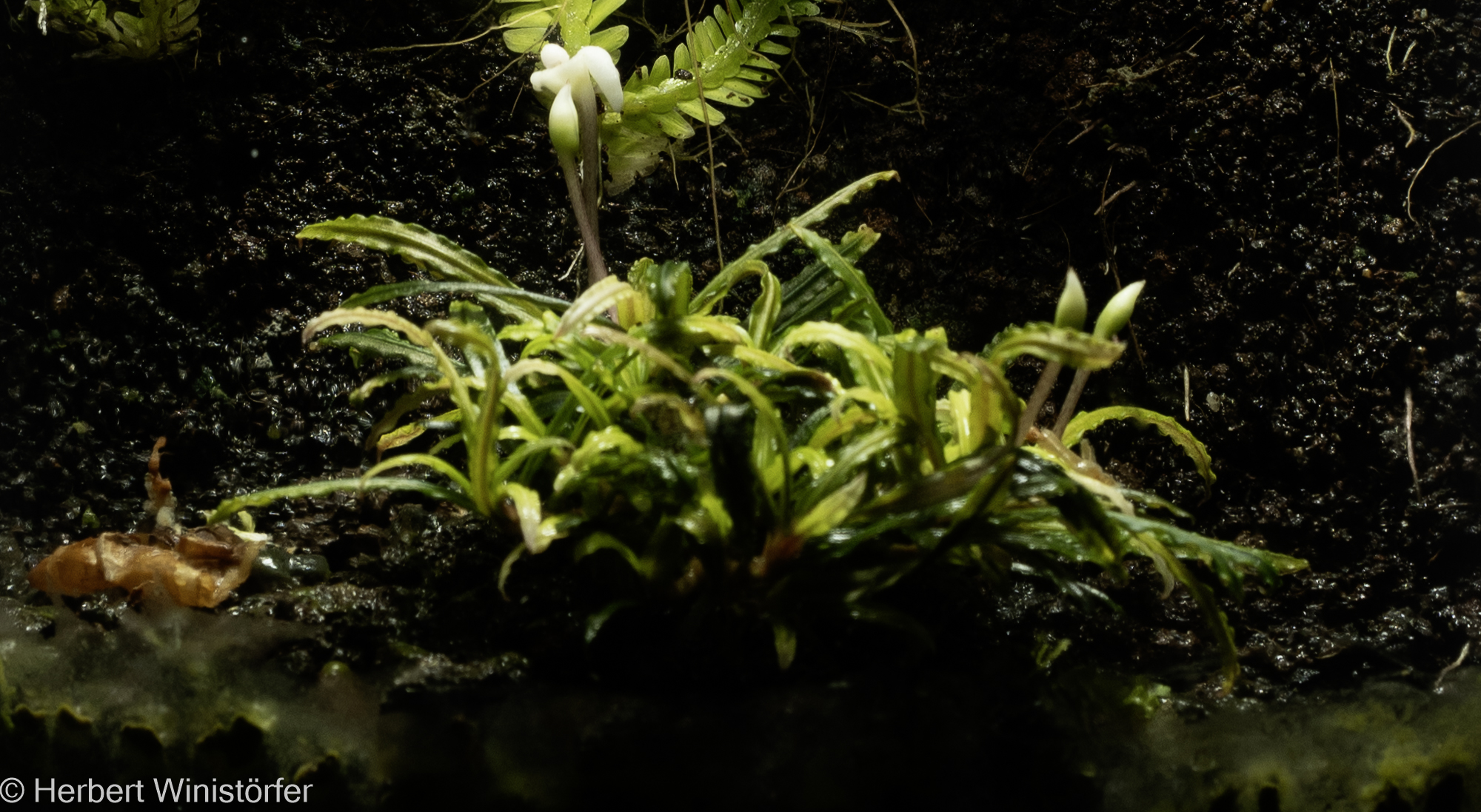
In the long run, however, the original setup showed its weaknesses: the slope took too much space within the container leaving not enough for plants to grow, the Selaginella crowded out all other plants placed on top of the slope and Bucephalandra cf. belindae began to decline with its roots in stagnant water. So, I saved the healthy plants in time and built a new container with another setup: No slope, far less substrate, no stagnant water, a single lava rock in the center to separate the plants from each other (see the picture below).
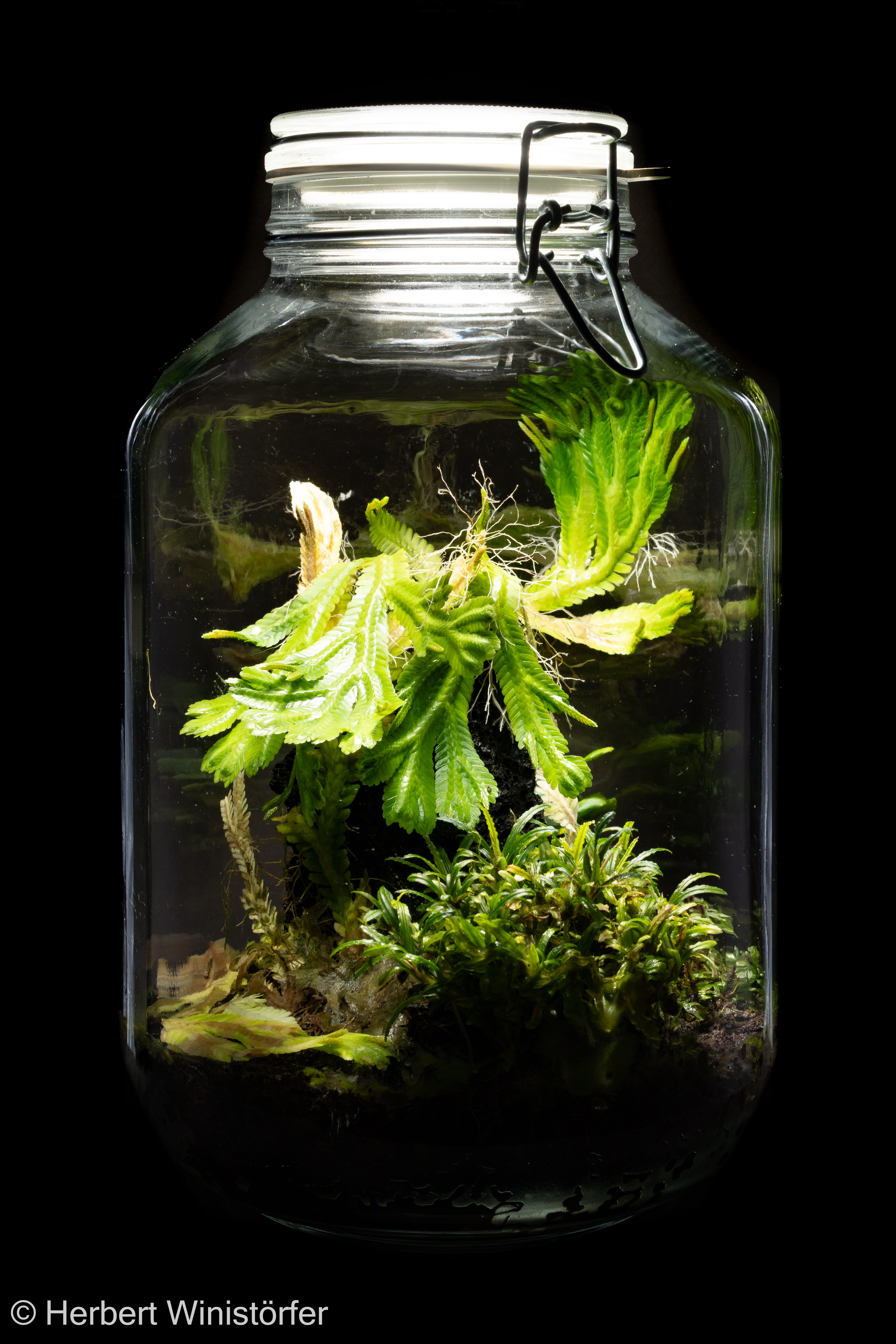
After more than a year, I can say that the new setup seems to be working much better: Bucephalandra cf. belindae has recovered nicely, and I look forward to discovering new inflorescences.