-

A precious, lichen-like Begonia
Read more: A precious, lichen-like BegoniaIn 2017, Lin and colleagues described Begonia lichenora as a species new to science. The species is “Distributed in Sarawak, Borneo; known only from Bau to Padawan areas that are at border with West Kalimantan Province of Indonesia. Plants usually climb up the steep, slightly shaded soil slopes in wet dipterocarp forest, elevation ca. 100…
-
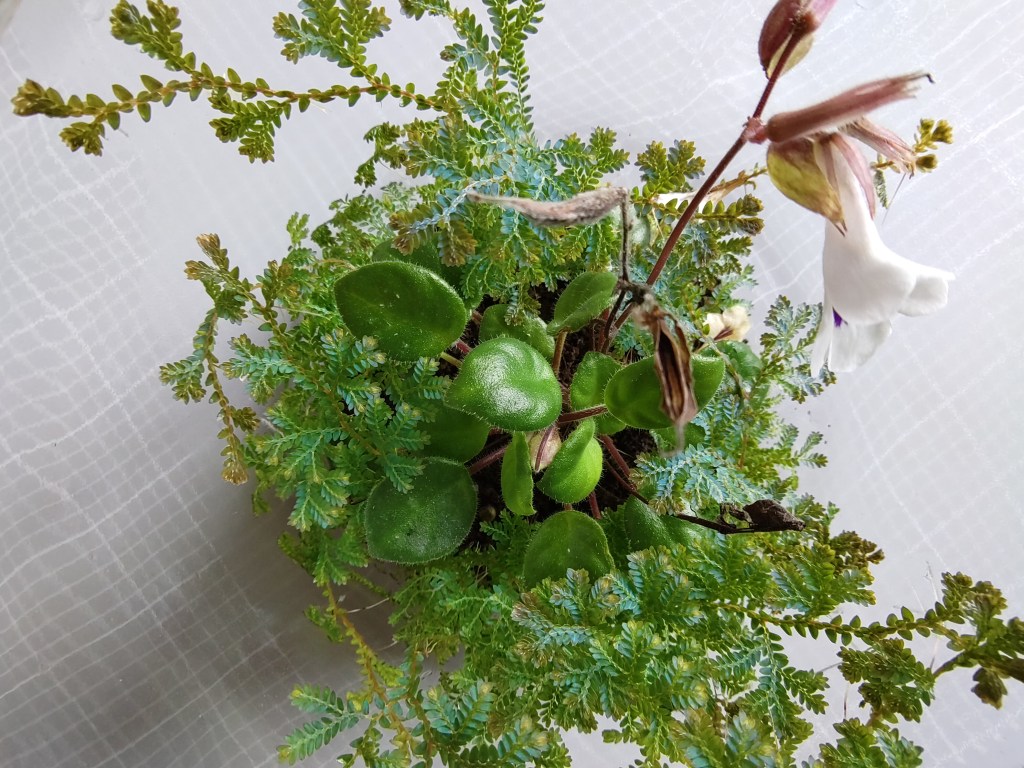
Root or shoot?
Read more: Root or shoot?A primeval plant that grows easily in hermetospheres provides insights into the early history of plant development. Initially I had Selaginella uncinata, a spikemoss, growing in a 1 litre jar for a few weeks as a trial. That is how I found that the plant thrives under hermetosphere conditions and spreads quickly (see picture below).…
-
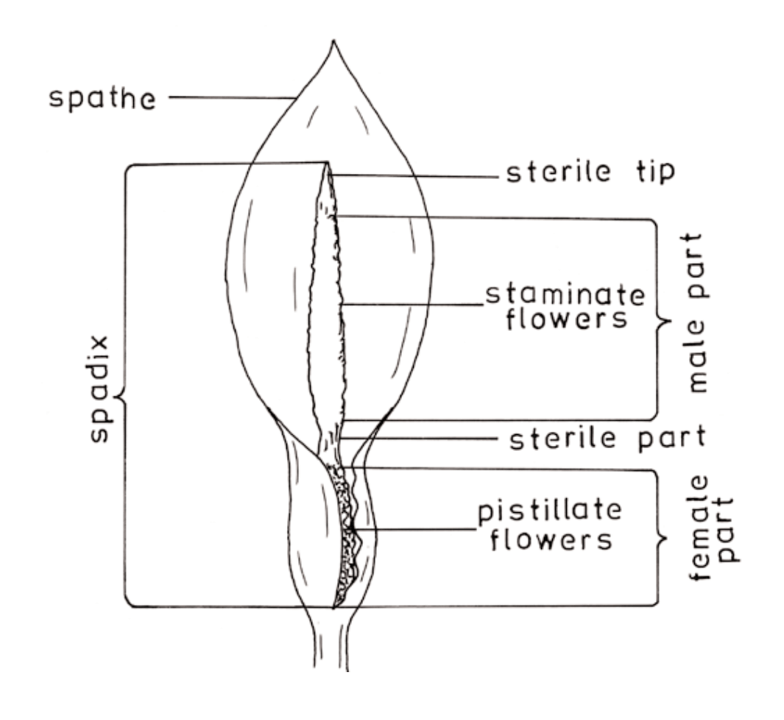
Tiny flies find tiny flowers
Read more: Tiny flies find tiny flowersAt first glance, the flowers of aroids (family Araceae) appear much less spectacular than those of other plants. Aroids are therefore loved by plant enthusiasts far more for their foliage than for their flowers. On closer inspection, however, the flowers offer amazing insights. While tropical aroids have been popular as indoor, terrarium or aquarium plants…
-

Plant, ant-plant and ant
Read more: Plant, ant-plant and antIn their natural habitat, the melastoma family plant Pachycentria glauca often grow as epiphythes on ant-plants like Hydnophytum and Dischidia (which themselves usually grow epiphytically). Plants that live in a mutualistic association with a colony of ants are called myrmecophytes. Two morphological features of P. glauca are important for this plant-ant interaction: miniature pearl bodies…
-

Succeeding generations (1): Biophytum sensitivum
Read more: Succeeding generations (1): Biophytum sensitivumThe title of his article can be understood in two ways. If you have read my [About], you know that my goal in dealing with hermetospheres is to design miniature systems in which each plant reproduces over several generations. With this post, I begin a series of successful examples of second or third generation plants…
-
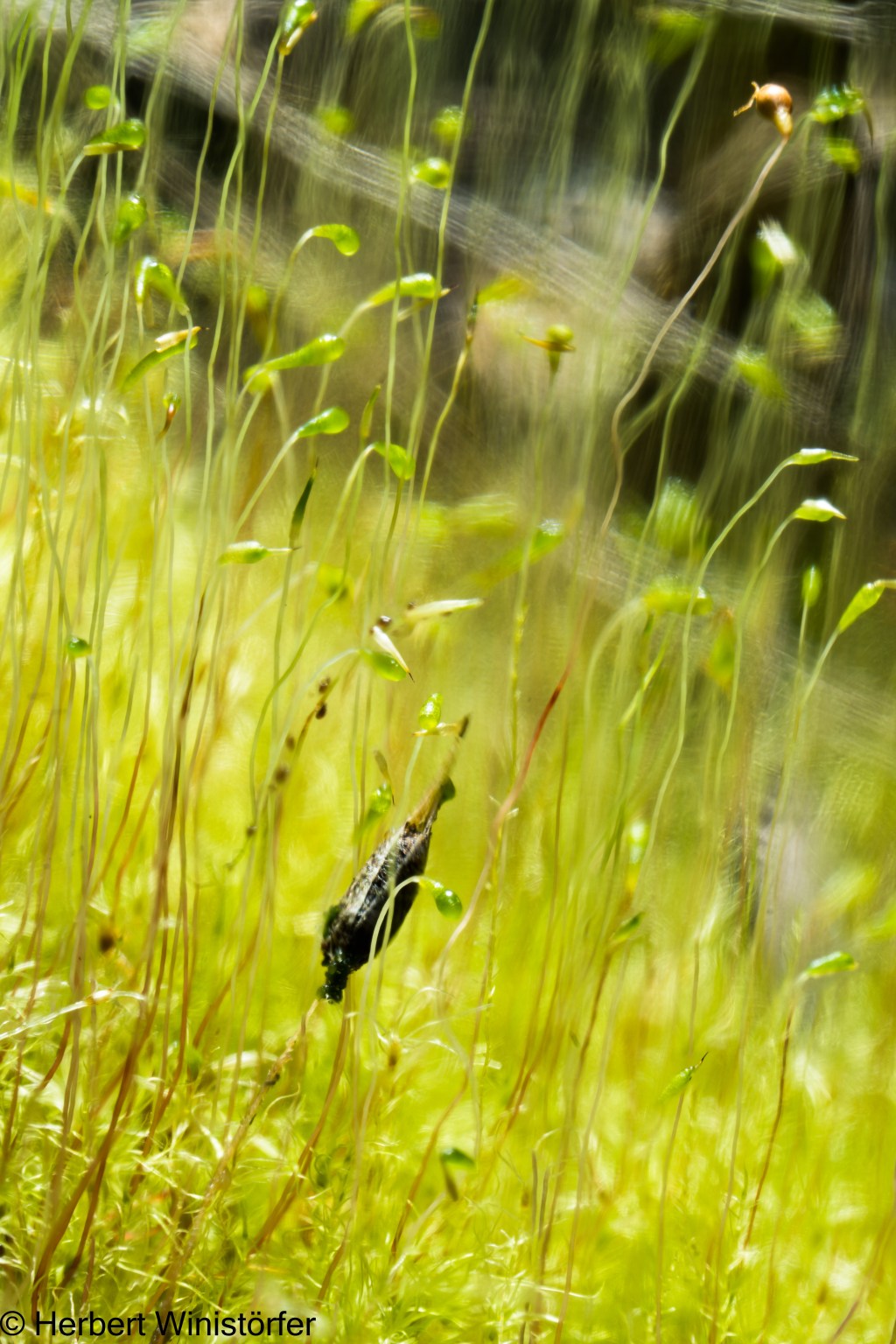
A tiny cosmopolitan
Read more: A tiny cosmopolitanWhen I started with hermetospheres, mosses were not my first priority. They sometimes came as a stowaway with other plants, and I usually let them grow. They did not trouble and formed a welcome ground cover. Moss first caught my attention when spore capsules developed on long, thin stems in my very first hermetosphere jar.…
-
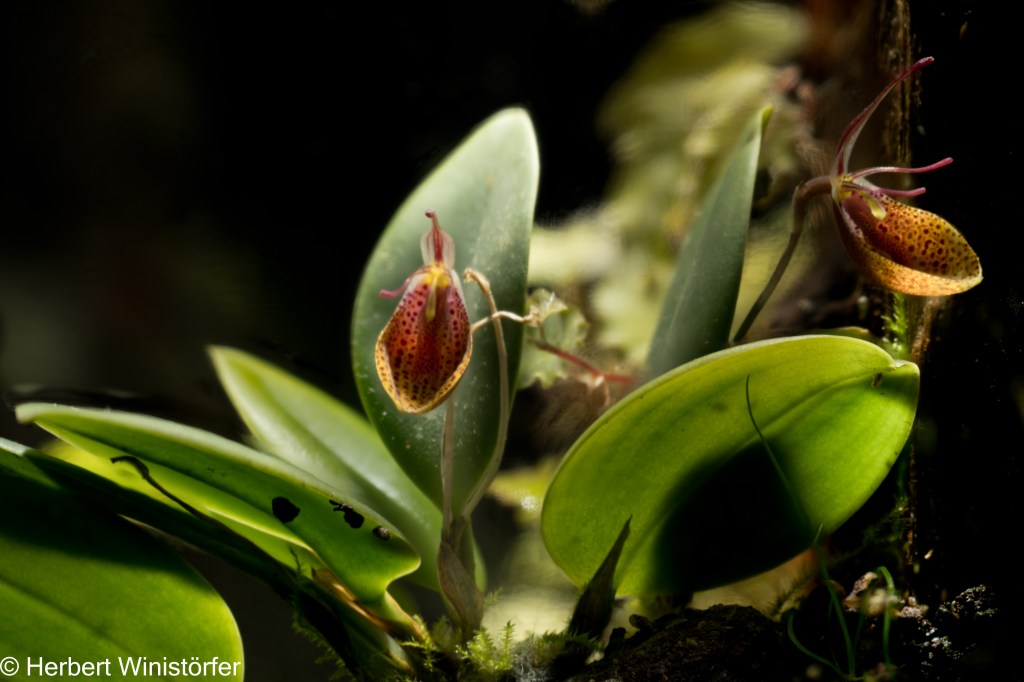
A mysterious orchid with boat-shaped flowers
Read more: A mysterious orchid with boat-shaped flowersVery little is known about the orchid Restepia cymbula. According to C.A. Luer (1996), who described the species in the Icones Pleurothallidarium, its presumptive discoverer was Mario Portilla, later co-founder of the famous nursery Ecuagenera Cia. Ltda. Luer writes: “This little species without collection data was obtained in 1992 by Colomborquideas Ltd. above Medellin, Colombia,…
-
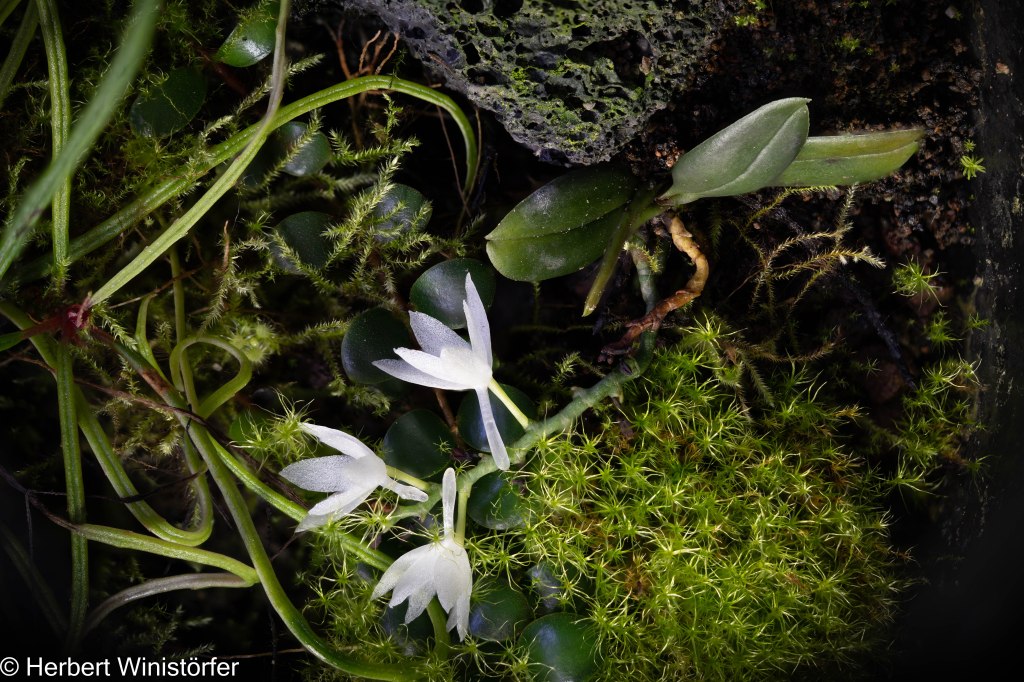
A vulnerable orchid
Read more: A vulnerable orchidAerangis hyaloides is popular with orchid collectors for its lush, brilliant white flowers. For me, this was also one of the reasons to choose it for my Madagascar container. Other reasons were its small size, its supposedly undemanding cultivation and its suitable temperature, humidity and light preferences as an understory species of lowland forests. My…
-

In honour of João Barbosa Rodrigues
Read more: In honour of João Barbosa RodriguesIt is the first orchid I ever planted in a hermetosphere, and the fragile beauty of its flowers strikes me again every time. Initially it was planted on one side of the substrate with a small portion of its creeping rhizome. It has since worked its way across the entire diameter of the glass to…
-

What makes a flower attractive?
Read more: What makes a flower attractive?Tillandsia ionantha has been popular as an ornamental plant since it arrived in the greenhouses of Belgian horticulturist Louis Van Houtte (1810-1876). This is where Jules Émile Planchon (1823-1888) found the specimen he used for his botanical description of the new species (Planchon 1855). As currently circumscribed, T ionantha is widely distributed in Mexico and…
-
Subscribe
Subscribed
Already have a WordPress.com account? Log in now.
 Hermetospheres