-
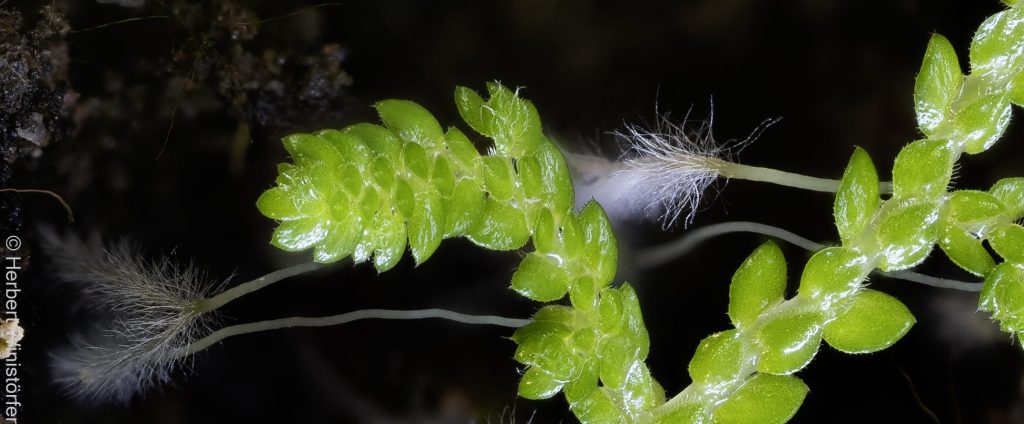
Two great naturalists and a miniature plant
Read more: Two great naturalists and a miniature plantIt is hard to imagine a plant more inconspicuous than Selaginella microphylla: tiny leaves on a uniform, branched shoot, monochromatic green, without flowers. Nevertheless, it was collected in 1801 or 1802 during an expedition through the rough wilderness of the northern Andes, carefully labelled, preserved, transported to the Pacific coast and shipped to Europe together…
-
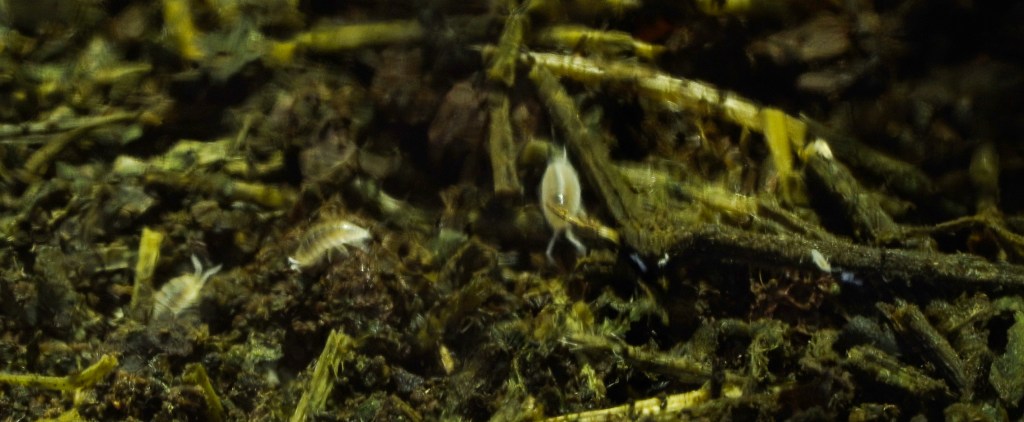
Nutrient recycling
Read more: Nutrient recyclingIn a previous post, I explained why I minimize the nutrient content in my hermetospheres and how I calculate how many nutrients I add to my substrate to start with. Even though nutrients are meant to be scarce, it can happen that a plant grows too tall or too wide for the container. The reasons…
-
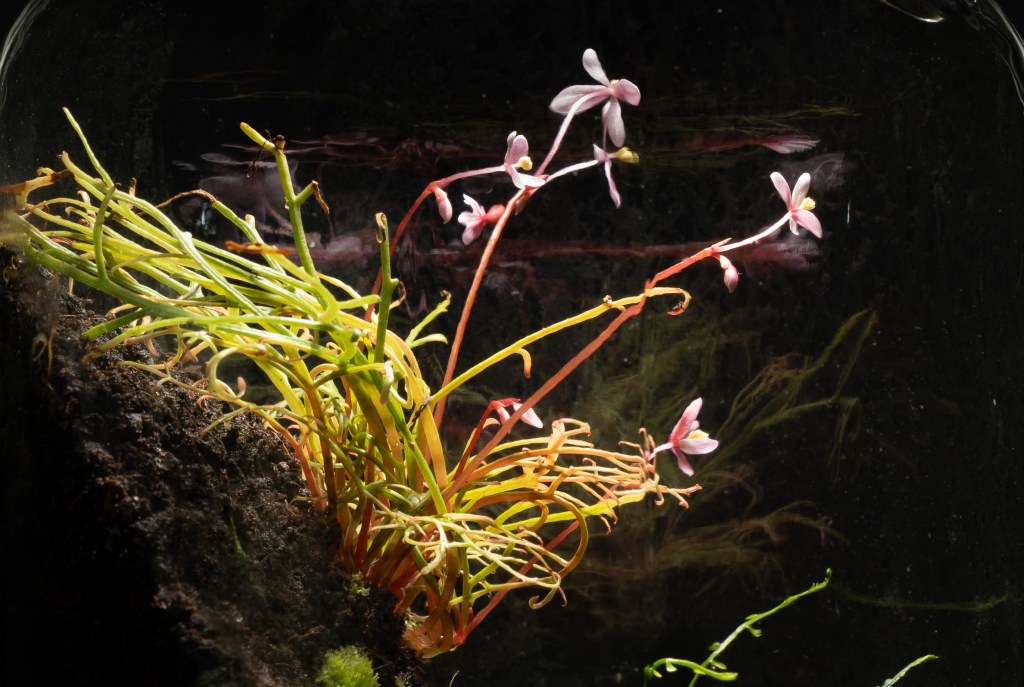
Succeeding generations (2): Begonia pteridoides
Read more: Succeeding generations (2): Begonia pteridoidesWhen plants produce second and third generations is one of my best rewards when working with hermetospheres. Plants have several ways to do this, e.g. seeds or runners, and not always it is quite clear when a next generation actually begins. In the case of Begonia pteridoides shown here, the situation should be unambiguous.
-
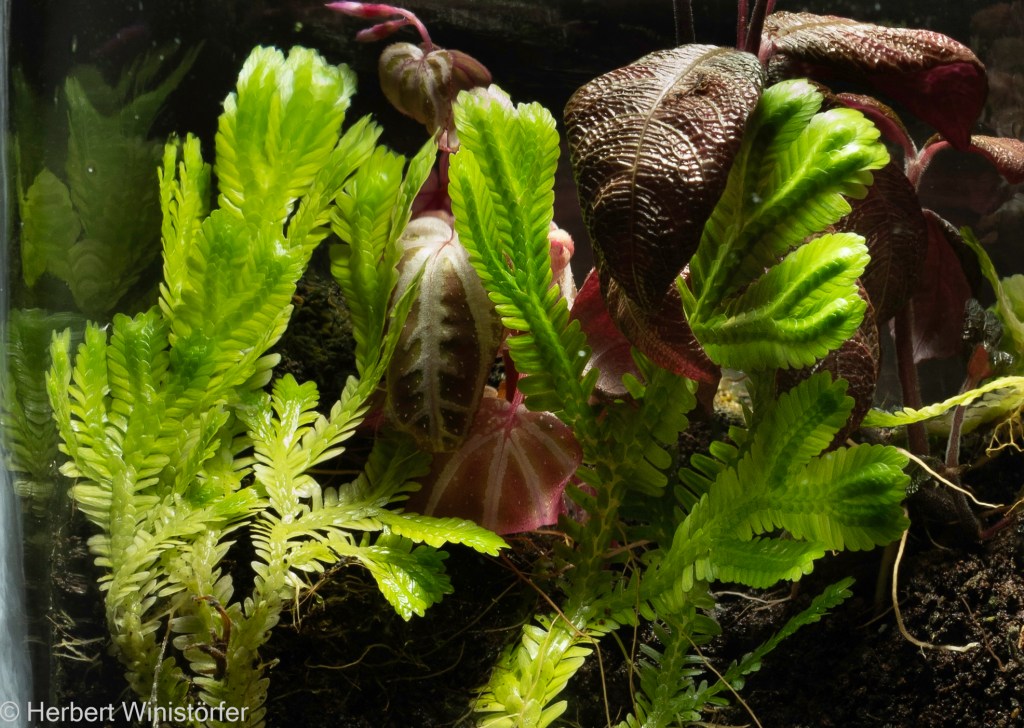
Brooks’ Selaginella: Plant knowledge as a by-product of colonial politics
Read more: Brooks’ Selaginella: Plant knowledge as a by-product of colonial politicsThe history of the discovery and first description of Selaginella brooksii is, as is often the case with tropical plants, also a history of colonial activities by European states. The story of S. brooksii is far from unique, but it is exemplary and therefore worth telling here.
-
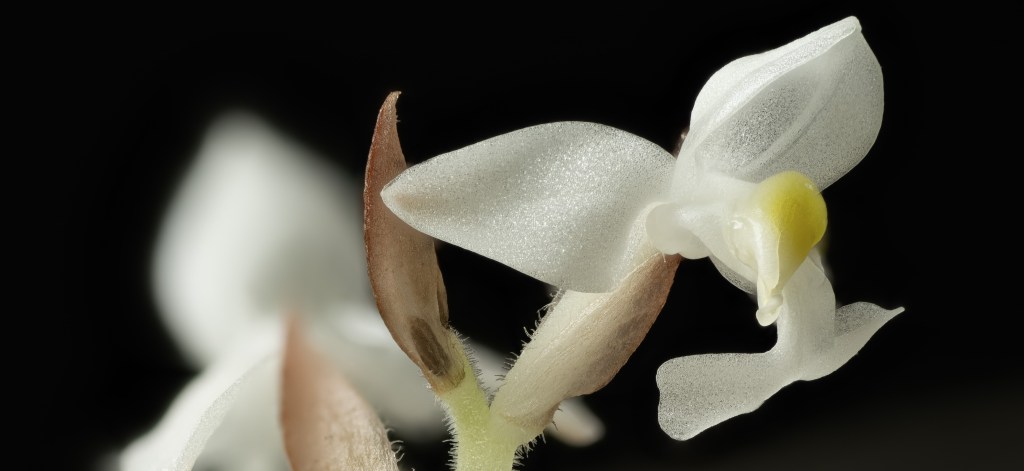
The orchid flower that lost its symmetry
Read more: The orchid flower that lost its symmetryThe ‘jewel orchid’ Ludisia discolor is common in culture, and reports from fellow hermetosphere enthusiasts as well as the description of the orchid’s natural habitat made me confident that it would also thrive in the closed container. My experience so far has proved me right. Jewel orchids are cultivateed mainly for their patterned leaves and…
-

An island Gesneria and Baker’s law
Read more: An island Gesneria and Baker’s lawAutonomous self-fertilisation, i.e. the ability to produce viable seeds in the absence of partners and pollinators, offers plants various advantages. In nature it can help to colonize distant islands, in the hermetosphere it can help to survive over several generations. The example of Gesneria cuneifolia is discussed.
-
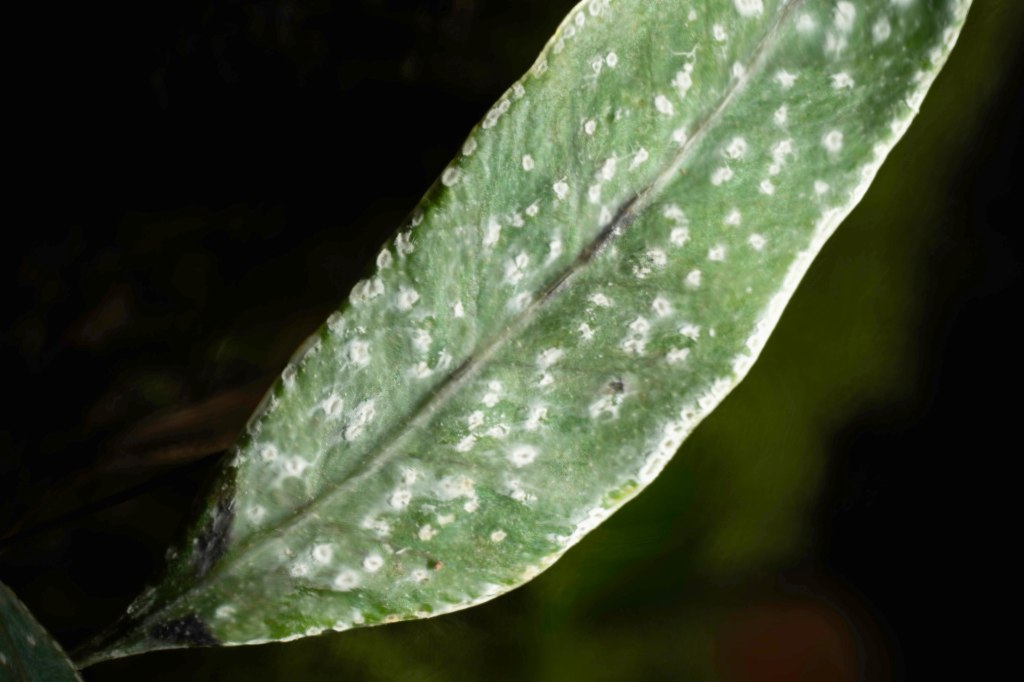
A fern with conspicuous white spots
Read more: A fern with conspicuous white spotsWhy does my fern Selliguea albidosquamata show a large number of white dots on the margins and upper side of the leaf blades? Some research revealed a likely explanation.
-
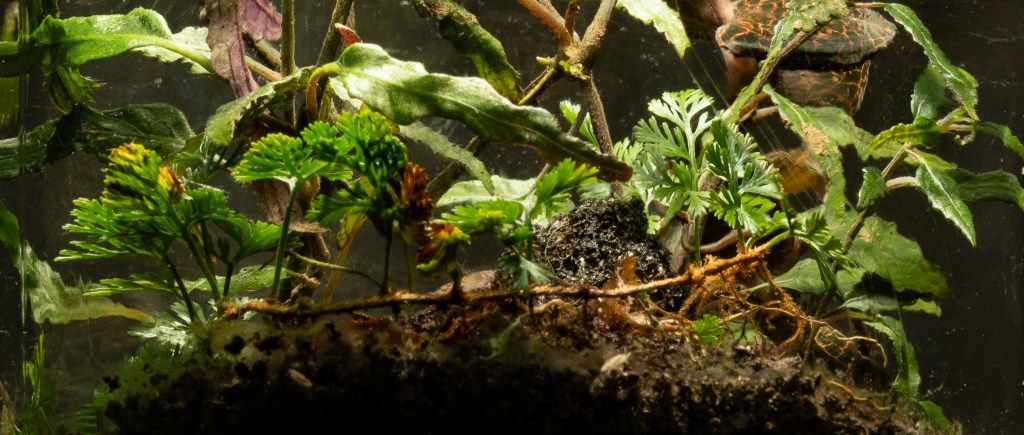
The perfect fern
Read more: The perfect fernThis creeping fern, most likely Davallia parvula, meets all the criteria for a perfect hermetosphere plant: small size, slow growth, robustness and delicate beauty.
-
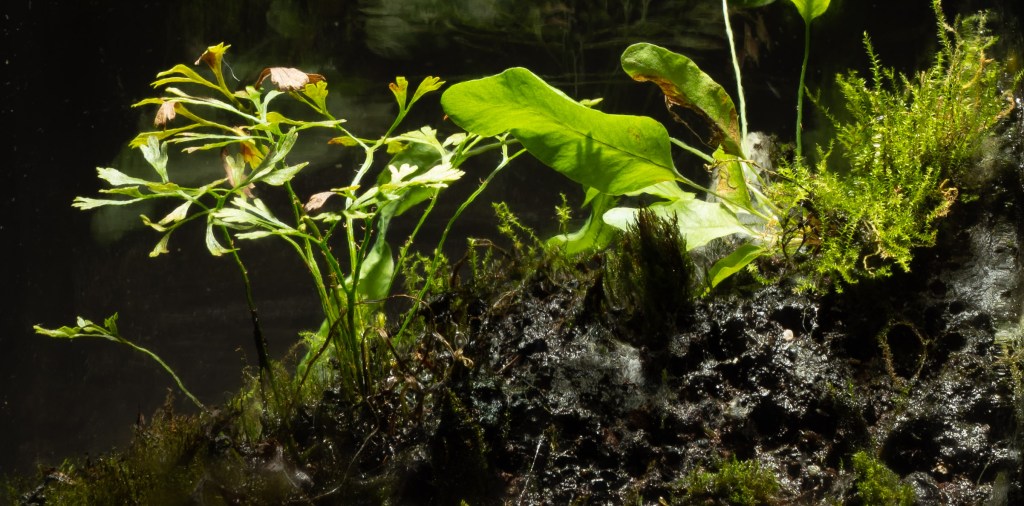
Death and the hitchhiker fern
Read more: Death and the hitchhiker fernSometimes, when things look bad, it pays to simply wait and see if things change for the better. I have already described an experience of this kind (Death and resurrection). There is a similar story to tell today. A 5l container inspired by the flora of Costa Rica was set up on April 2023 with…
-
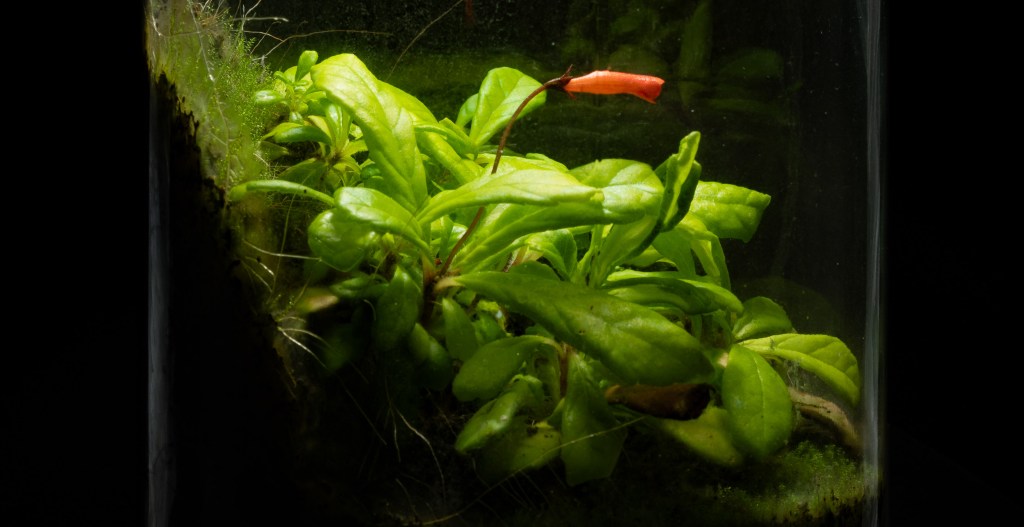
Follow-up: Gesneria cuneifolia
Read more: Follow-up: Gesneria cuneifoliaAlmost six months ago, I reported first experiences with seed-grown Gesneria cuneifolia. Now, with first flowers appearing, it is time for a follow-up.
-
Subscribe
Subscribed
Already have a WordPress.com account? Log in now.
 Hermetospheres