This creeping fern, most likely Davallia parvula, meets all the criteria for a perfect hermetosphere plant: small size, slow growth, robustness and delicate beauty. The rhizome is covered with red brown scales, the lamina between 0.5 and 3.5 cm long, triangle-shaped (deltoide) and multiple pinnate (Nooteboom 1994: 189). Sori and spores appear at the axils of pinnae, otherwise the fertile fronds look similar to the sterile ones (see the drawing at the bottom of the page). So far I have not been able to observe any fertile fronds in my containers.
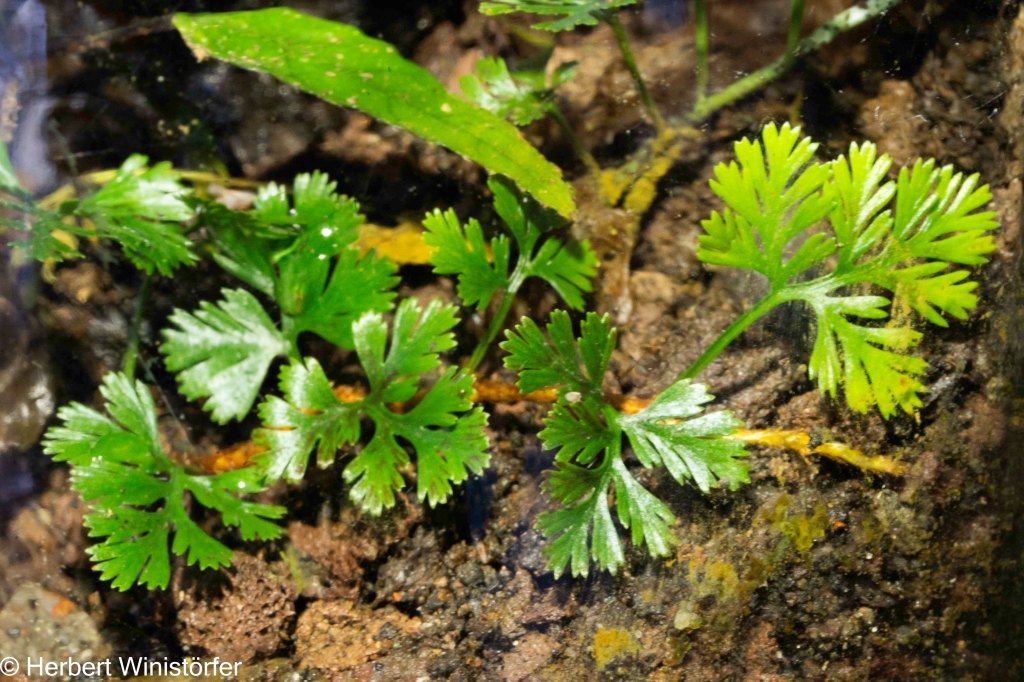
The two pictures below show the development of D. parvula during a period of 14 months. Starting with two short pieces of rhizome with 4-7 fronds, the fern has made its way across the substrate during this time.
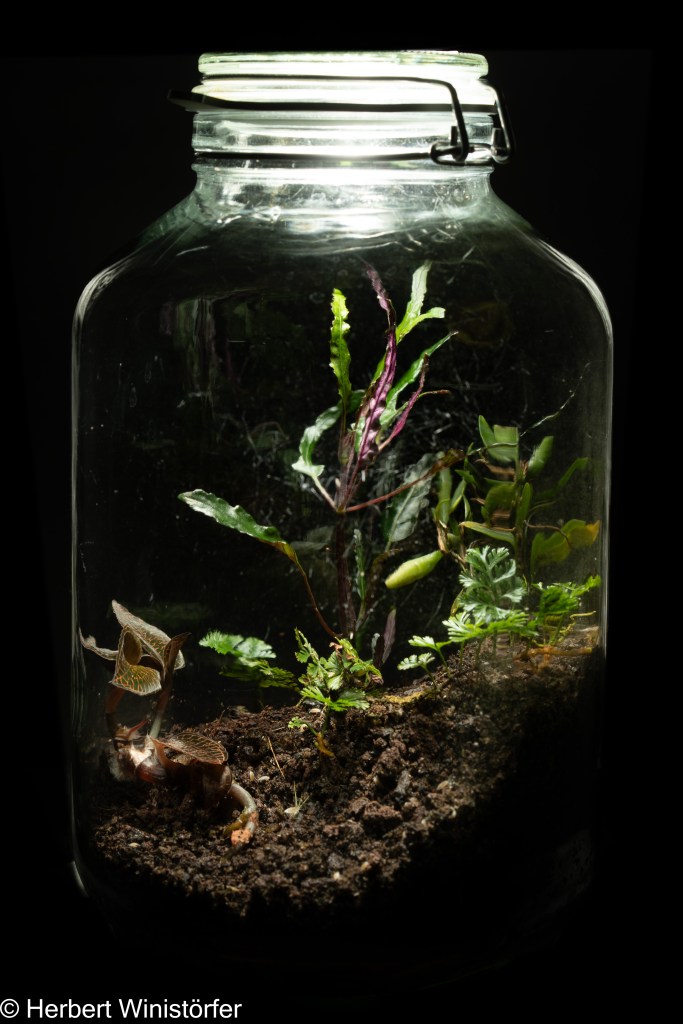
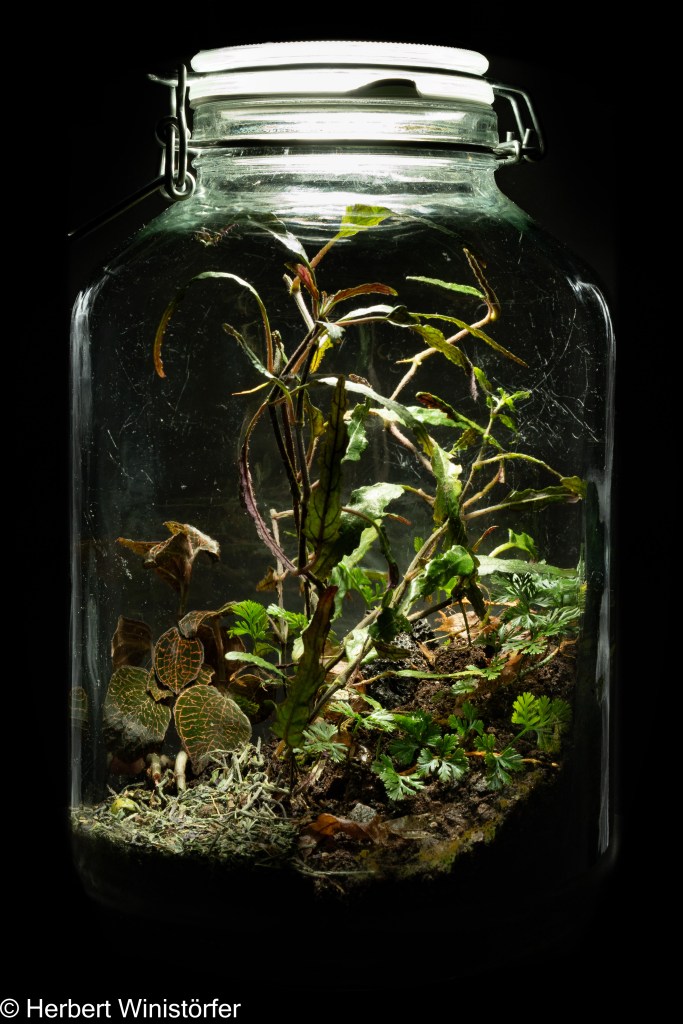
The following video offers a 360° view of a container in which D. parvula has been growing for 18 months.
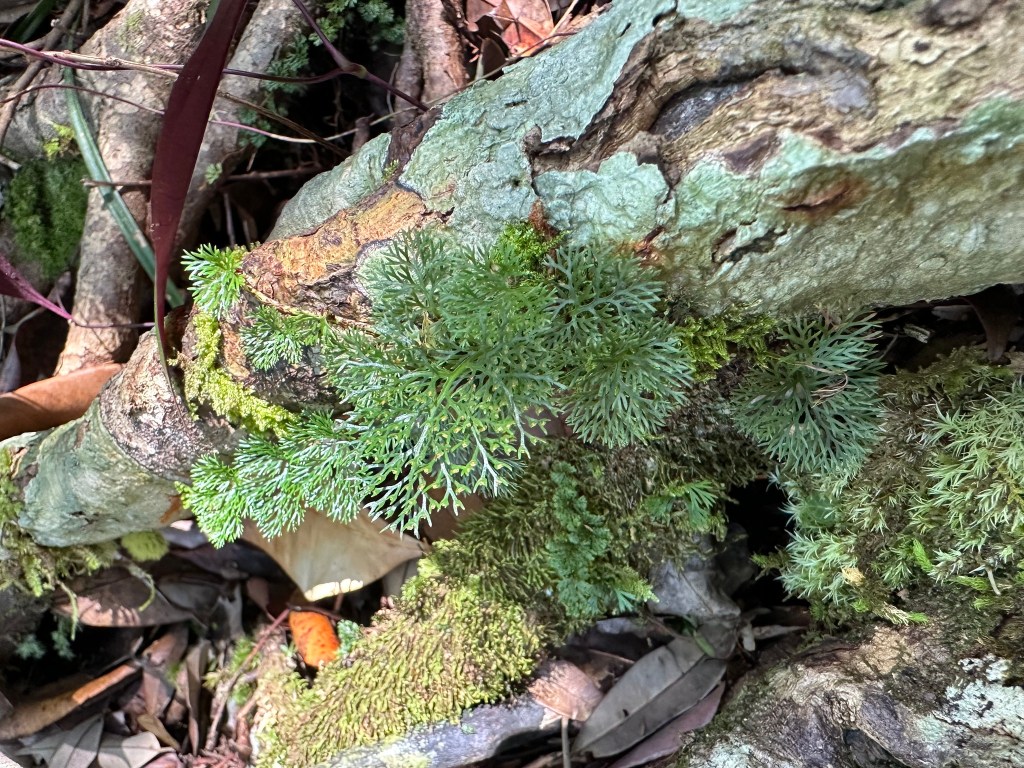
Davallia parvula is native to Borneo, Malaya, New Guinea, Sulawesi and Sumatera, where it is mostly found growing epiphytic or epilithic at low altitudes of 0-800 m (Nooteboom 1994: 189).
Davallia parvula was introduced to science by W.J. Hooker. and R.K. Greville (1831). The authors had never traveled to the islands of Southeast Asia themselves. They received the plant material for their description and drawing of the fern from Nathaniel Wallich ( 1786-1854). Wallich, a surgeon and botanist from Belgium, held the post of superintendent of the East India Company’s Botanical Garden at Calcutta from 1817 to 1846. With enormous energy he amassed large amounts of dried specimens for the garden’s plant collection. Wallich himself collected on various sick leaves and on excursions made on the company’s behalf. On one of these occasions in 1822 he brought Davallia parvula back from Singapore. In 1828 he obtained a two-and-half-year leave from the Garden and was allowed to take the as yet unmounted herbarium to London (Noltie and Watson 2021). The names and collecting details were written up in a vast catalogue of more than 9000 items (Wallich 1828). These specimens and notes were the basis of Hooker’s scientific description and Greville’s drawing.
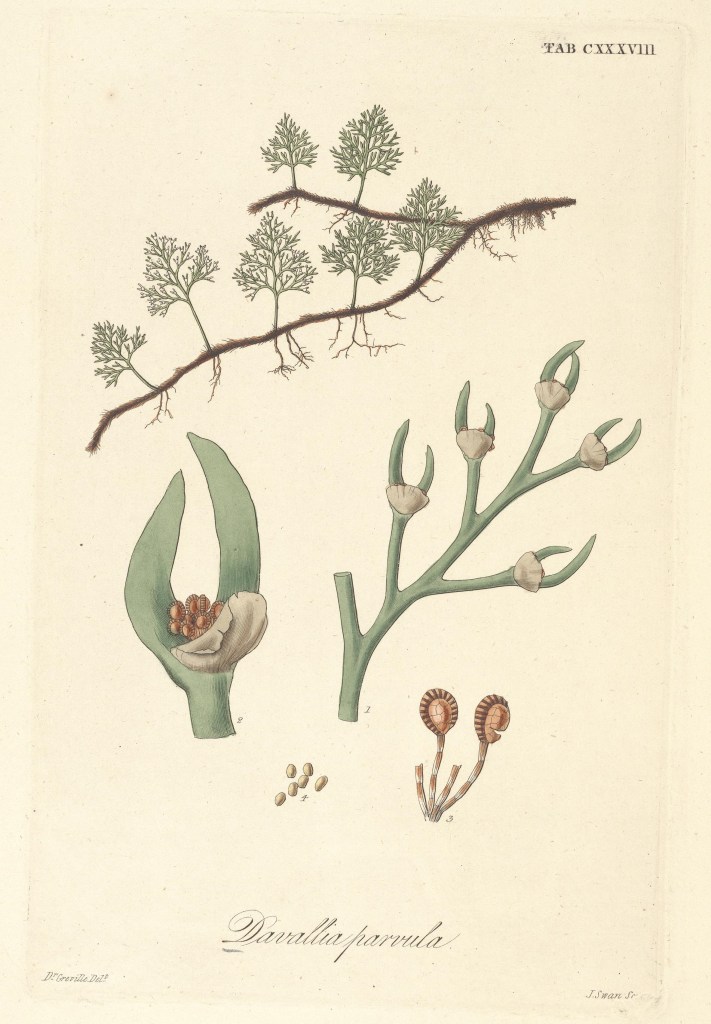
The authors use the publication to thank Wallich effusively for his pioneering work: “For this plant we have again to express our acknowledgements to Dr. Wallich, Director of the Honourable East India Company’s Botanic Garden at Calcutta, whose arrival in this country, after twenty years’ devotion to the arduous duties of his profession in India, with a collection never before equalled for number and value, amounting to no less than twenty-five tons weight, is, indeed, in every point of view, a subject of congratulation to the admirers of botanical science. Upon the merits of this no less excellent man, than acute, profound, industrious, and princely-minded botanist, we have already had occasion to dilate. Not only has he explored,—and sometimes at the risk of his health and even life,—the extensive region of the Hindoo dominions; but the territory of Nepal, the Birman empire, hitherto untrodden by the foot of any botanist, the islands of Singapure and the Mauritius, have all been laid under contribution by the personal exertions of this indefatigable naturalist, everywhere accompanied as he was by collectors, and by the amplest facilities for preserving the immense treasures which were thus amassed.” (Hooker and Greville 1831, tab. 138).

