-

An under-researched plant family
Read more: An under-researched plant familyUsually, when I place a new plant in a new hermetosphere, I want to know its identification down to species level. I have several reasons for this. In most cases, identifying the species is a prerequisite for obtaining information about its natural habitat. This information is helpful to assess whether or not a plant is…
-

The Hoya from Kanyakumari
Read more: The Hoya from KanyakumariWax plants (genus Hoya) are popular houseplants. At least this species from southern India also thrives in the hermetosphere. This is the impression I got from my journey with H. kanyakumariana during the first year.
-
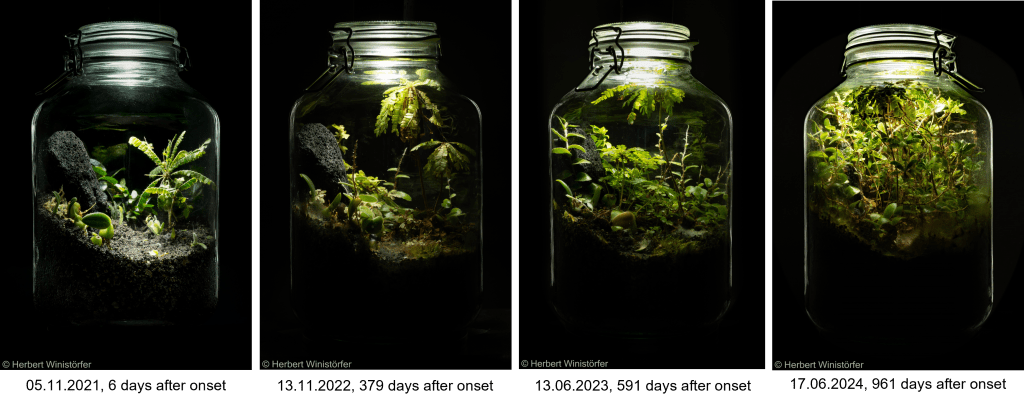
A jungle in the making
Read more: A jungle in the makingOne of the most fascinating aspects of hermetospheres is to see how plant communities develop over years in a confined space – with only minimal intervention. The picture below shows the current state of one of my first containers. How it became what it is today is this story. One of my first containers ever…
-

Acclimation (4): Labisia sp.
Read more: Acclimation (4): Labisia sp.Previous entries in this blog (#1, #2, #3) have already discussed the observation that some plants change their habitus after being planted in a closed container, presumably from “ordinary” greenhouse conditions. This is another example. The plant is marketed under the name Labisia sp. ‘Boyan’, and its natural habitat is stated as Borneo. However, in…
-

The mystery of red leaf undersides
Read more: The mystery of red leaf undersides“The lower (abaxial) leaf surfaces of many plant species are brightly colored by red to purple pigments, most commonly anthocyanins. This trait has evolved multiple times independently in the plant kingdom, most prolifically in angiosperms but also in some seedless, vascular plants […], making it a textbook example of convergent evolution.” (Hughes and Lev-Yadun 2023,…
-
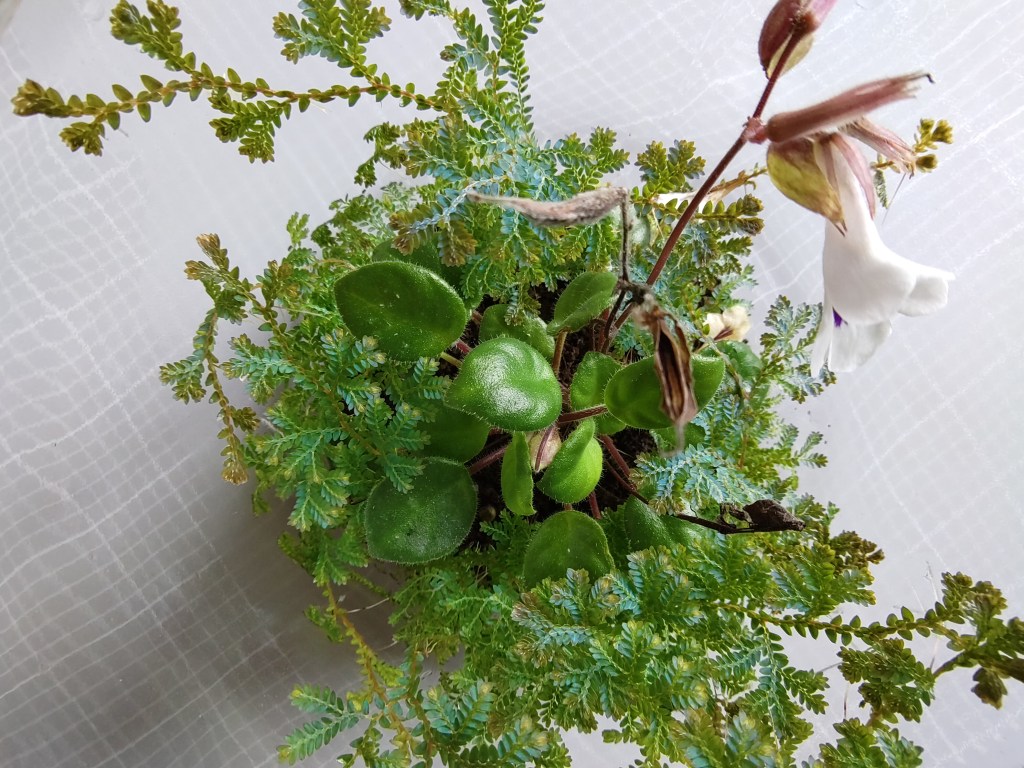
Root or shoot?
Read more: Root or shoot?A primeval plant that grows easily in hermetospheres provides insights into the early history of plant development. Initially I had Selaginella uncinata, a spikemoss, growing in a 1 litre jar for a few weeks as a trial. That is how I found that the plant thrives under hermetosphere conditions and spreads quickly (see picture below).…
-

Acclimation (3): Peperomia sp.
Read more: Acclimation (3): Peperomia sp.Why does a plant begin to produce miniature leaves after a change in environmental conditions? This is the provisional story of a Peperomia sp. in one of my hermetospheres. The genus Peperomia is one of the largest genera of basal angiosperms, comprising about 1500–1700 species distributed across all (sub-)tropical regions of the world. The greatest…
-

Acclimation (2): Strobilanthes reptans
Read more: Acclimation (2): Strobilanthes reptansWhy does a plant begin to produce oversized leaves as soon as it is placed in a hermetosphere? Let us start the story at the beginning: I recently started a hermetosphere to represent New Guinea. Begonia bipinnatifida with its wonderful, reddish, bipinnate leaves should be the main actor and Strobilanthes reptans as well as Davallia…
-

Succeeding generations (1): Biophytum sensitivum
Read more: Succeeding generations (1): Biophytum sensitivumThe title of his article can be understood in two ways. If you have read my [About], you know that my goal in dealing with hermetospheres is to design miniature systems in which each plant reproduces over several generations. With this post, I begin a series of successful examples of second or third generation plants…
-
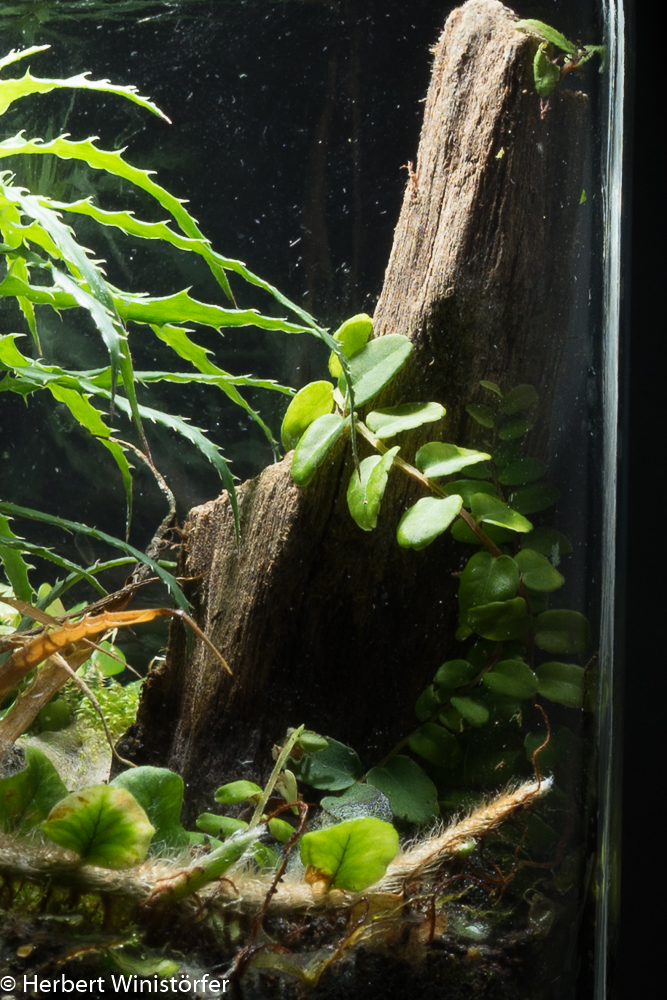
Darwin and the mystery of the coiling direction
Read more: Darwin and the mystery of the coiling directionWhen I acquired this plant as one of my first purchases to grow in a hermetosphere, it was labelled Marcgravia umbellata, but it might as well be Macgravia oligandra. Both plants originate from the caribbean islands and belong to the shingle-leaf climbers – root-climbing plants whose leaves are adpressed and often overlap (Zona 2020). As…
-
Subscribe
Subscribed
Already have a WordPress.com account? Log in now.
 Hermetospheres