-

Acclimation (3): Peperomia sp.
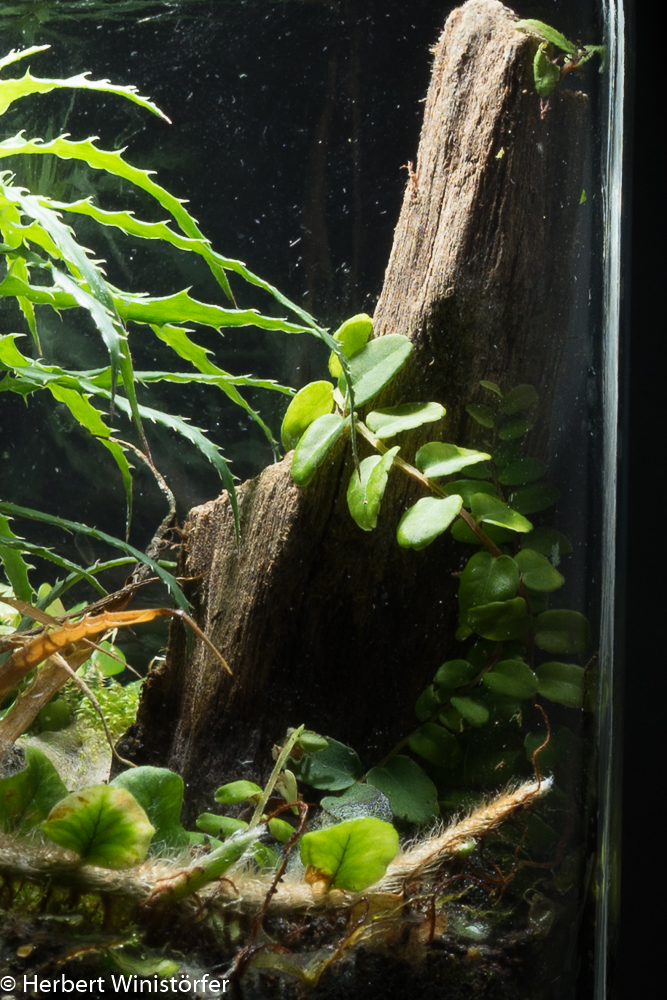
Read more: Acclimation (3): Peperomia sp.Why does a plant begin to produce miniature leaves after a change in environmental conditions? This is the provisional story of a Peperomia sp. in one of my hermetospheres. The genus Peperomia is one of the largest genera of basal angiosperms, comprising about 1500–1700 species distributed across all (sub-)tropical regions of the world. The greatest…
-

Acclimation (2): Strobilanthes reptans
Read more: Acclimation (2): Strobilanthes reptansWhy does a plant begin to produce oversized leaves as soon as it is placed in a hermetosphere? Let us start the story at the beginning: I recently started a hermetosphere to represent New Guinea. Begonia bipinnatifida with its wonderful, reddish, bipinnate leaves should be the main actor and Strobilanthes reptans as well as Davallia…
-

Succeeding generations (1): Biophytum sensitivum
Read more: Succeeding generations (1): Biophytum sensitivumThe title of his article can be understood in two ways. If you have read my [About], you know that my goal in dealing with hermetospheres is to design miniature systems in which each plant reproduces over several generations. With this post, I begin a series of successful examples of second or third generation plants…
-
Darwin and the mystery of the coiling direction
Read more: Darwin and the mystery of the coiling directionWhen I acquired this plant as one of my first purchases to grow in a hermetosphere, it was labelled Marcgravia umbellata, but it might as well be Macgravia oligandra. Both plants originate from the caribbean islands and belong to the shingle-leaf climbers – root-climbing plants whose leaves are adpressed and often overlap (Zona 2020). As…
-

Plant on the move
Read more: Plant on the moveThe “little tree plant” (Biophytum sensitivum) is very popular among terrarium hobbyists. Its natural habitat are wet lands of tropical India and South-East Asia, where it grows in the shades of trees and shrubs, in grass lands at low and medium altitudes (Sakthivel and Guruvayoorappan 2012). It looks like a miniature palm tree, is perennial,…
-

Acclimation (1): Ficus punctata
Read more: Acclimation (1): Ficus punctataClosed glass containers inevitably create extreme conditions for plant growth. This is especially the case for relative humidity, which can be assumed to be close to 100% at all times. Most tropical plants can deal with this, and hardly ever I could observe obvious changes from “normal” greenhouse conditions, where my plants usually come from,…
-
Subscribe
Subscribed
Have a WordPress.com account? Log in now.

