-
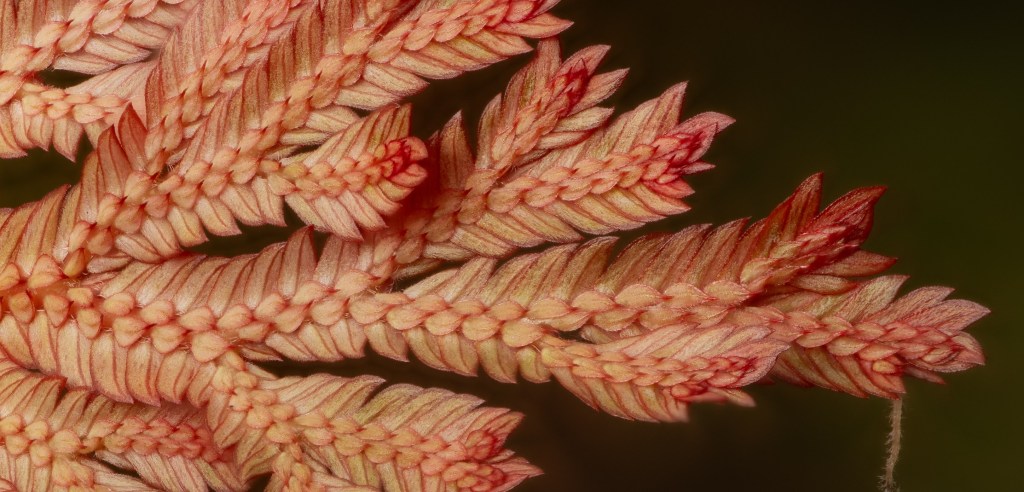
The blue iridescence of the red Selaginella
Read more: The blue iridescence of the red SelaginellaIridescence is the name of shimmering blue metallic colors of certain plants that appear to change as the angle of view changes. You can find out how it is produced in Selaginella erythropus, why it cannot be seen with the bare eye and how unusual this is in the plant kingdom. Before that, it is…
-
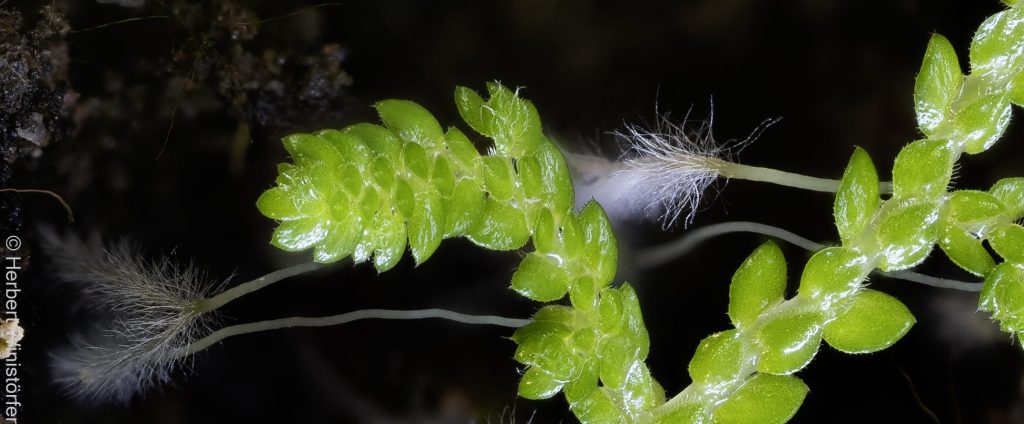
Two great naturalists and a miniature plant
Read more: Two great naturalists and a miniature plantIt is hard to imagine a plant more inconspicuous than Selaginella microphylla: tiny leaves on a uniform, branched shoot, monochromatic green, without flowers. Nevertheless, it was collected in 1801 or 1802 during an expedition through the rough wilderness of the northern Andes, carefully labelled, preserved, transported to the Pacific coast and shipped to Europe together…
-

An island Gesneria and Baker’s law
Read more: An island Gesneria and Baker’s lawAutonomous self-fertilisation, i.e. the ability to produce viable seeds in the absence of partners and pollinators, offers plants various advantages. In nature it can help to colonize distant islands, in the hermetosphere it can help to survive over several generations. The example of Gesneria cuneifolia is discussed.
-
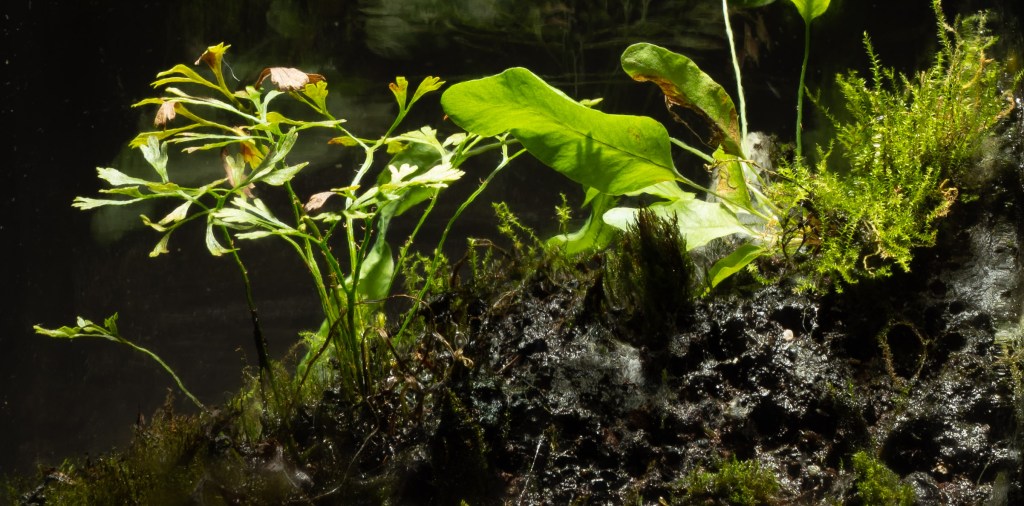
Death and the hitchhiker fern
Read more: Death and the hitchhiker fernSometimes, when things look bad, it pays to simply wait and see if things change for the better. I have already described an experience of this kind (Death and resurrection). There is a similar story to tell today. A 5l container inspired by the flora of Costa Rica was set up on April 2023 with…
-
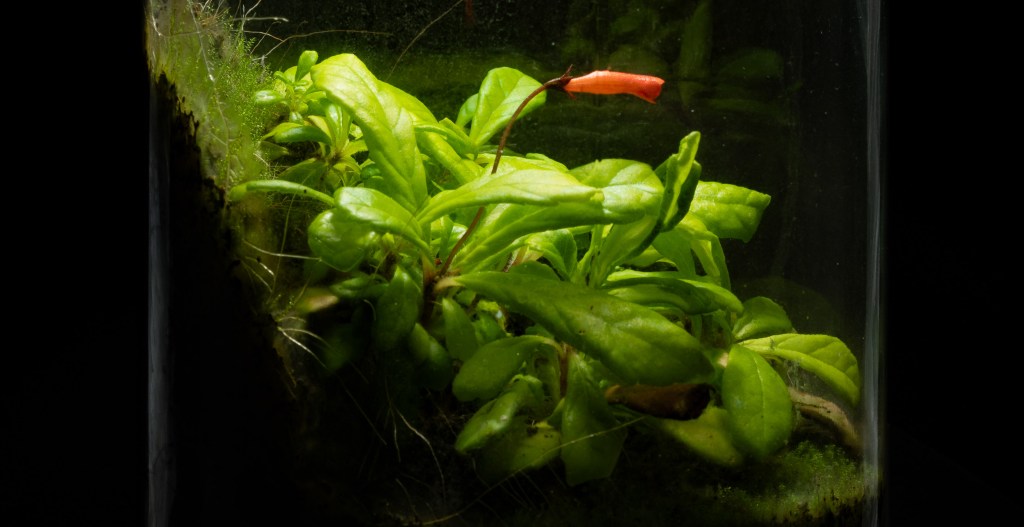
Follow-up: Gesneria cuneifolia
Read more: Follow-up: Gesneria cuneifoliaAlmost six months ago, I reported first experiences with seed-grown Gesneria cuneifolia. Now, with first flowers appearing, it is time for a follow-up.
-

“Climbing stag’s tongue with scaly stems”
Read more: “Climbing stag’s tongue with scaly stems”This fern is not only visually very appealing, it also has other characteristics that make it an ideal plant for hermetospheres: small size, slow growth and a preference for a permanently warm and humid environment. The fact that it is widespread throughout tropical America indicates that it does not make any exceptional demands in order…
-

Acclimation (5): Gesneria cuneifolia
Read more: Acclimation (5): Gesneria cuneifoliaGesneriads (Gesneriaceae), a family of plants named in honour of the Zurich Renaissance naturalist Conrad Gessner (1516-1565), have been very popular as ornamental plants for a long time. Main aspects of the cultivation are covered by The Gesneriad Society. Although most gesneriads are perennial herbs or shrubs native to topical or subtropical regions, some species…
-

Efficient light capture with downsized leaves?
Read more: Efficient light capture with downsized leaves?The unequal growth of two leaves in a pair from a single branch node is called anisophylly. It occurs in several, non related groups of Angiosperms that have opposite leaves, like Gesneriaceae, Melastomataceae, Rubiaceae and Urticaceae and is therefore assumed to have evolved independently several times. But what is the competitive advantage of this trait…
-

The dwarf Microgramma
Read more: The dwarf Microgramma“Microgramma C.Presl is a fern genus of approximately 30 species in the family Polypodiaceae, all occurring in the Neotropics except one occurring in Africa. They are rhizome-creeping epiphytes, growing from trunk bases to the canopy, with a few species also able to grow in rocky or terrestrial habitats. They occur preferentially in wet tropical forests…
-
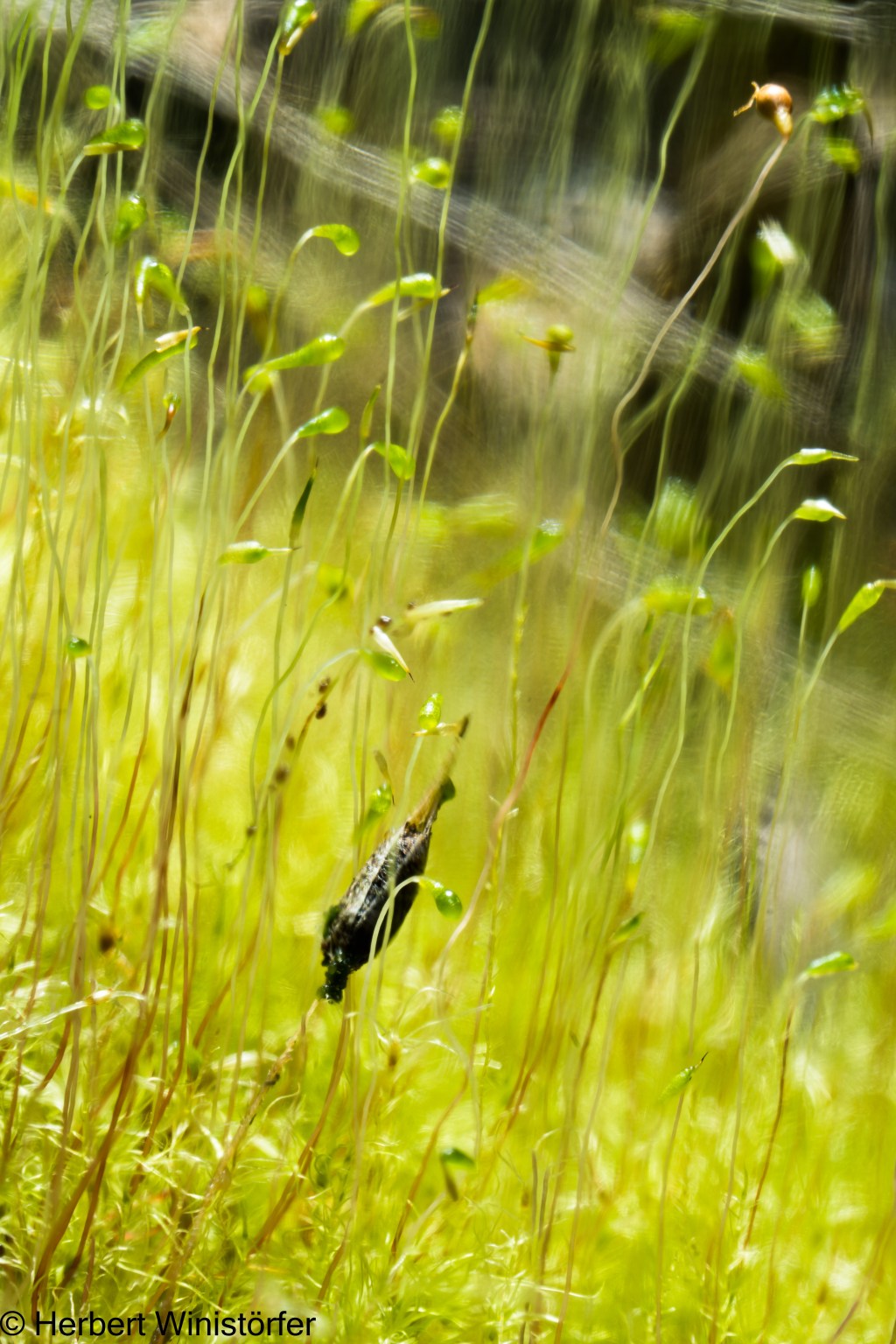
A tiny cosmopolitan
Read more: A tiny cosmopolitanWhen I started with hermetospheres, mosses were not my first priority. They sometimes came as a stowaway with other plants, and I usually let them grow. They did not trouble and formed a welcome ground cover. Moss first caught my attention when spore capsules developed on long, thin stems in my very first hermetosphere jar.…
-
Subscribe
Subscribed
Already have a WordPress.com account? Log in now.
 Hermetospheres