In their natural habitat, the melastoma family plant Pachycentria glauca often grow as epiphythes on ant-plants like Hydnophytum and Dischidia (which themselves usually grow epiphytically). Plants that live in a mutualistic association with a colony of ants are called myrmecophytes. Two morphological features of P. glauca are important for this plant-ant interaction: miniature pearl bodies on leaves, blooms and fuits and distinctive root swellings. Neither of these could be observed so far on the plants that grow in my hermetospheres. Nevertheless, the plant seems to be satiesfied with lava gravel and a few nutrients as a substrate. Neither a specific host plant nor the symbiosis with ants seem to be mandatory. In a hermetosphere dedicated to Borneo, a rooted cutting only took two months to produce the first flower (see picture below).

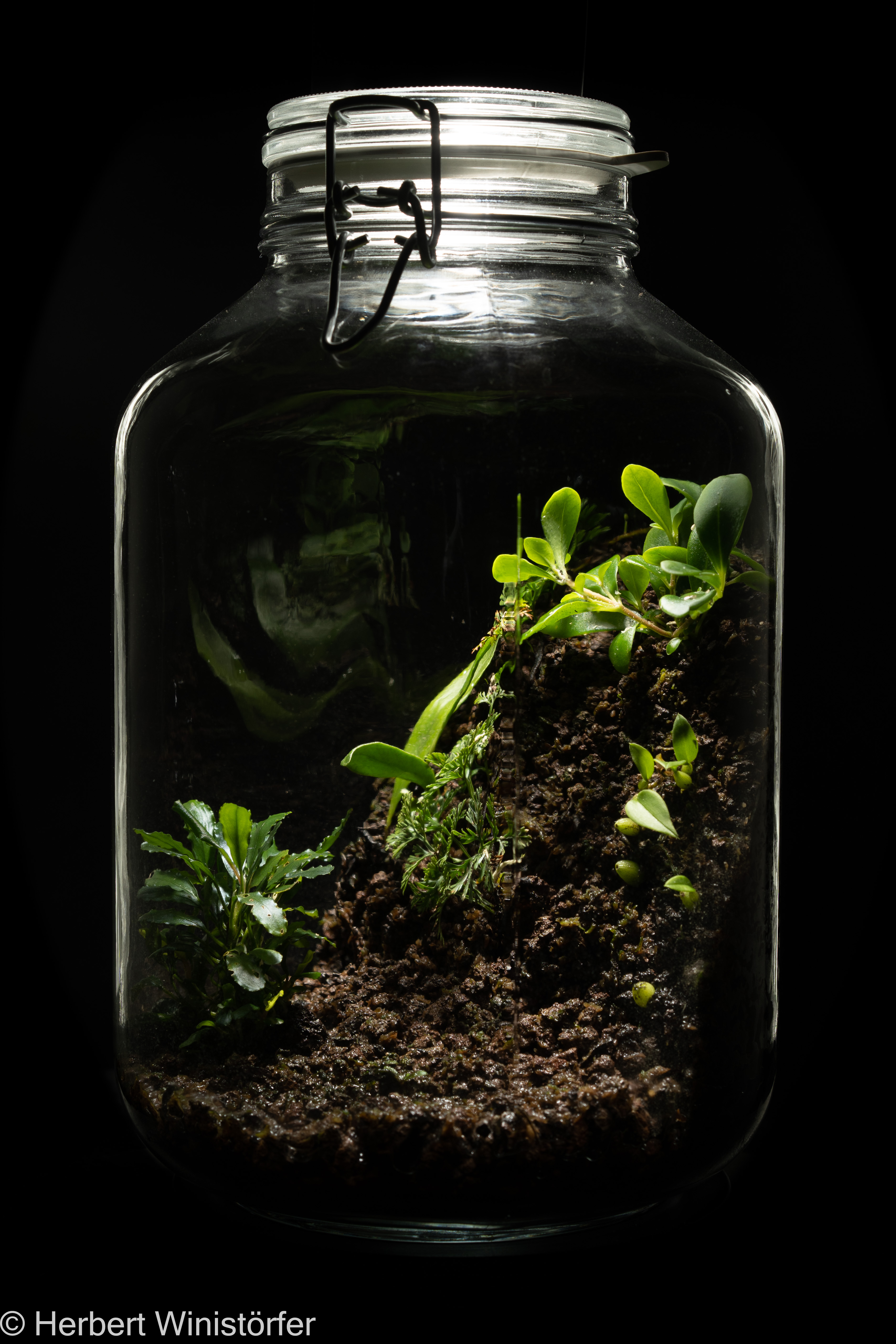
The two following picutres show Pachycentria glauca with its fellow plants in the 5l hermetosphere dedicated to Borneo.

From the short-time experience alone documented above, I would not dare saying that Pachycentria glauca can do well in hermetospheres. However, in the only large-scale experiment I ever conducted, a 25l glass carboy dedicated to Borneo as well, P. glauca grew significantly within the first eight months (see picture below), bloomed, and provided the cutting used later for the 5l jar shown on top.

Gudrun Clausing (1998) has studied interactions of Pachycentria species with ant-plants in Sabah and Sarawak (Malaysia): “[…] P. glauca show a complex relationship with ants mediated by other ant plants. [They] provide pearl bodies and potential nesting space or shelter for ants in dried out and hollow root swellings. The main characteristic which differentiates them from all other Melastomataceae interacting with ants are their particular seeds which are attractive to ants and carried into their nests. As a result […] P. glauca is frequently found growing on Hydnophytum and Dischidia. [The] species might increase the fitness of the community in which they live by the provision of food in form of pearl bodies and by water storage in their root swellings. In return, […] P. glauca are planted in a favourable nutrient-rich environment and perhaps are protected by the ants.”
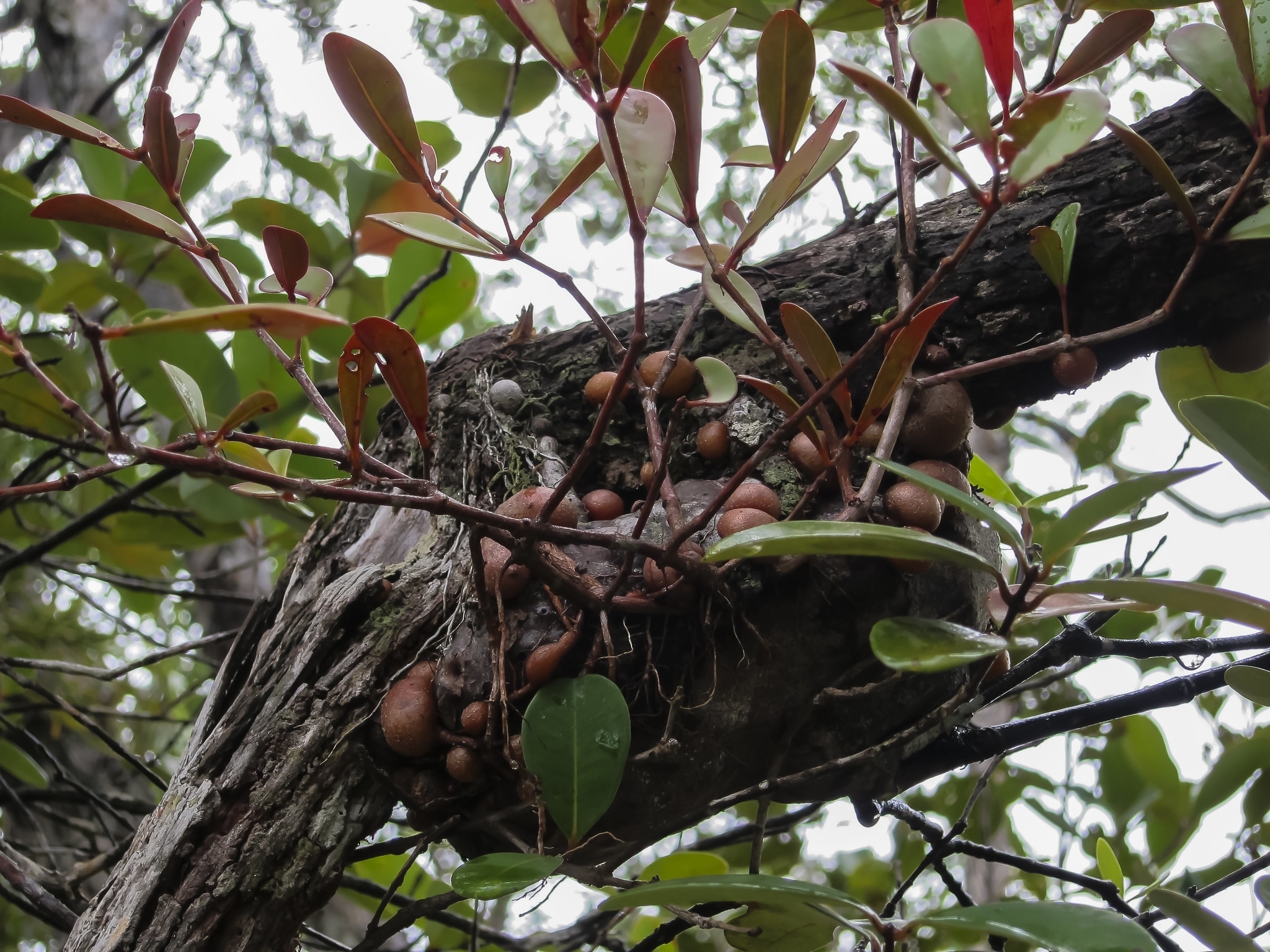
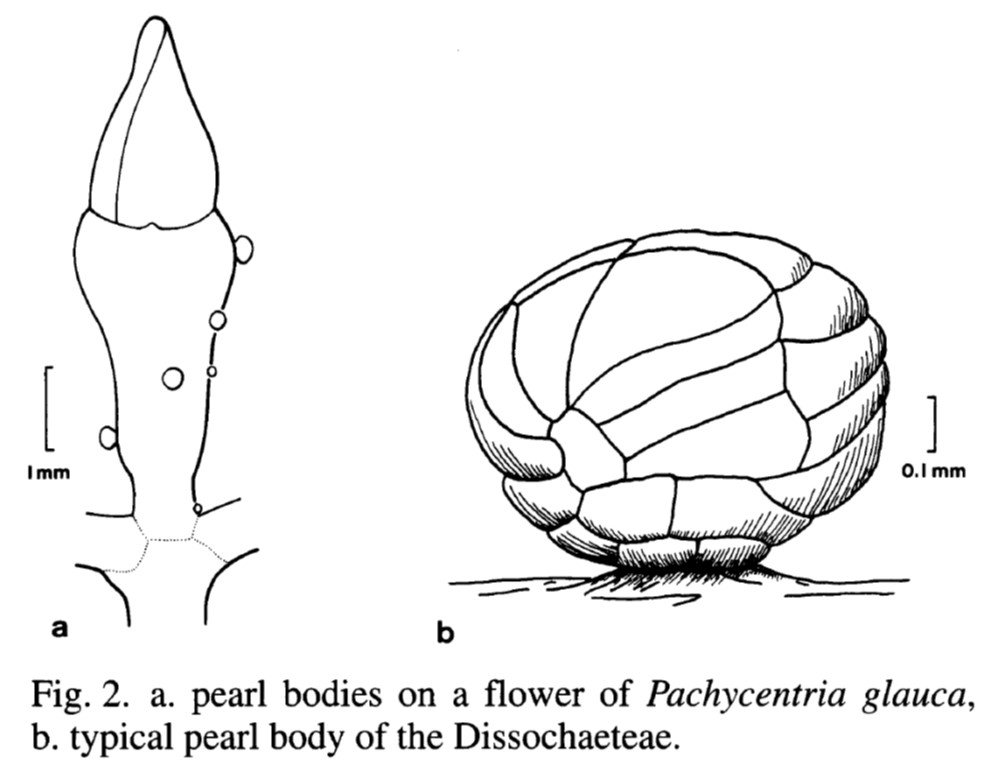
The two figures below give an idea of root swellings and pearl bodies that can be expected from Pachycentria glauca.
I will continue to watch my plants closely and add to this post if one or the other of the described characteristics should show up.
 Hermetospheres
One response to “Plant, ant-plant and ant”
Lieber Herbie,
das wird ja spannend mit deinen tropischen Pflanzen. Wer weiss, wirst du
bald auch noch eine Ameisen Kultur haben? Zum Vergleich: mit und ohne
Ameisen. !! Deine Borneo Kultur sieht gut aus. Ich bin gespannt, wie es
weiter geht.
Freue mich auf den 1. August mit Euch
Liebe Grüsse
Marianne
LikeLike