Photography can serve various functions in conjunction with hermetospheres. Some images are created for documentary purposes. They can be used to record developments in the glass container over longer periods of time and to compare different states. Other images have an aesthetic value, and in the best case they succeed in inspiring viewers without a purely botanical interest for the beauty of plants and plant communities.
To photograph glasses with their contents as a whole in appealing quality, a simple studio setup with two light sources and a standard focal length lens is completely sufficient. However, as soon as you want to draw attention to the beauty of the spore capsules of a moss or the flower of a miniature orchid with pictures, certain extensions are helpful. Therefore, this article discusses the use of a macro lens and the technique of focus stacking.
First, I invite you to compare the following two pictures. Both show a flower of the miniature orchid Anathallis minutalis from my Coste Rica jar. The original flower is about 3 mm large. Both pictures were taken with the same camera and a sensor of 24 MP, with similar aperture. One image, taken with a standard lens (55 mm focal length) at the shortest possible distance of about 50 cm, had to be greatly enlarged to show the flower adequately. The other image was taken with a macro lens (90 mm focal length), again with the shortest distance of about 25 cm, and was only slightly cropped (to 2’947x 4’421 pixels). The difference in resolution becomes clear when the images are viewed in their original size. It is also obvious that the image taken with the macro lens has much less depth of field than the one taken with the normal lens. This is where focus stacking comes in.

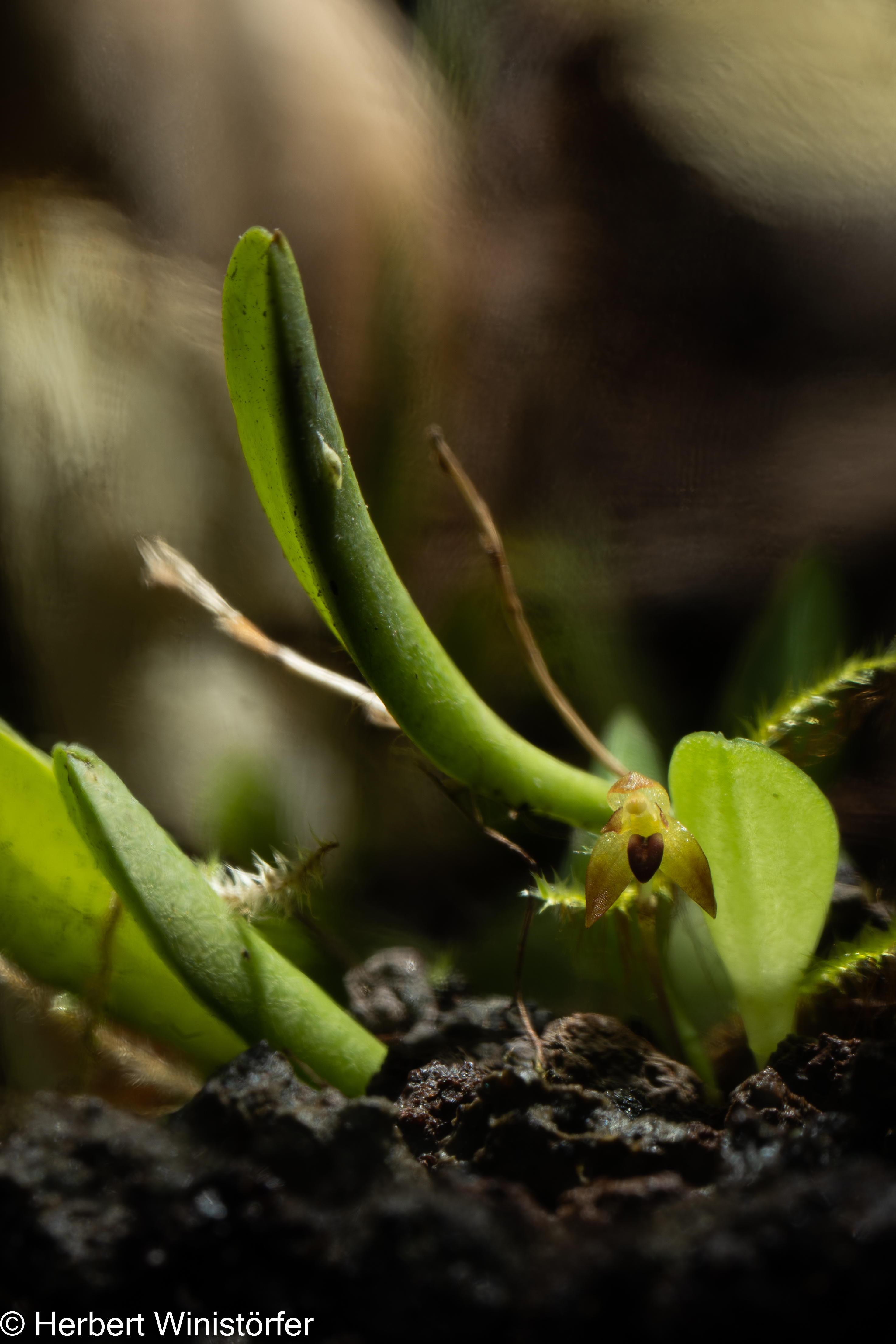
Focus stacking or focus bracketing means merging several images taken with different foci into a single image. The resulting image has a greater depth of field than any of the original images. Some modern cameras have specialized functions for this purpose, but a corresponding series of images can also be taken manually. What is necessary, however, is a software application that takes care of the computation of the images. It selects the sharpest available image for each part of the picture and assembles the parts.
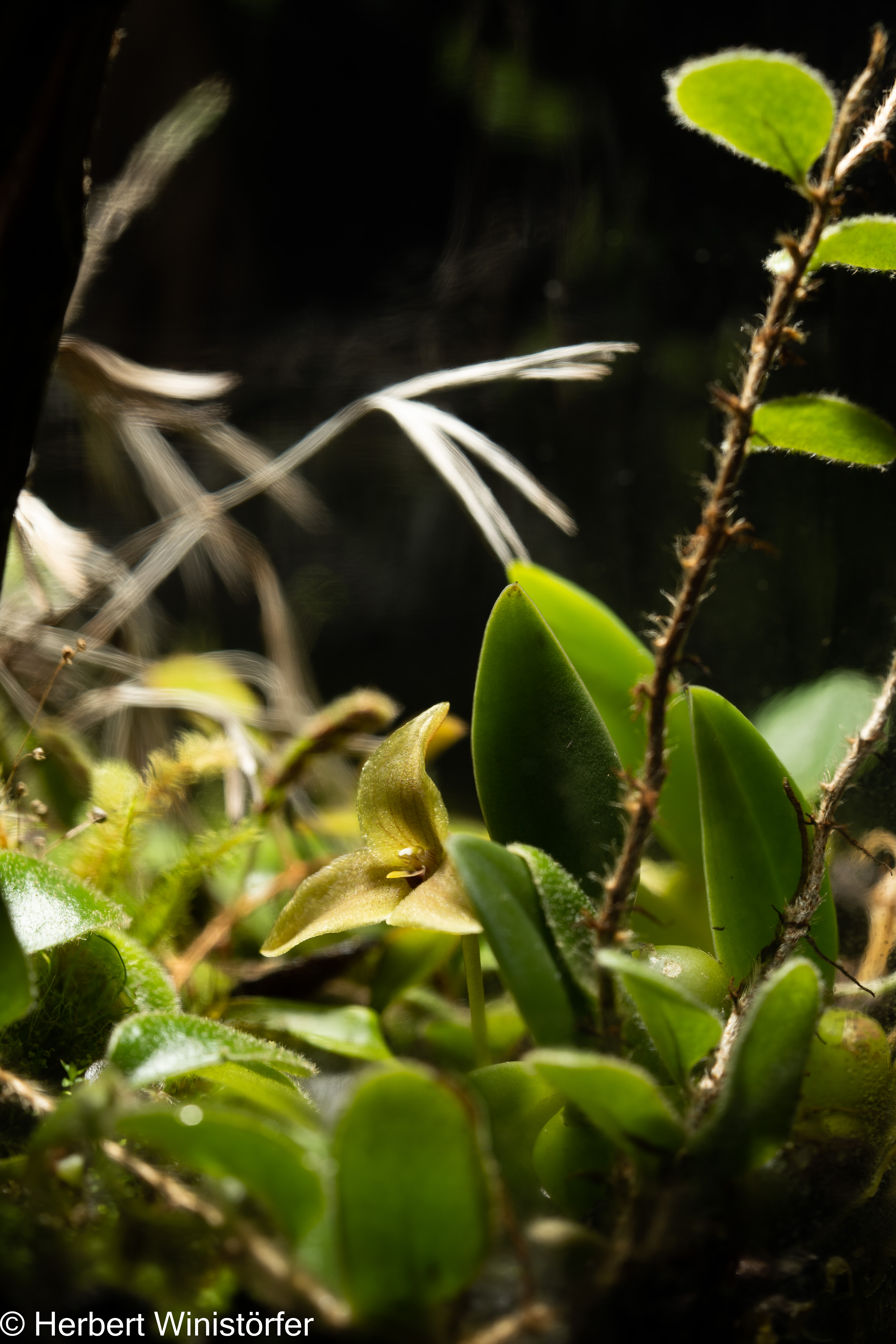
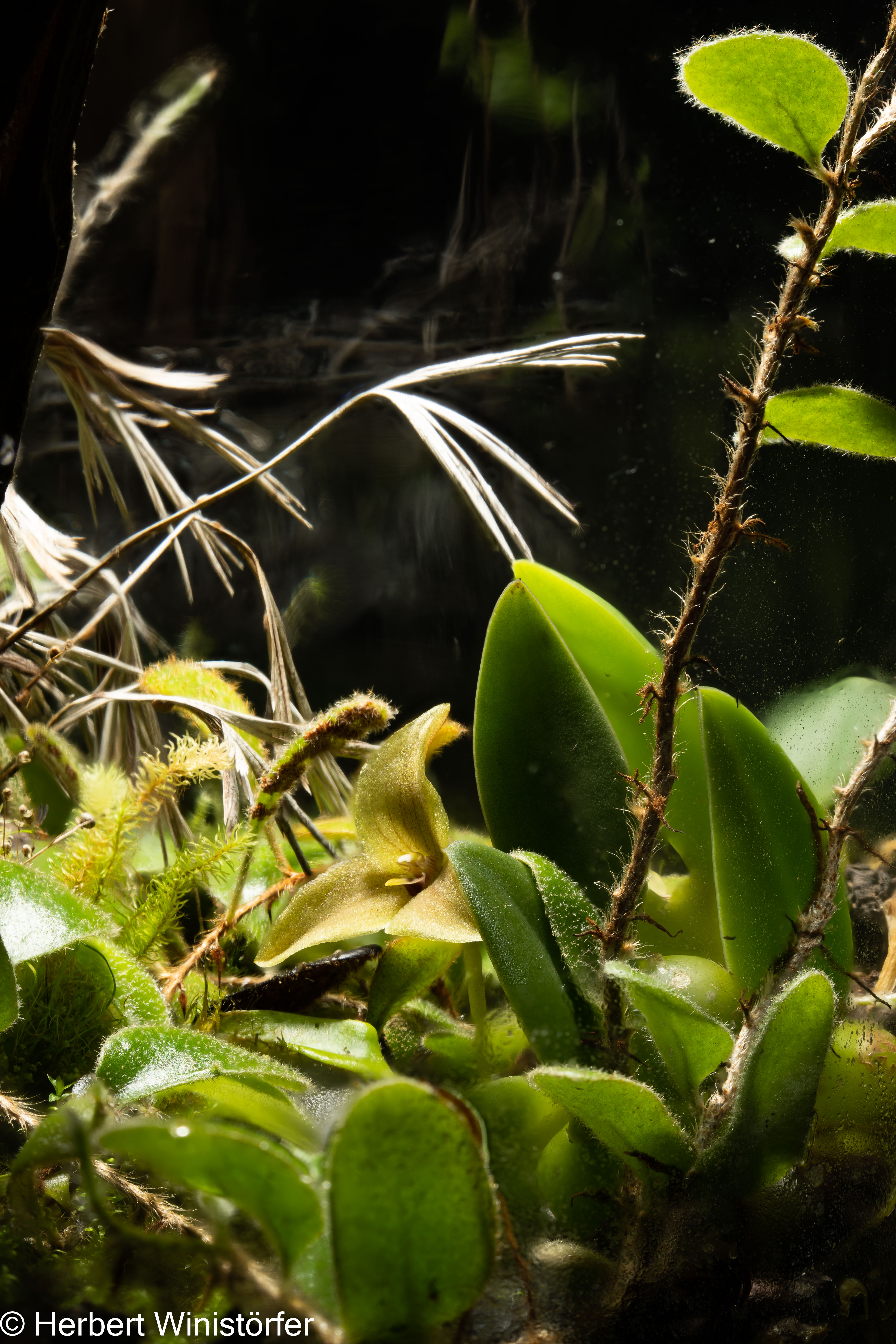
The two pictures above of a Bulbophyllum oblongum flower show the difference focus stacking can make. While the single image shows every object in front and behind the bloom blurred, the stacked image shows the fern rhizome in the foreground, the fern frond with sori, the moss and even the dried fern fronds in the background in full sharpness.
It remains the question: Do we need sharpness in every plane of an image like this? That depends on the purpose of the image and, of course, is a matter of taste. Focus stacking creates the possibility to precisely control the sharpness of macro shots. For objects behind glass, like plants in hermetospheres, a further advantage is to keep the glass surface blurred in order to hide dust and dirt on the inside that is often difficult to clean.
 Hermetospheres
One response to “Macro lens for micro plants”
Sehr eindrückliche Bilder!
LikeLike