Closed glass containers inevitably create extreme conditions for plant growth. This is especially the case for relative humidity, which can be assumed to be close to 100% at all times. Most tropical plants can deal with this, and hardly ever I could observe obvious changes from “normal” greenhouse conditions, where my plants usually come from, to my hermetosphere conditions. One exception is Ficus punctata.
Ficus punctata is nicely covered by “THE FIGS OF BORNEO, A guide to Borneo’s 150 species of wild fig trees, stranglers, lianas and shrubs.” The article does not only show the huge difference (e.g. in leaf size) between male and female plants of this climbing species, the blog also reveals the stunning features of sexual reproduction within the genus. Based on coevolution, most fig species depend on one single species of wasp (familiy Agaonidae) for pollination. The highly specific reproduction cycle is wonderfully documented and illustrated by Kjellberg and Lesne 2020). Based on fossil records, the mutualism is considerd to be as old as 34 Myr at least (Compton e.a. 2010). Only recently, scientists began to understand the molecular mechanisms behind the mutualist coevolution of fig and wasp (Wang e.a. 2021). In my 5l hermetosphere representing Myanmar, pollination of Ficus punctata is never going to happen. Female plants are missing as well as the right wasps.
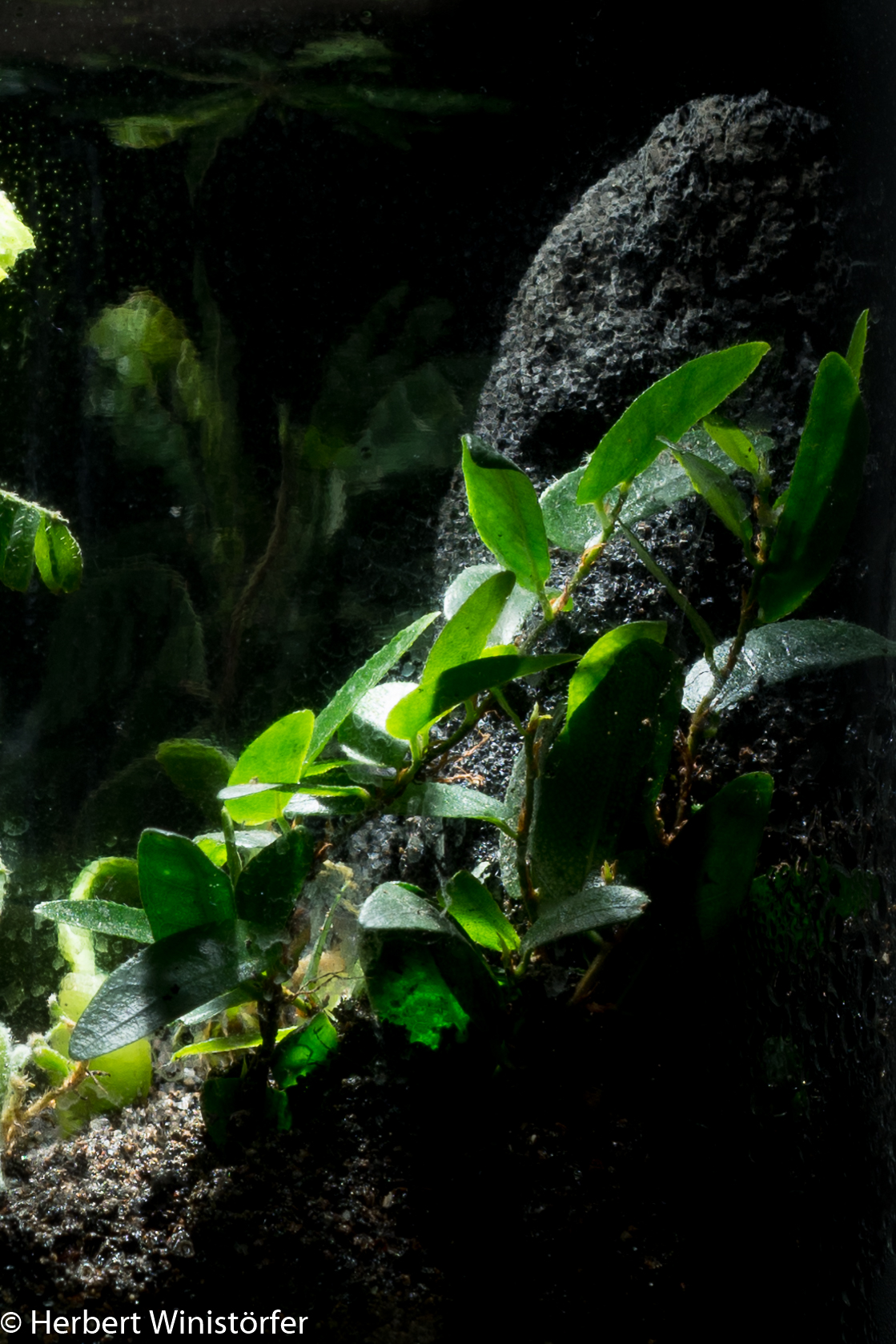
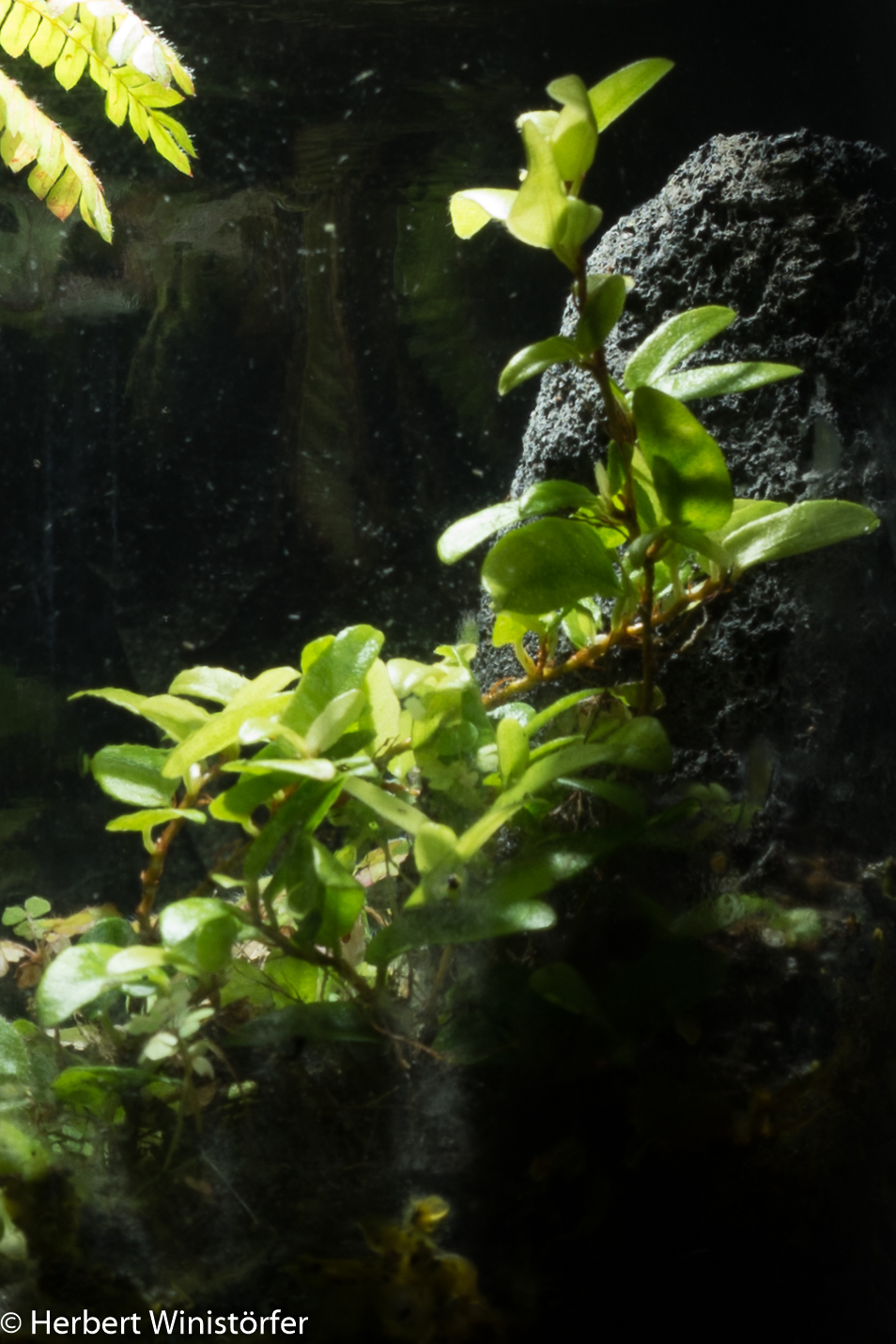
Only during research for this post I realized that I got a male plant. It came with already ligenous shoots, 10 to 12cm high, and dark green leaves. During the first few months however, it lost all these leaves and produced new ones. Other than the old leaves these new ones were bright green and of less shiny surface. It seemed obvious to me that a change must have happened in the leaf structure, most likely in the cuticle, the protecting film covering the outermost skin layer (epidermis) of leaves.
With this hypothesis in mind, I started looking through literature in search for evidence. Vapor pressure difference (VPD) between leaf and atmosphere is the driving force behind all water and nutrient transport from roots to shoots. The regulation is done by stomata, leaf openings that can be closed to limit transpiration. High relative humidity (RH) in the atmosphere is equivalent to low VPD.
While a lot of adaptations described are species-specific, some seem to be common for C3 plants (Fanourakis e.a. 2020): Leaves of plants grown under high RH conditions and then subjected to desiccation loose water faster than those grown under low RH conditions. This seems primarily due to (1) bigger stomata with larger openings, (2) poor stomatal functionality, especially a reduced rate of stomatal closure and, to a lesser extent, (3) higher cuticular transpiration rates due to a thinner epicuticular wax layer. At least the latter seems to correspond with my own observation with Ficus punctata.


3 responses to “Acclimation (1): Ficus punctata”
[…] consequences of the high relative humidity of the atmosphere for plant growth have already been discussed. In this article we will thus focus on the humidity of the substrate, from which most plants obtain […]
LikeLike
[…] entries in this blog (#1, #2, #3) have already discussed the observation that some plants change their habitus after being […]
LikeLike
[…] punctata: In an early phase, the Ficus replaced large parts of its foliage, but then grew slowly and steadily without […]
LikeLike