-

“Climbing stag’s tongue with scaly stems”
Read more: “Climbing stag’s tongue with scaly stems”This fern is not only visually very appealing, it also has other characteristics that make it an ideal plant for hermetospheres: small size, slow growth and a preference for a permanently warm and humid environment. The fact that it is widespread throughout tropical America indicates that it does not make any exceptional demands in order…
-
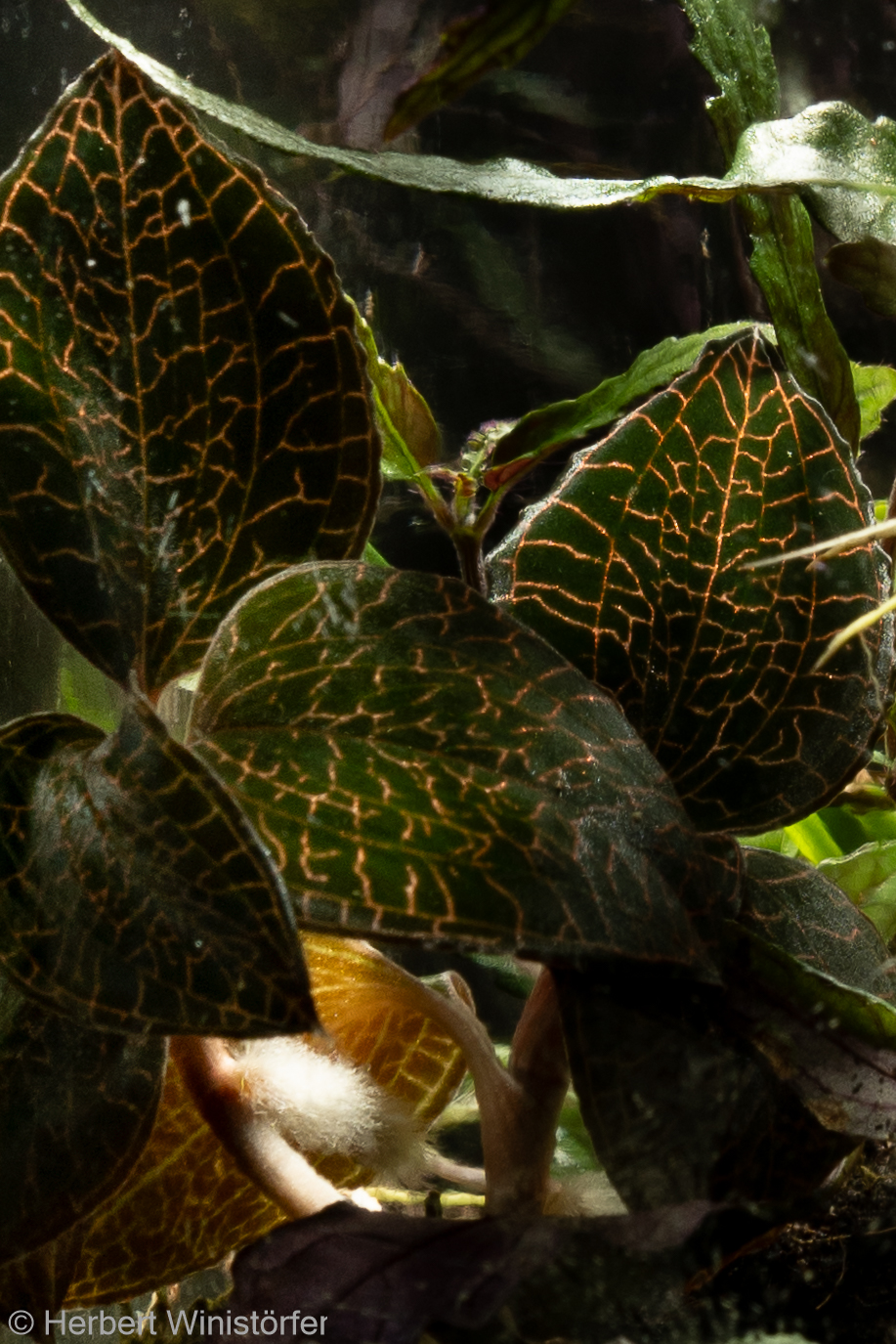
Jewels of the closed terrarium?
Read more: Jewels of the closed terrarium?Since the times of the ‘plant hunters’ of the colonial era, orchids have held a special fascination for plant lovers. Only a small proportion of tropical orchids live with roots anchored in the soil (terrestrial), far more live as epiphytes on other plants. They obtain moisture and nutrients from the precipitation water that runs down…
-

Efficient light capture with downsized leaves?
Read more: Efficient light capture with downsized leaves?The unequal growth of two leaves in a pair from a single branch node is called anisophylly. It occurs in several, non related groups of Angiosperms that have opposite leaves, like Gesneriaceae, Melastomataceae, Rubiaceae and Urticaceae and is therefore assumed to have evolved independently several times. But what is the competitive advantage of this trait…
-

Acclimation (4): Labisia sp.
Read more: Acclimation (4): Labisia sp.Previous entries in this blog (#1, #2, #3) have already discussed the observation that some plants change their habitus after being planted in a closed container, presumably from “ordinary” greenhouse conditions. This is another example. The plant is marketed under the name Labisia sp. ‘Boyan’, and its natural habitat is stated as Borneo. However, in…
-

The dwarf Microgramma
Read more: The dwarf Microgramma“Microgramma C.Presl is a fern genus of approximately 30 species in the family Polypodiaceae, all occurring in the Neotropics except one occurring in Africa. They are rhizome-creeping epiphytes, growing from trunk bases to the canopy, with a few species also able to grow in rocky or terrestrial habitats. They occur preferentially in wet tropical forests…
-

The mystery of red leaf undersides
Read more: The mystery of red leaf undersides“The lower (abaxial) leaf surfaces of many plant species are brightly colored by red to purple pigments, most commonly anthocyanins. This trait has evolved multiple times independently in the plant kingdom, most prolifically in angiosperms but also in some seedless, vascular plants […], making it a textbook example of convergent evolution.” (Hughes and Lev-Yadun 2023,…
-

A precious, lichen-like Begonia
Read more: A precious, lichen-like BegoniaIn 2017, Lin and colleagues described Begonia lichenora as a species new to science. The species is “Distributed in Sarawak, Borneo; known only from Bau to Padawan areas that are at border with West Kalimantan Province of Indonesia. Plants usually climb up the steep, slightly shaded soil slopes in wet dipterocarp forest, elevation ca. 100…
-
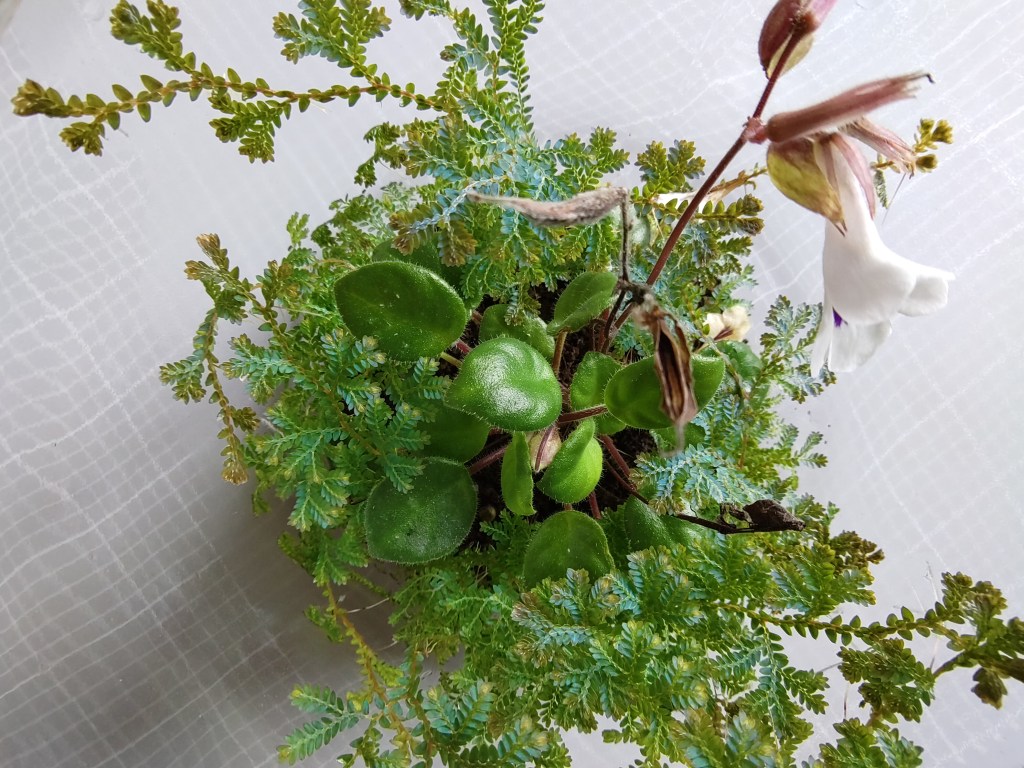
Root or shoot?
Read more: Root or shoot?A primeval plant that grows easily in hermetospheres provides insights into the early history of plant development. Initially I had Selaginella uncinata, a spikemoss, growing in a 1 litre jar for a few weeks as a trial. That is how I found that the plant thrives under hermetosphere conditions and spreads quickly (see picture below).…
-

Acclimation (3): Peperomia sp.
Read more: Acclimation (3): Peperomia sp.Why does a plant begin to produce miniature leaves after a change in environmental conditions? This is the provisional story of a Peperomia sp. in one of my hermetospheres. The genus Peperomia is one of the largest genera of basal angiosperms, comprising about 1500–1700 species distributed across all (sub-)tropical regions of the world. The greatest…
-
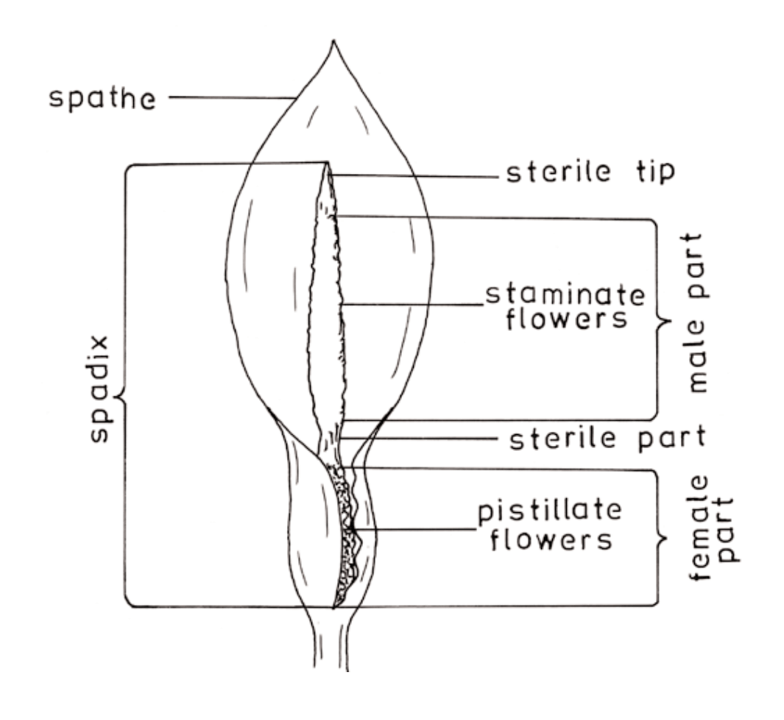
Tiny flies find tiny flowers
Read more: Tiny flies find tiny flowersAt first glance, the flowers of aroids (family Araceae) appear much less spectacular than those of other plants. Aroids are therefore loved by plant enthusiasts far more for their foliage than for their flowers. On closer inspection, however, the flowers offer amazing insights. While tropical aroids have been popular as indoor, terrarium or aquarium plants…
-
Subscribe
Subscribed
Have a WordPress.com account? Log in now.

