-

Acclimation (4): Labisia sp.
Read more: Acclimation (4): Labisia sp.Previous entries in this blog (#1, #2, #3) have already discussed the observation that some plants change their habitus after being planted in a closed container, presumably from “ordinary” greenhouse conditions. This is another example. The plant is marketed under the name Labisia sp. ‘Boyan’, and its natural habitat is stated as Borneo. However, in…
-

The dwarf Microgramma
Read more: The dwarf Microgramma“Microgramma C.Presl is a fern genus of approximately 30 species in the family Polypodiaceae, all occurring in the Neotropics except one occurring in Africa. They are rhizome-creeping epiphytes, growing from trunk bases to the canopy, with a few species also able to grow in rocky or terrestrial habitats. They occur preferentially in wet tropical forests…
-

The mystery of red leaf undersides
Read more: The mystery of red leaf undersides“The lower (abaxial) leaf surfaces of many plant species are brightly colored by red to purple pigments, most commonly anthocyanins. This trait has evolved multiple times independently in the plant kingdom, most prolifically in angiosperms but also in some seedless, vascular plants […], making it a textbook example of convergent evolution.” (Hughes and Lev-Yadun 2023,…
-

A precious, lichen-like Begonia
Read more: A precious, lichen-like BegoniaIn 2017, Lin and colleagues described Begonia lichenora as a species new to science. The species is “Distributed in Sarawak, Borneo; known only from Bau to Padawan areas that are at border with West Kalimantan Province of Indonesia. Plants usually climb up the steep, slightly shaded soil slopes in wet dipterocarp forest, elevation ca. 100…
-
Root or shoot?
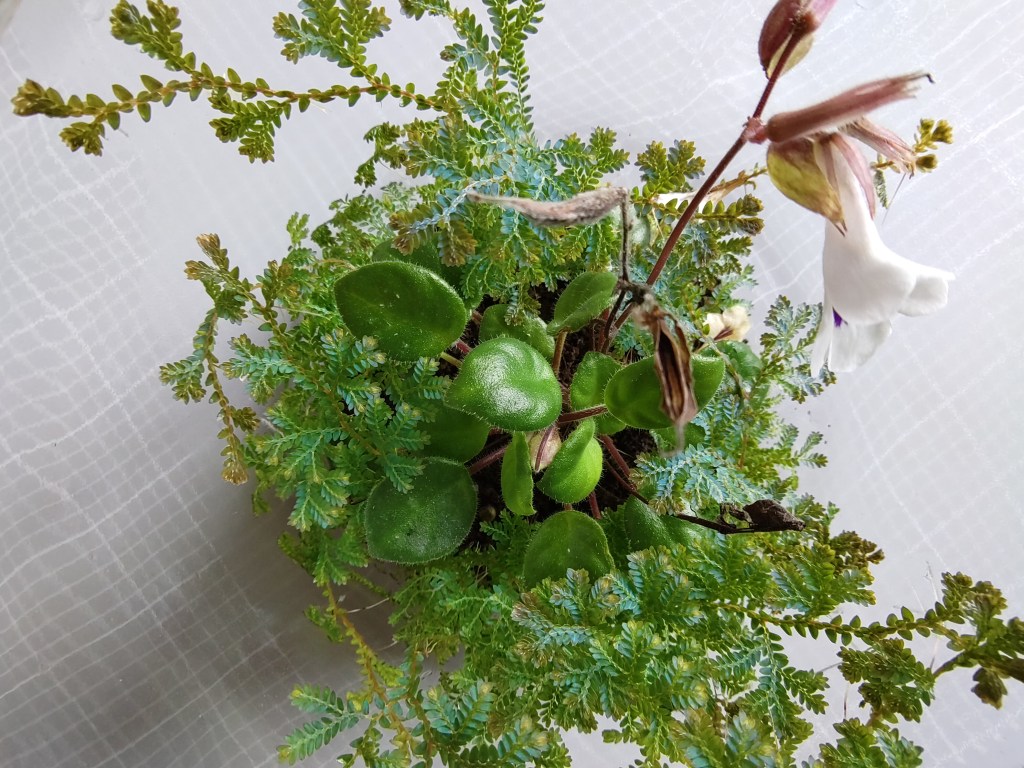
Read more: Root or shoot?A primeval plant that grows easily in hermetospheres provides insights into the early history of plant development. Initially I had Selaginella uncinata, a spikemoss, growing in a 1 litre jar for a few weeks as a trial. That is how I found that the plant thrives under hermetosphere conditions and spreads quickly (see picture below).…
-

Acclimation (3): Peperomia sp.
Read more: Acclimation (3): Peperomia sp.Why does a plant begin to produce miniature leaves after a change in environmental conditions? This is the provisional story of a Peperomia sp. in one of my hermetospheres. The genus Peperomia is one of the largest genera of basal angiosperms, comprising about 1500–1700 species distributed across all (sub-)tropical regions of the world. The greatest…
-
Tiny flies find tiny flowers
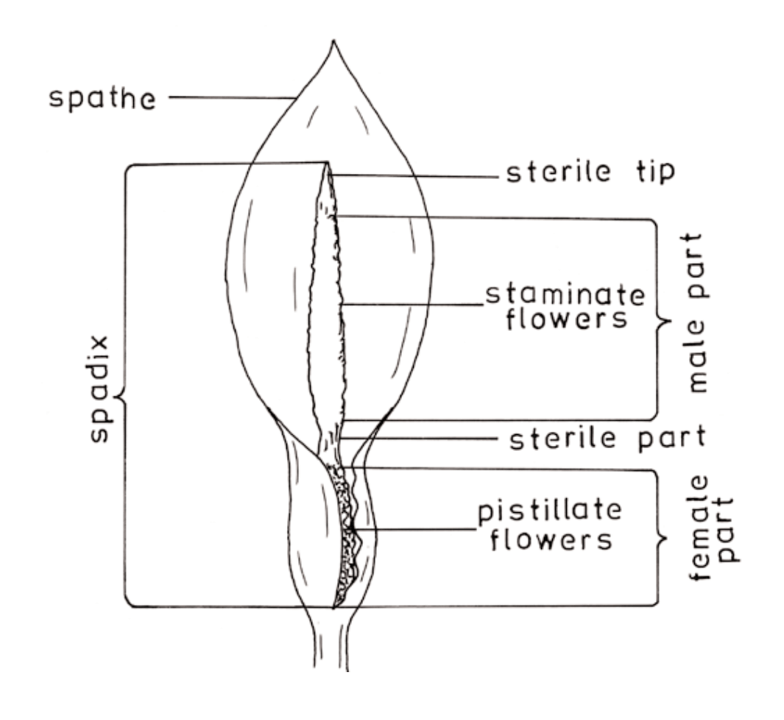
Read more: Tiny flies find tiny flowersAt first glance, the flowers of aroids (family Araceae) appear much less spectacular than those of other plants. Aroids are therefore loved by plant enthusiasts far more for their foliage than for their flowers. On closer inspection, however, the flowers offer amazing insights. While tropical aroids have been popular as indoor, terrarium or aquarium plants…
-

Acclimation (2): Strobilanthes reptans
Read more: Acclimation (2): Strobilanthes reptansWhy does a plant begin to produce oversized leaves as soon as it is placed in a hermetosphere? Let us start the story at the beginning: I recently started a hermetosphere to represent New Guinea. Begonia bipinnatifida with its wonderful, reddish, bipinnate leaves should be the main actor and Strobilanthes reptans as well as Davallia…
-

Plant, ant-plant and ant
Read more: Plant, ant-plant and antIn their natural habitat, the melastoma family plant Pachycentria glauca often grow as epiphythes on ant-plants like Hydnophytum and Dischidia (which themselves usually grow epiphytically). Plants that live in a mutualistic association with a colony of ants are called myrmecophytes. Two morphological features of P. glauca are important for this plant-ant interaction: miniature pearl bodies…
-

Light conditions
Read more: Light conditionsThis post is last of a three-part series discussing water conditions, nutrient conditions, and light conditions in hermetospheres. When I started my first hermetospheres, I intuitively felt that the place chosen within my apartment did not provide enough natural light for plant growth. I therefore installed LED grow lights, first one, then a second. Now,…
-
Subscribe
Subscribed
Already have a WordPress.com account? Log in now.
 Hermetospheres