-

Succeeding generations (3): Ludisia discolor
Read more: Succeeding generations (3): Ludisia discolorIf hermetospheres are supposed to last over years, it is advantageous to work with plants that are able to produce offspring under the particular restrictions given (a.o. limited space, unlikely pollination). The terrestrial orchid Ludisia discolor has its own way of ensuring offspring in the absence of pollinators. The key to this type of vegetative propagation…
-
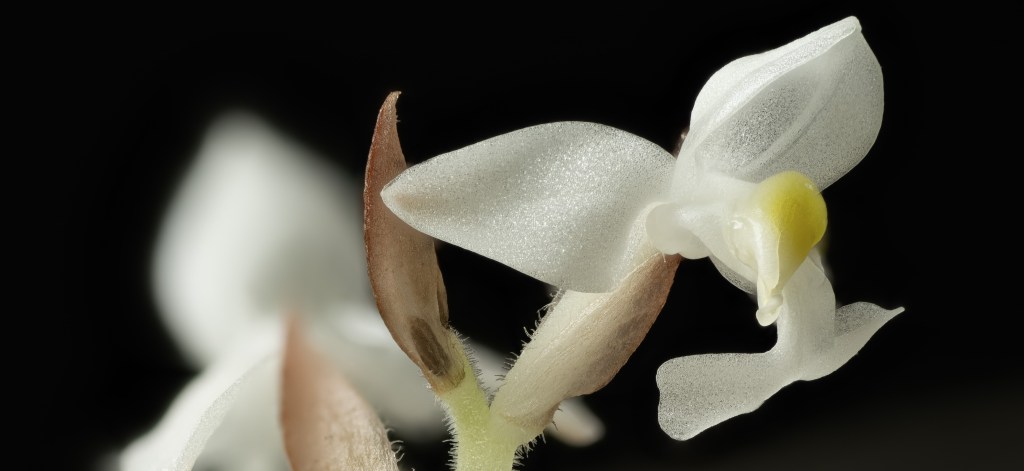
The orchid flower that lost its symmetry
Read more: The orchid flower that lost its symmetryThe ‘jewel orchid’ Ludisia discolor is common in culture, and reports from fellow hermetosphere enthusiasts as well as the description of the orchid’s natural habitat made me confident that it would also thrive in the closed container. My experience so far has proved me right. Jewel orchids are cultivateed mainly for their patterned leaves and…
-
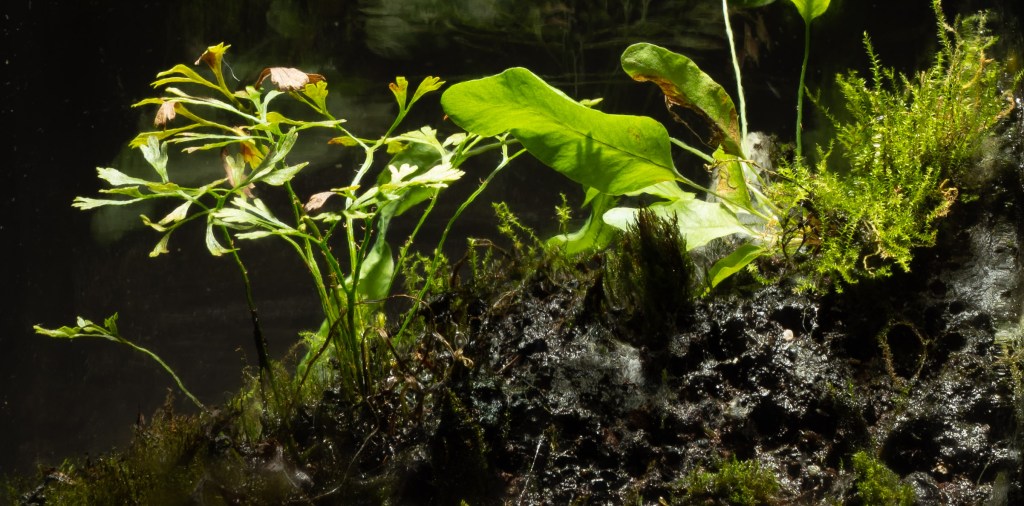
Death and the hitchhiker fern
Read more: Death and the hitchhiker fernSometimes, when things look bad, it pays to simply wait and see if things change for the better. I have already described an experience of this kind (Death and resurrection). There is a similar story to tell today. A 5l container inspired by the flora of Costa Rica was set up on April 2023 with…
-
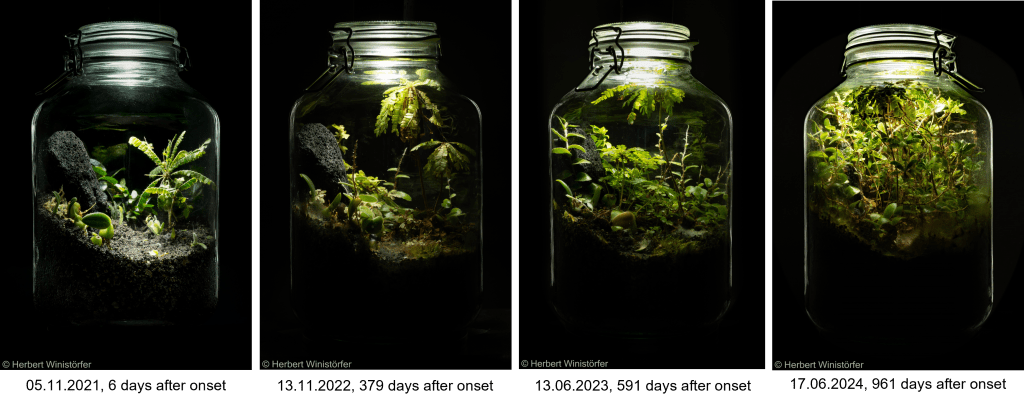
A jungle in the making
Read more: A jungle in the makingOne of the most fascinating aspects of hermetospheres is to see how plant communities develop over years in a confined space – with only minimal intervention. The picture below shows the current state of one of my first containers. How it became what it is today is this story. One of my first containers ever…
-
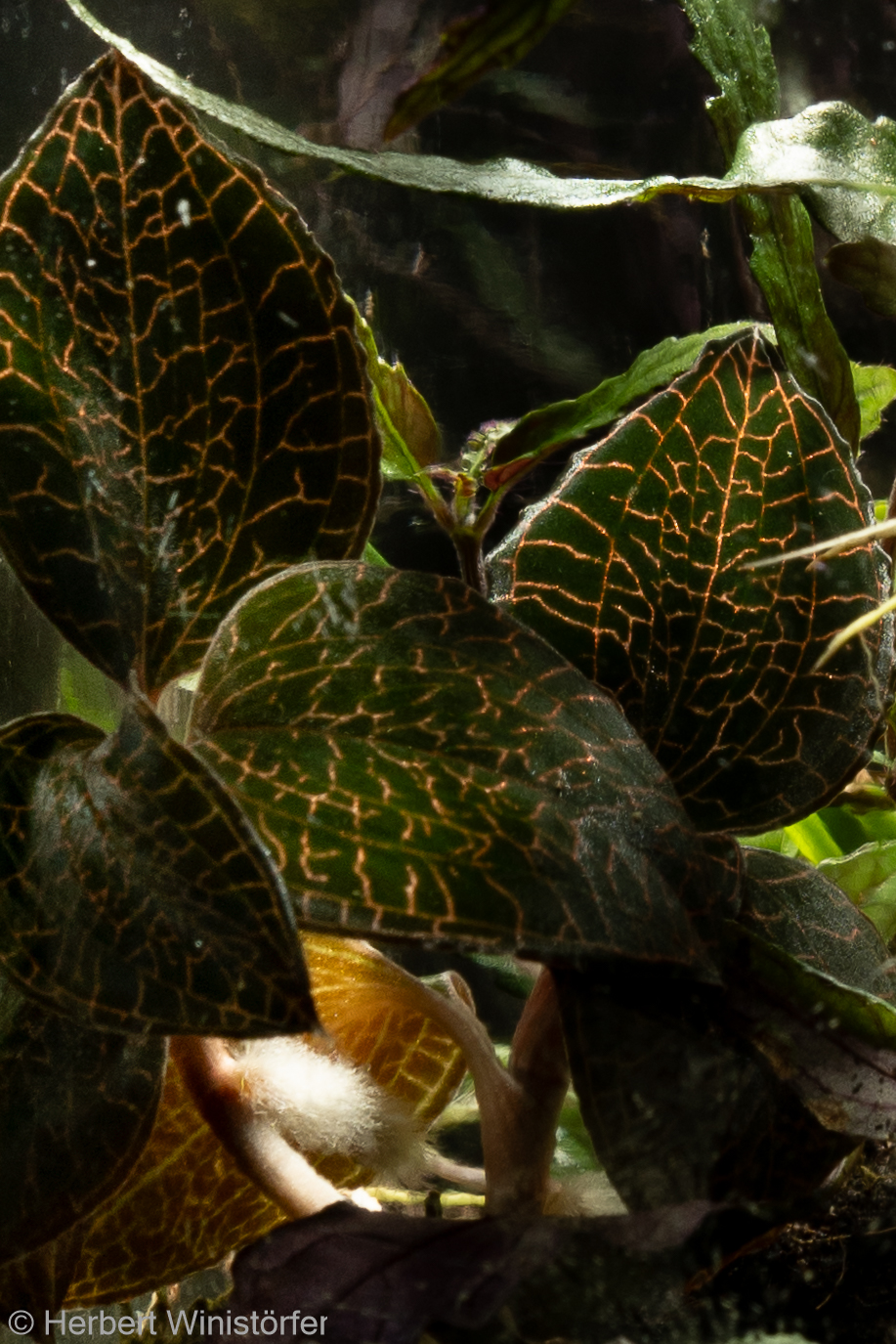
Jewels of the closed terrarium?
Read more: Jewels of the closed terrarium?Since the times of the ‘plant hunters’ of the colonial era, orchids have held a special fascination for plant lovers. Only a small proportion of tropical orchids live with roots anchored in the soil (terrestrial), far more live as epiphytes on other plants. They obtain moisture and nutrients from the precipitation water that runs down…
-
Avoid blurring
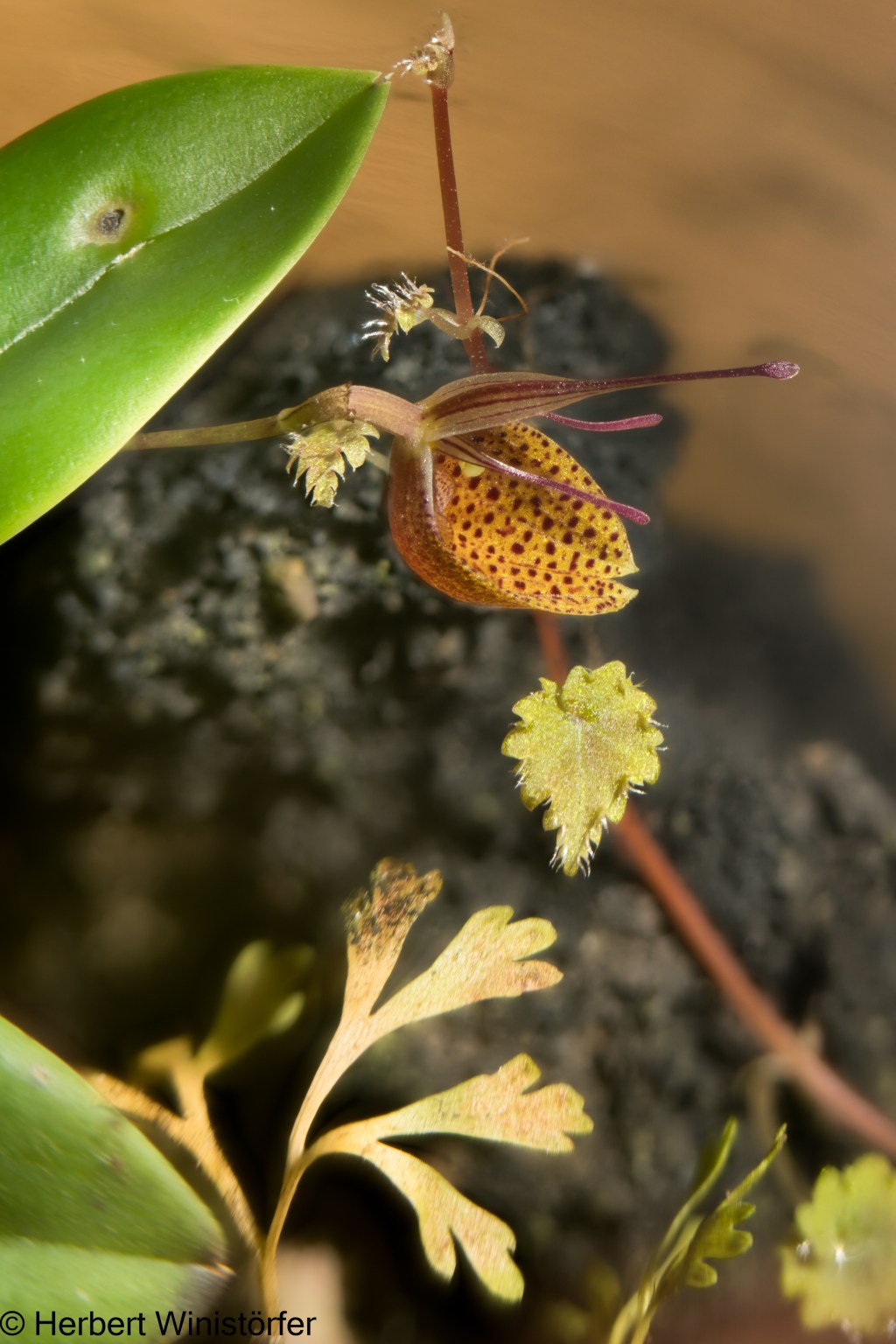
Read more: Avoid blurringHermetospheres can have a high aesthetic value. If that is part of the motivation behind them, one is tempted to capture the beauty photographically. However, objects behind glass are difficult to photograph. Depending on the optical quality of the glass from which the container is made, the object will appear more or less blurred. My…
-
A mysterious orchid with boat-shaped flowers
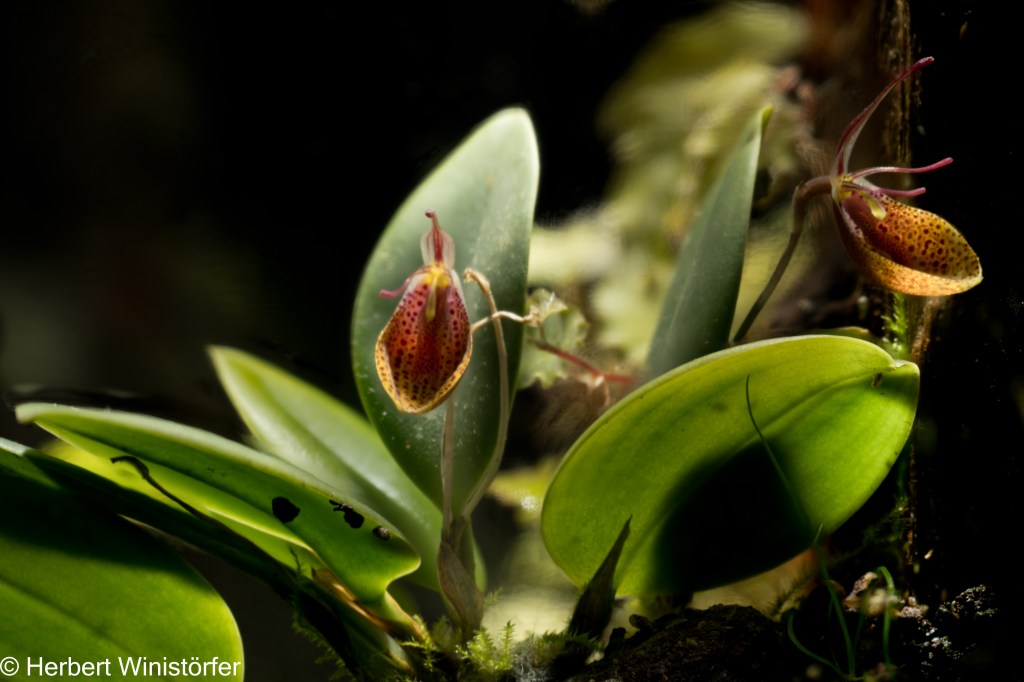
Read more: A mysterious orchid with boat-shaped flowersVery little is known about the orchid Restepia cymbula. According to C.A. Luer (1996), who described the species in the Icones Pleurothallidarium, its presumptive discoverer was Mario Portilla, later co-founder of the famous nursery Ecuagenera Cia. Ltda. Luer writes: “This little species without collection data was obtained in 1992 by Colomborquideas Ltd. above Medellin, Colombia,…
-
A vulnerable orchid
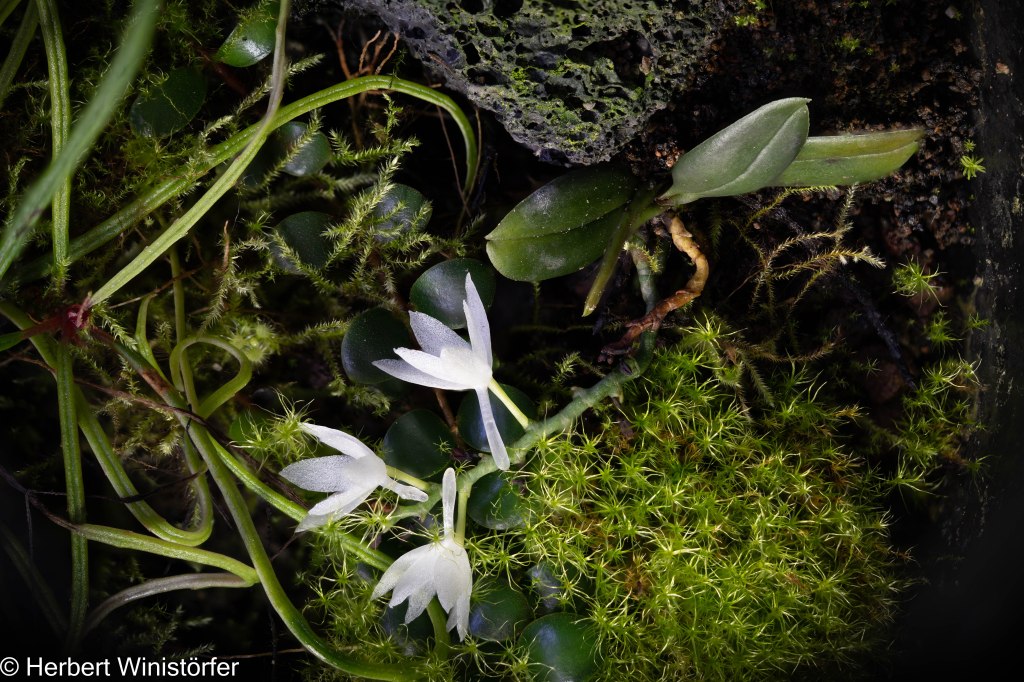
Read more: A vulnerable orchidAerangis hyaloides is popular with orchid collectors for its lush, brilliant white flowers. For me, this was also one of the reasons to choose it for my Madagascar container. Other reasons were its small size, its supposedly undemanding cultivation and its suitable temperature, humidity and light preferences as an understory species of lowland forests. My…
-

In honour of João Barbosa Rodrigues
Read more: In honour of João Barbosa RodriguesIt is the first orchid I ever planted in a hermetosphere, and the fragile beauty of its flowers strikes me again every time. Initially it was planted on one side of the substrate with a small portion of its creeping rhizome. It has since worked its way across the entire diameter of the glass to…
-
Macro lens for micro plants
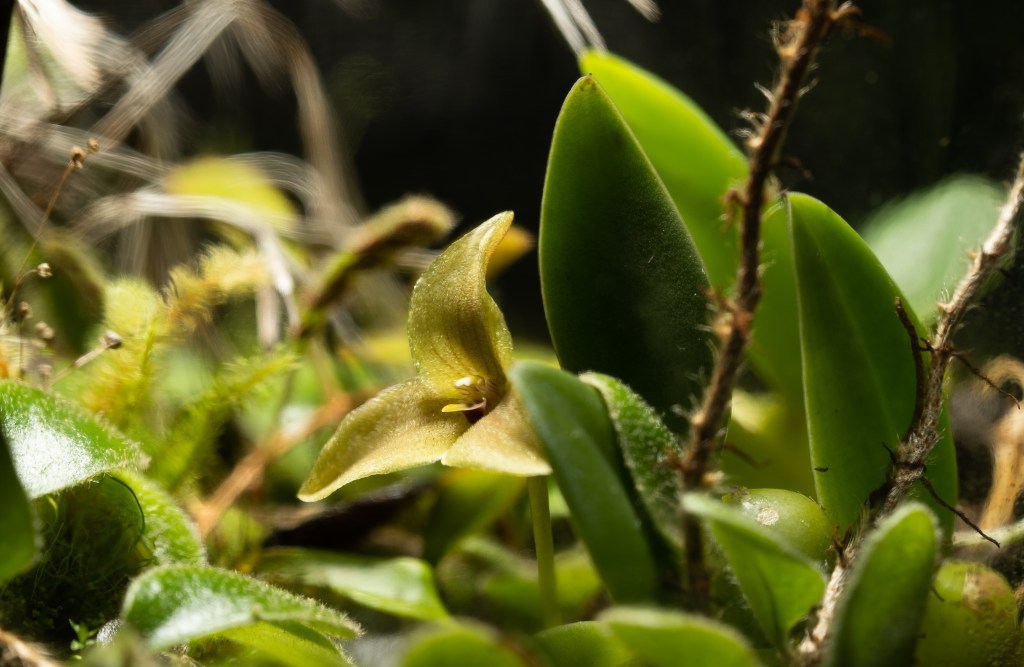
Read more: Macro lens for micro plantsPhotography can serve various functions in conjunction with hermetospheres. Some images are created for documentary purposes. They can be used to record developments in the glass container over longer periods of time and to compare different states. Other images have an aesthetic value, and in the best case they succeed in inspiring viewers without a…
-
Subscribe
Subscribed
Already have a WordPress.com account? Log in now.
 Hermetospheres