-

What makes a flower attractive?
Read more: What makes a flower attractive?Tillandsia ionantha has been popular as an ornamental plant since it arrived in the greenhouses of Belgian horticulturist Louis Van Houtte (1810-1876). This is where Jules Émile Planchon (1823-1888) found the specimen he used for his botanical description of the new species (Planchon 1855). As currently circumscribed, T ionantha is widely distributed in Mexico and…
-

Unexpected guest
Read more: Unexpected guestWhen creating and observing hermetospheres, I focus on plant life. However, one must be prepared to encounter unexpected guests. This is what happened to me once before, when a whole container was overgrown with a fungus within a few hours. With the latest guest, I got to know an entire new and extraordinary life form.…
-

The flower destined to stay closed
Read more: The flower destined to stay closedSo far, this jar represents little more than a series of failures. Originally, it was supposed to represent the Mexican Gulf province of Veracruz. There, in the cloud forest of the Sierra Madre Oriental, at an altitude of around 1500m, are the only known locations of Pinguicula emarginata. The species had been recommended to me when…
-
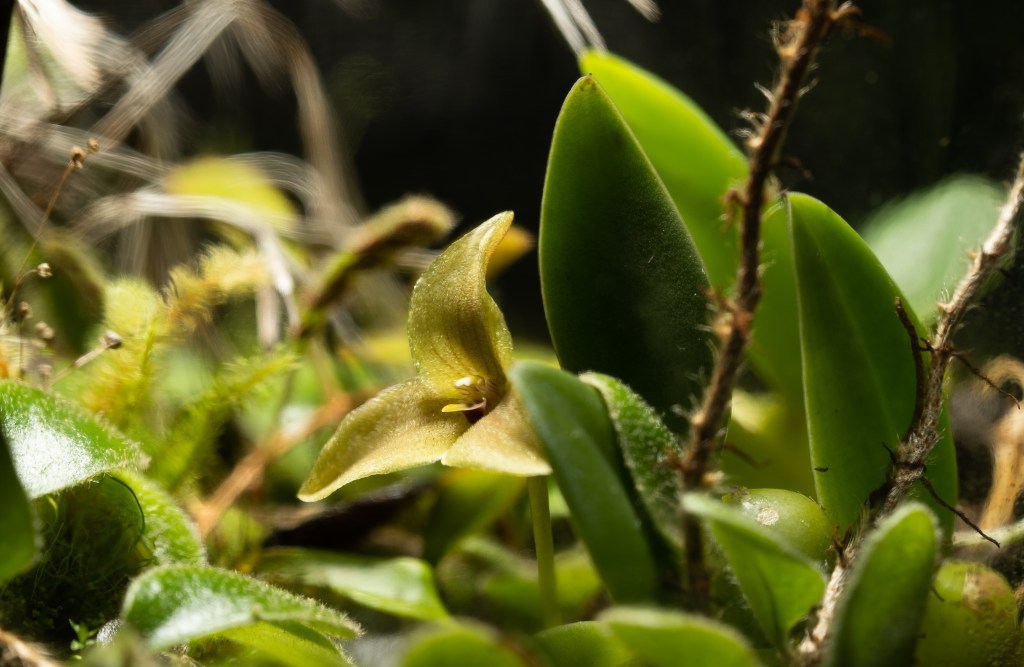
Macro lens for micro plants
Read more: Macro lens for micro plantsPhotography can serve various functions in conjunction with hermetospheres. Some images are created for documentary purposes. They can be used to record developments in the glass container over longer periods of time and to compare different states. Other images have an aesthetic value, and in the best case they succeed in inspiring viewers without a…
-
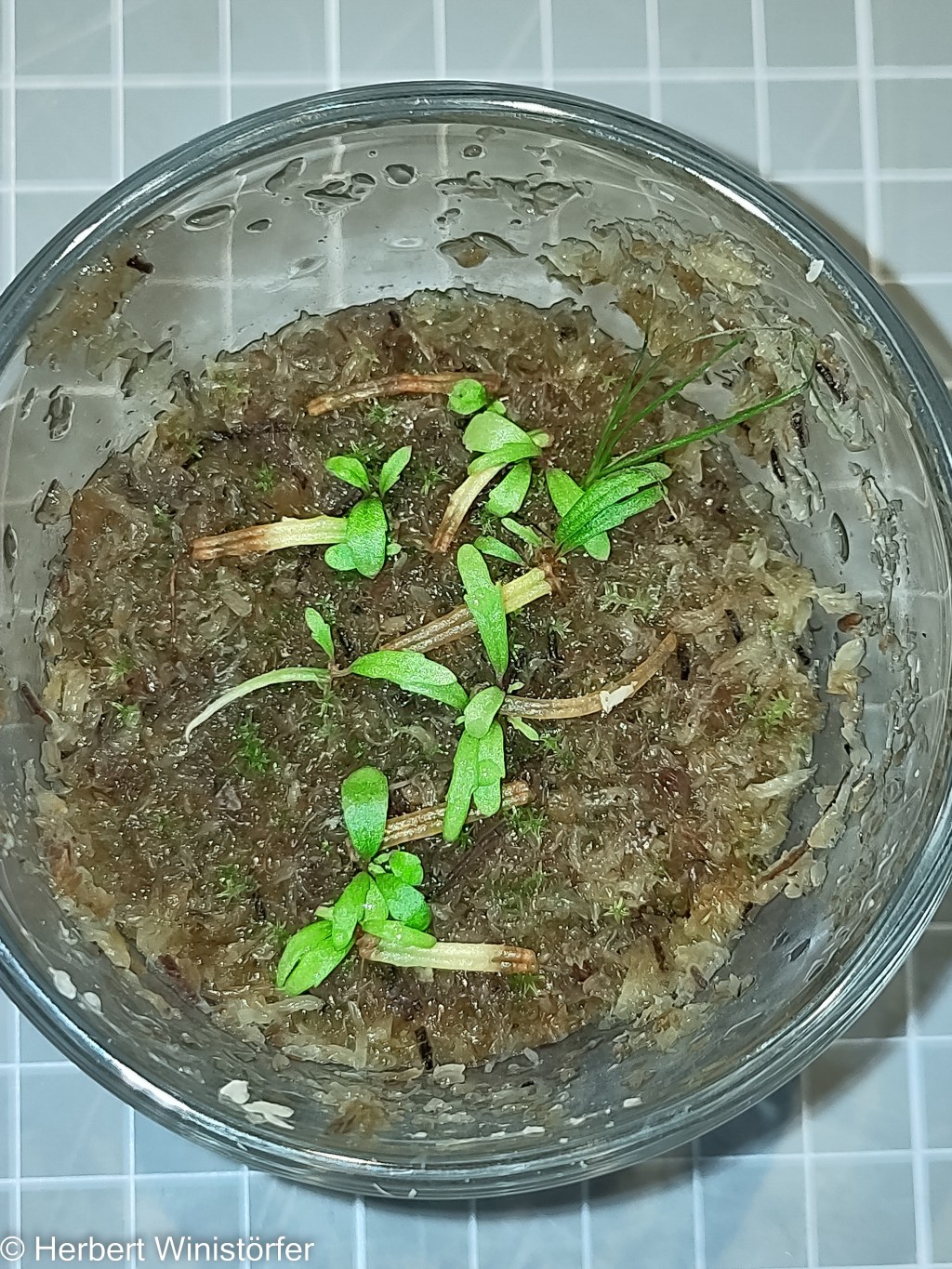
A most exceptional Begonia
Read more: A most exceptional BegoniaBegonia is not only among the most diverse genera in nature (about 1’550 described species), but also among the most intensively cultivated ornamental plants in the world (over 10’000 cultivars). Begonias are known from Africa (160 species), the Americas and Asia (more than 600 species each), but not from Australia. Attempts have been made to…
-
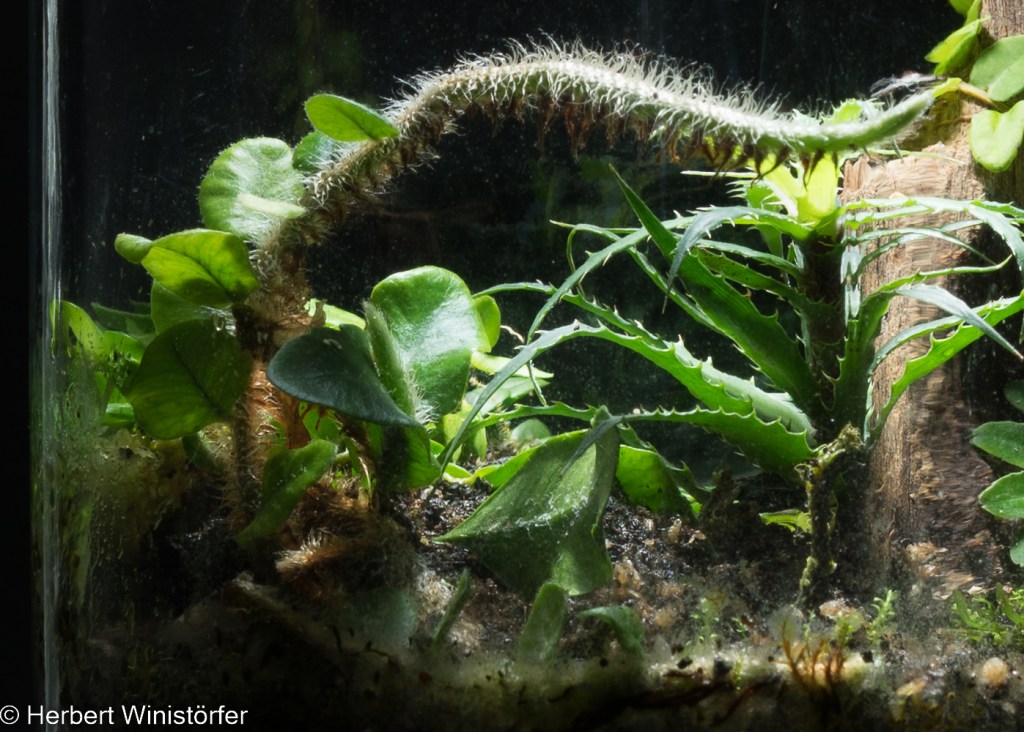
Around the world on behalf of the tsar
Read more: Around the world on behalf of the tsarOn 7 August 1803 the sailing ship Nadeshda under captain Adam Johann von Krusenstern left St. Petersburg for the first Russia-led circumnavigation of the globe on behalf of Tsar Alexander I. During a first stop in Copenhagen, German naturalist Georg Heinrich von Langsdorff (1774-1852), later diplomat in the service of the tsar, came aboard. After crossing…
-

In the studio
Read more: In the studioI was asked for more detail about the way I take the photographs of my hermetospheres in addition to the basics provided earlier, so here it is. Can permanent light be used as main light instead of a camera flash, and does this make a difference for the result? Make your own judgement: You can…
-
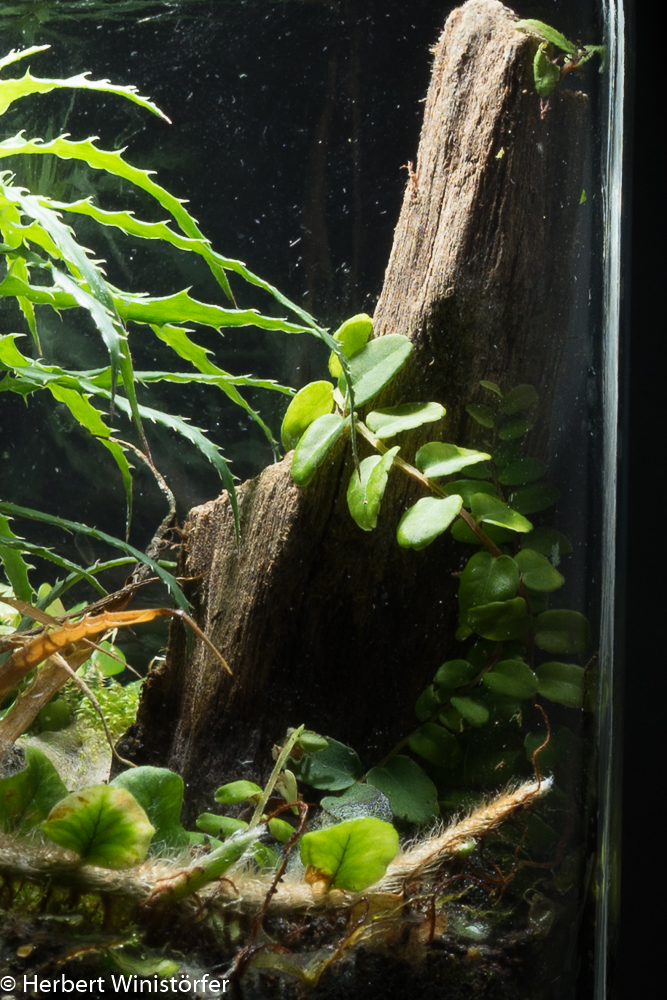
Darwin and the mystery of the coiling direction
Read more: Darwin and the mystery of the coiling directionWhen I acquired this plant as one of my first purchases to grow in a hermetosphere, it was labelled Marcgravia umbellata, but it might as well be Macgravia oligandra. Both plants originate from the caribbean islands and belong to the shingle-leaf climbers – root-climbing plants whose leaves are adpressed and often overlap (Zona 2020). As…
-

Plant on the move
Read more: Plant on the moveThe “little tree plant” (Biophytum sensitivum) is very popular among terrarium hobbyists. Its natural habitat are wet lands of tropical India and South-East Asia, where it grows in the shades of trees and shrubs, in grass lands at low and medium altitudes (Sakthivel and Guruvayoorappan 2012). It looks like a miniature palm tree, is perennial,…
-
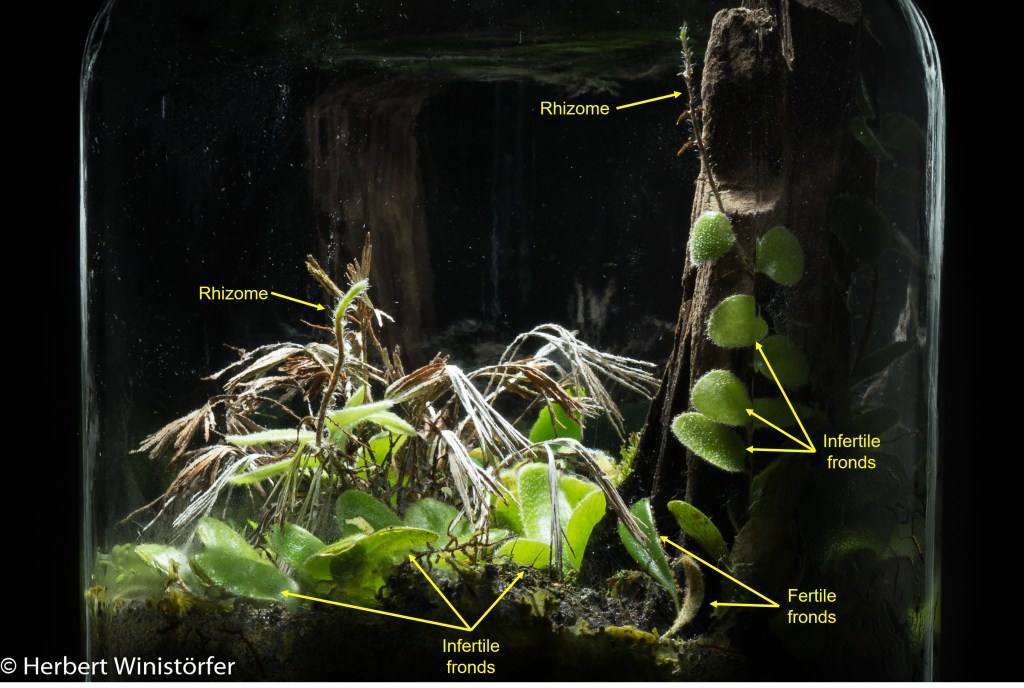
Pyrrosia nummulariifolia
Read more: Pyrrosia nummulariifoliaYou might wonder why this post is categorized as both success and failure. Let me begin with the success. When I started my jar designated to Myanmar in mid-August 2021, I placed a short rhizome cutting of P. nummulariifolia along the border of the substrate. Now, almost a year later, it is well established and…
-
Subscribe
Subscribed
Have a WordPress.com account? Log in now.

