There are few people who cultivate bryophytes (mosses, liverworts, hornworts) for the sake of bryophytes. For most people, mosses and their cousins are just pretty accessories for the “real plants”. For a long time, this was also true for me and my hermetospheres. Mosses first caught my attention when a moss that I had unintentionally brought into a container produced sporophytes. I became interested and started looking for mosses that are native to tropical regions and would therefore fit with my plants. To my surprise, I discovered that some of the mosses most offered in the terrarium and aquarium trade (e.g. Dicranum scoparium, Polytrichum formosum, Taxiphyllum barbieri) are native to temperate zones. That is no coincidence. Only “recently, the tropical, African, and South American bryophyte floras are becoming sufficiently well known to permit study of their ecological relationships as well.” (Glime 2017a: 2)
I do not assume that mosses, which I find outdoors in my home country in temperate zones, survive for long in the hermetosphere. Experts on mosses describe the difficulties in cultivating them in terrariums (Glime 2017b: 23) without, however, distinguishing between species from tropical, subtropical or temperate zones.
So, I acquired three mosses (Hypnum cupressiforme, Kindbergia praelonga, Octoblepharium albidum) whose area of distribution includes tropical regions and tried to establish them in hermetospheres. I failed spectacularly – none of them thrived. This experience made me loose interest in mosses temporarily.
The other day, I took a closer look at a two-year-old container and discovered at least three different types of bryophytes, two mosses and a liverwort, all of which introduced unintentionally (see the pictures below, bryophyte #1 to #3).
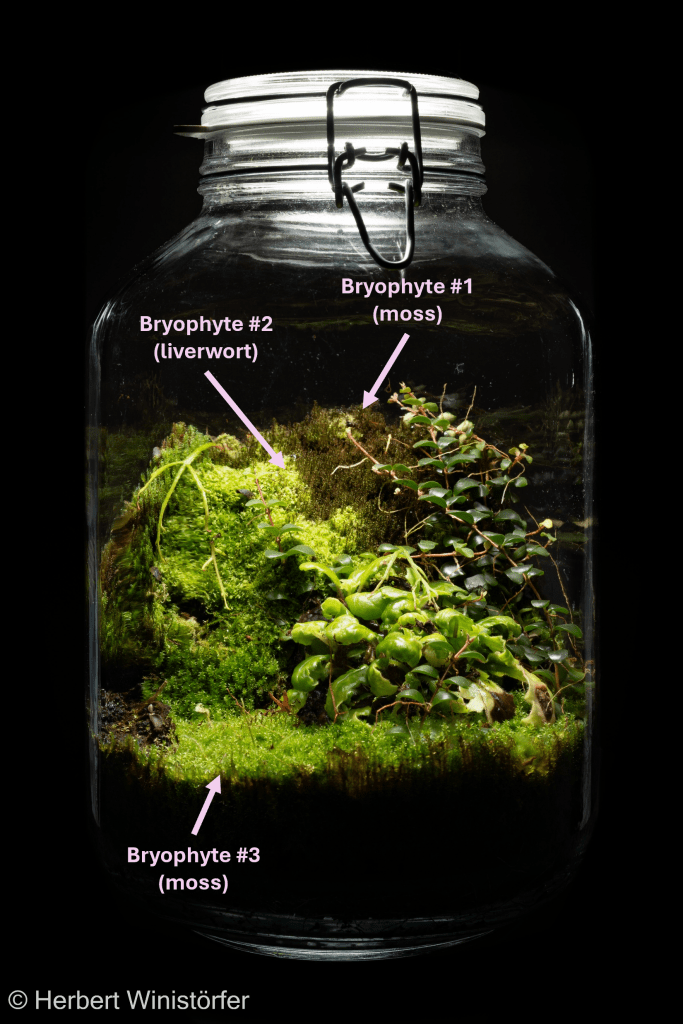
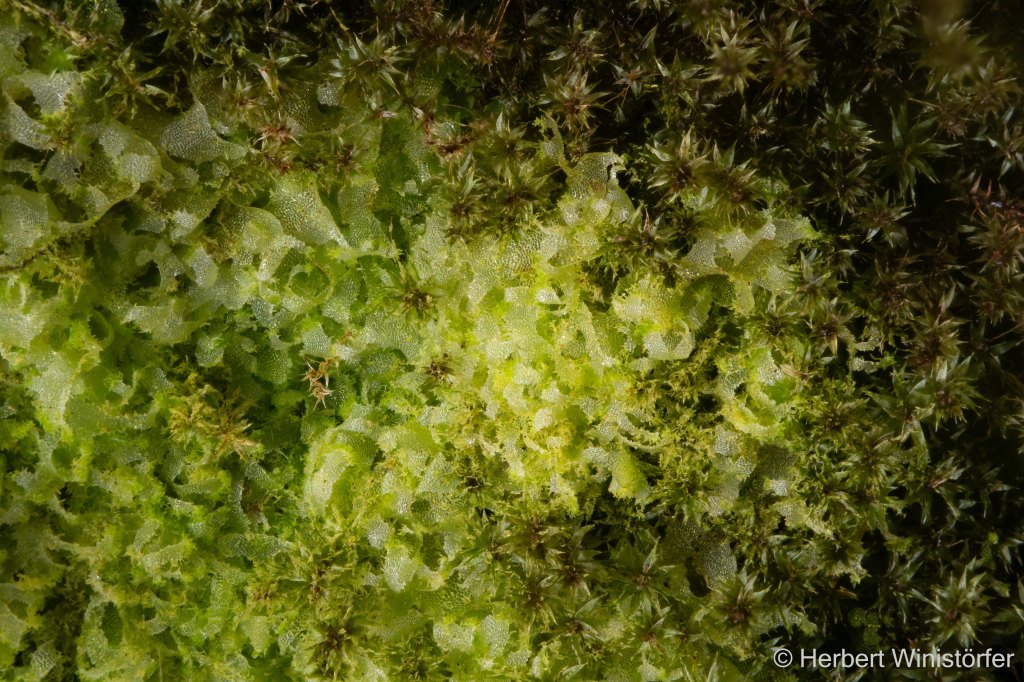
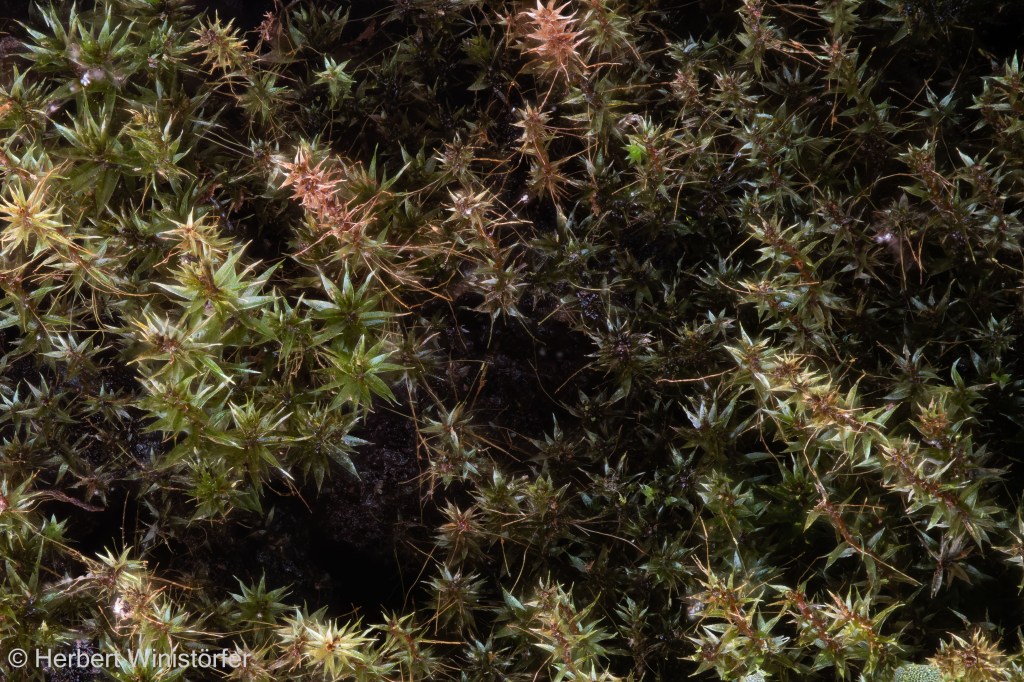
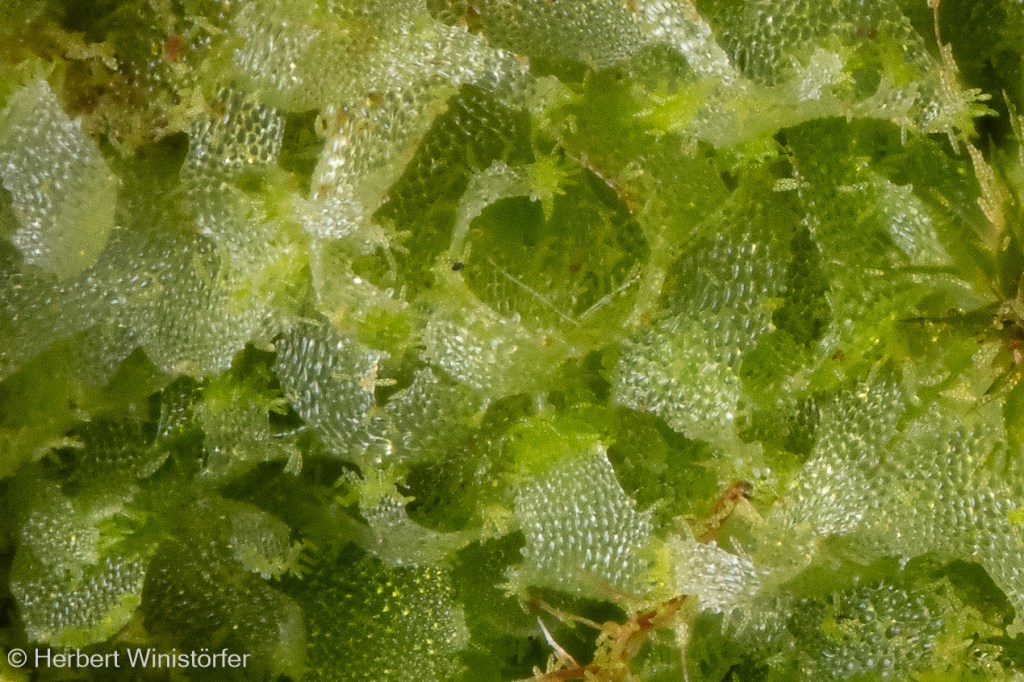
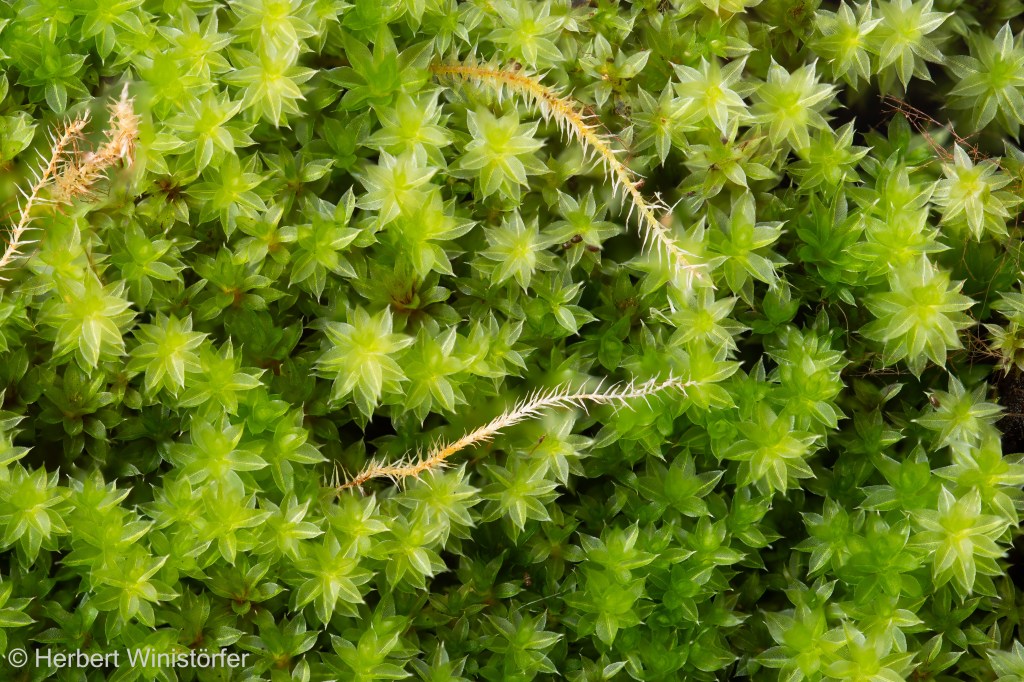
I assume all three bryophytes in the container must be common greenhouse species, a habitat not too different from what I can offer in my closed containers. I have no idea, however, of their correct identification. Identifying bryophytes correctly is a tricky business and a world of its own. Often enough microscopy is required to distinguish between species or even genera. However, on a close look, I find them fascinating, also how they share the limited surfaces in the container not covered by vascular plants. Would they remain existing next to each other or would one of them take over in the longer run? Would some produce sporophytes one day?
This is when I decided to dive into the world of bryophytes with the goal to establish reliable identifications for those growing in my hermetospheres and to try to establish other tropical mosses in new containers. The findings will be reported here.
 Hermetospheres