This is actually my second attempt with two miniature tuberous Gesneriads, Sinningia pusilla and Sinningia muscicola, in a hermetosphere. The first time, I had one tuber of each species and planted them about 1 cm deep in the substrate. Both sprouted, formed a rosette of leaves and flowers, faded, disappeared leaving dry seed capsules and never reappeared. But I don’t usually give up quickly, especially since both species are repeatedly praised for being suitable for cultivation in terrariums.
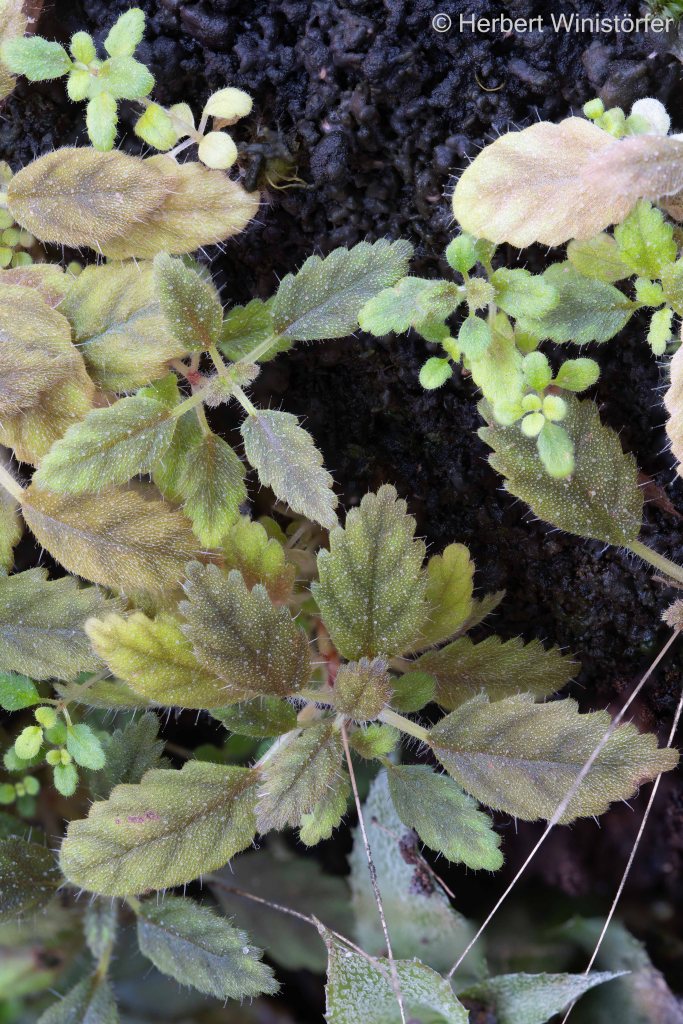

For this second attempt, I obtained seeds of both species and sowed them in a tray on lava sand mixed with some ground sphagnum moss and earthworm humus. I sealed the tray airtight with a transparent lid. After 70 days, numerous seedlings had grown from both species. I then planted these in a hermetosphere on my standard substrate, S. pusilla on the ground and S. muscicola on the slope (see video below).
Both Sinningias form pea-sized tubers beneath the surface of the soil, from which they can sprout again even if all above-ground parts of the plant have died. They therefore belong to the group of geophytes, as defined by Christen Raunkiær (1860-1938):
- “Raunkiaer (1934) first defined geophytes as terrestrial plants with resting buds located on a subterranean organ that undergo an annual die-back of the aboveground parts (i.e., dormancy).” (Howard e.a. 2019: 851)
- “Geophytes, as classically defined, are herbaceous terrestrial plants that typically undergo a dormancy period by dying back to an underground perennating organ in the form of a bulb, corm, tuber, or rhizome (Raunkiaer, 1934). These structures enable individuals to survive periods of drought and other environmental stressors through the protection of renewal buds belowground and the provision of stored resources.” (Howard e.a. 2019: 850)
If geophytism is an adaptation to seasonality, does it make sense to grow geophytes in hermetospheres, even though the humidity there is constantly high and temperature fluctuations throughout the year are minimal (given the hermetosphere is located in a lived-in interior)? I don’t have a definitive answer to that question yet. However, several experiments are currently underway with Corybas orchids, an Amorphophallus species, Begonia hymenophylla and the two small Sinningias. I have already had good experiences with two tuber-forming begonia species: B. bogneri and B. pteridoides thrive well in the hermetosphere. For now I would like to better understand the role the tubers play in the life cycle of the two Sinningias:
Both are endemic species of the state of Rio de Janeiro, Brazil, where they were found in the Atlantic forest at elevations below 1,000m, growing on humid cliffs or boulders, often in colonies, among mosses and lichens in deep shade (Chautems e.a. 2010: 258, Martius 1829: 62). The two pictures below show both plants in their natural habitat
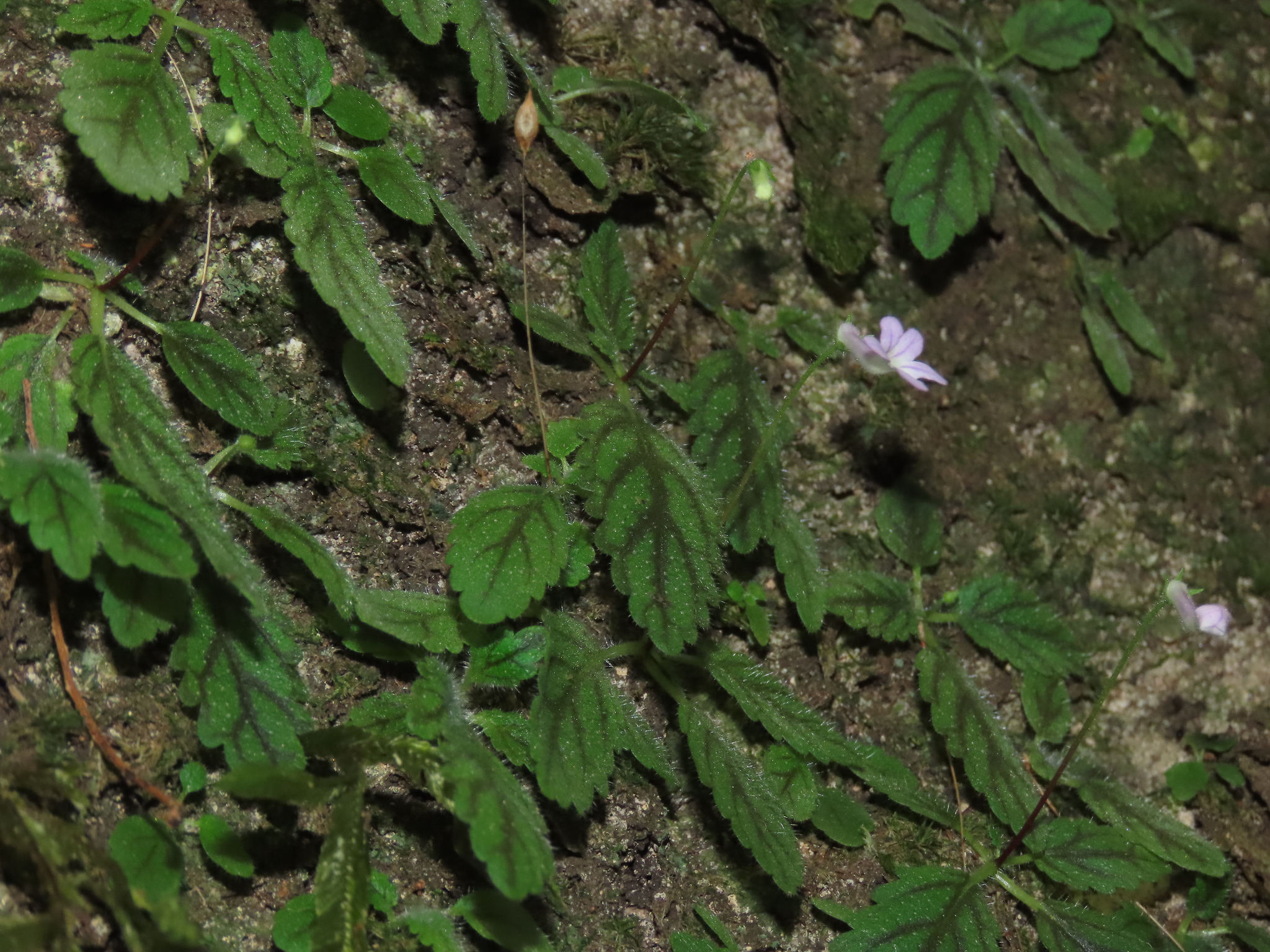
observed in Brazil on 20 September 2023 by Nicolás Lavandero (photo licensed under CC BY 4.0).

The climate diagram for the region in which both species are native shows only moderate temperature differences throughout the year. Precipitation, on the other hand, is significantly lower in the three winter months than during the rest of the year (see graph below).

The initial description of S. muscicola by Alain Chautems states: “Collected in bloom in October-November, also observed some flowers in January.” (Chautems e.a. 2010: 260) Of the eight occurrences (as per 14 November 2025) recorded in the GBIF database with details of the date of collection, all were between September and December. No observations of this species have been recorded in its natural habitat during the three less humid winter months (June, July, August). As for S. pusilla, of 19 GBIF occurrencies (as per 14 November 2025) located in the state of Rio de Janeiro and with an event date, only one (August) was assigned to the winter months. One could therefore say that it is unlikely, but not impossible, to encounter the two Sinningias (while floweing) in their natural habitat during the winter months.
With regard to the cultivation of the two Sinningias, there is plenty of publicly available advice from experienced growers. They consistently recommend high humidity, warm temperatures and low light levels for both species. Under these conditions, a dormant phase would not necessarily occur.
The following hypothesis can be derived from the above information: In their natural habitat, the geophytic habit allows both Sinningia species to survive dry periods during the winter months and to sprout again from their tubers as soon as sufficient moisture is available. Dormancy, however, is not mandatory and depends on envirmonmental conditions, most likely humidity.
My experiment with colonies of both miniature Sinningias in one container has only just begun. Will they enter a dormant phase? And if so, what will wake them up again if the container remains closed and conditions remain unchanged? Check back here later for a follow-up.
 Hermetospheres