Hermetospheres

Experiences with plant life in closed glass containers

, ,

The olive-coloured begonia

First collected presumably in 1979 and scientifically described 10 years ago, Begonia olivacea is established in the terrarium plant trade by now, both as potted plants or seed. According to the recommendations for cultivation given by the nurseries, the hermetosphere is bound to provide the perfect conditions for the plant. It is described as lithophytic herb with rhizomatous stem and very short (c. 1–2 mm long) internodes (Ardi 2015: 29). My only concern was that, with petioles up to 9 cm long and lamina up to 4.5×3.7 cm large, the plant could quickly grow too big for my standard 5l-container.

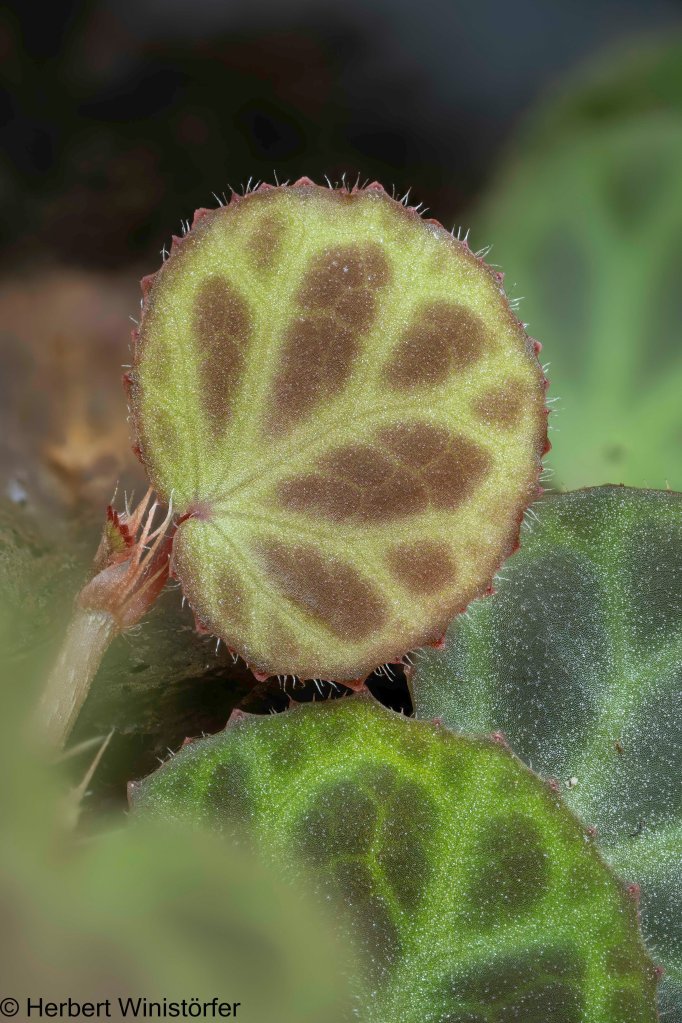
The two pictures below were taken after approximately two months in the closed terrarium.
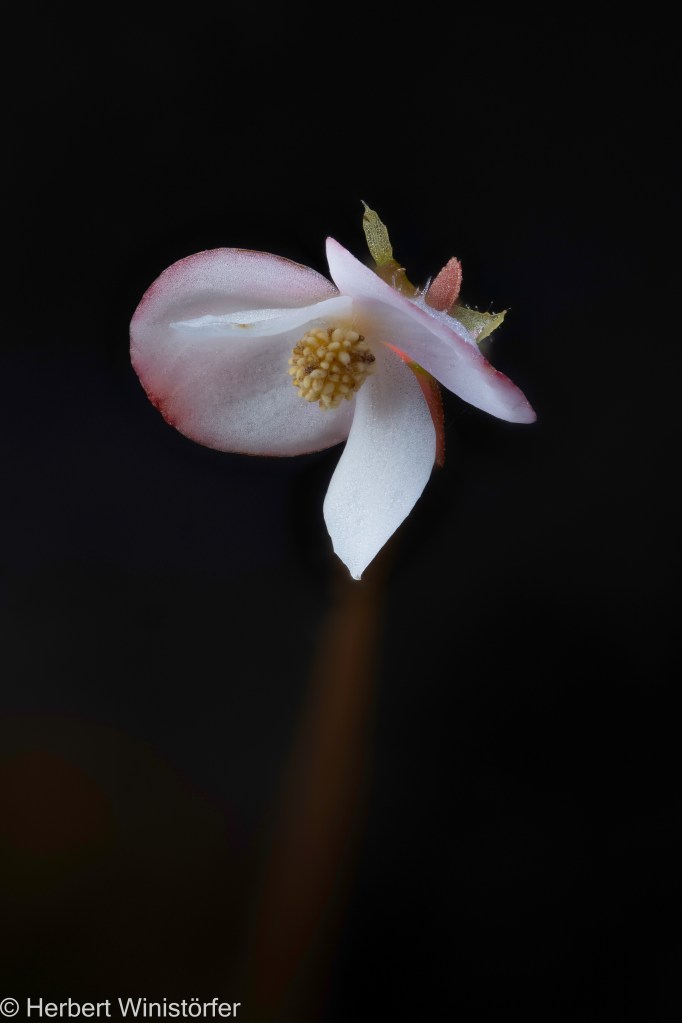
Male flower of B. olivacea in a container of 5 litres inspired by the flora of Sumatera, 21 August 2025, 54 days after onset; picture focus stacked.
Young leaf of B. olivacea in a container of 5 litres inspired by the flora of Sumatera, 05 September 2025, 69 days after onset; picture focus stacked from 236 single frames.

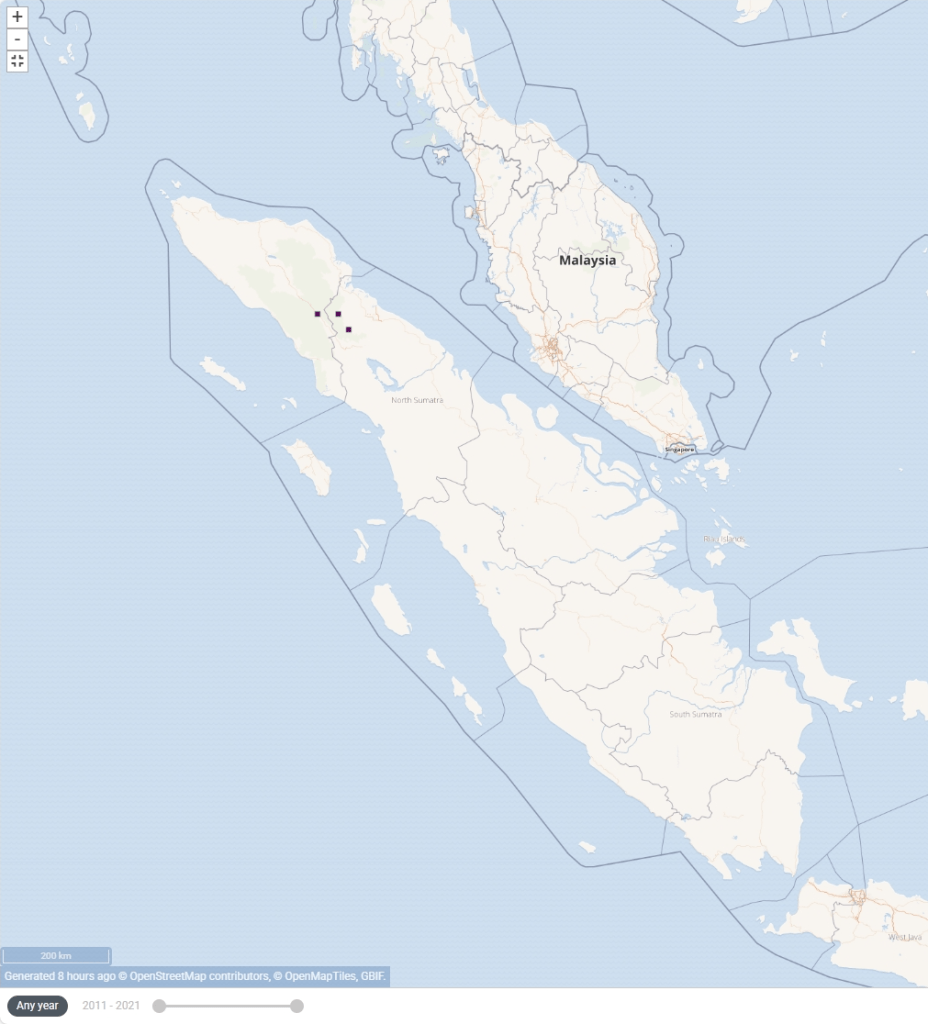
Before starting, I had, as always, tried to gather as much information as possible about the plant’s natural habitat. All three preserved specimens recorded in the GBIF database were collected in the Gunung Leuser National Park in the nothwest of the island of Sumatera (see map below). There, the “[…] species grows in meagre, dusty soil on limestone rock at 250–600 m altitude.” (Ardi 2015: 29). For an impression of the plants habit in its natural environment, see the images below taken from the original publication.
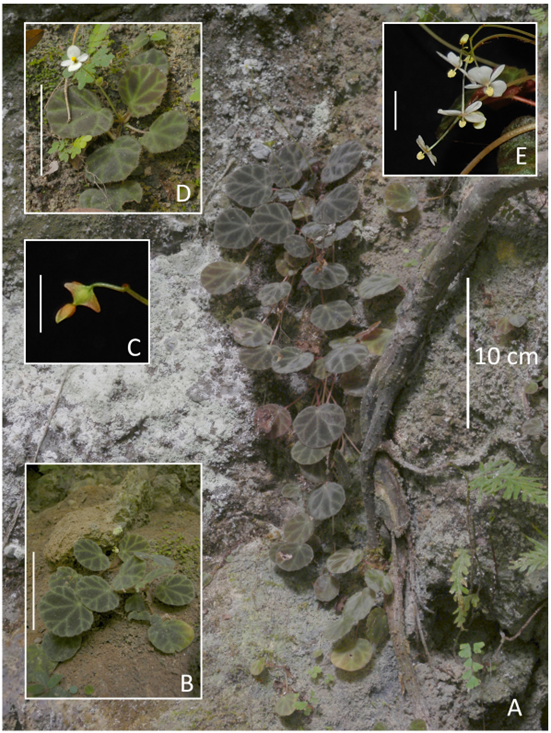
Images of B. olivacea in-situ from the original scientific description of the species;
Images of B. olivacea in-situ from the original scientific description of the species; image source: Ardi (2015: 30), licenced under CC BY 4.0. Original description: “Fig. 14. Begonia olivacea Ardi sp. nov. A. Habit, showing petiole elongation in older leaves. B. Green colour form. C. Female flower bud and ovary. D. Plant with male flower. E. Male flowers. A, B, D photographed at the type locality of Simolap; C, E taken from a plant in cultivation at Bogor Botanic Garden (accession B2013070037, derived from material collected at the type locality). Scale bars on insets: B, D = 5 cm; C, E = 1 cm.”
Map with the three georeferenced records (purple spots, as per 05 Sept. 2025) of B. olivacea in in the GBIF database, located in the nothwest of the island of Sumatera; image source: Begonia olivacea Ardi in GBIF Secretariat (2023), licenced under CC BY 4.0.

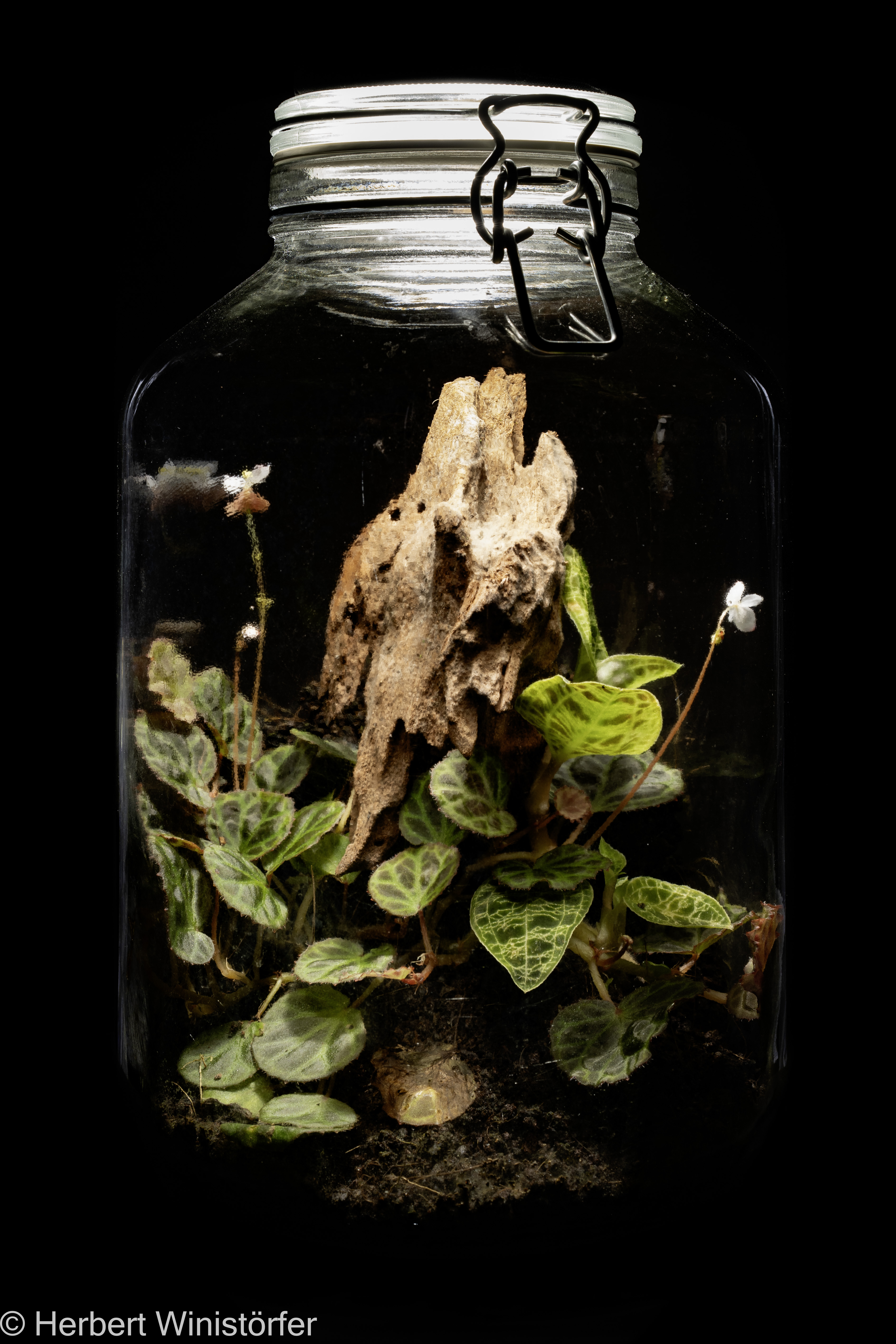
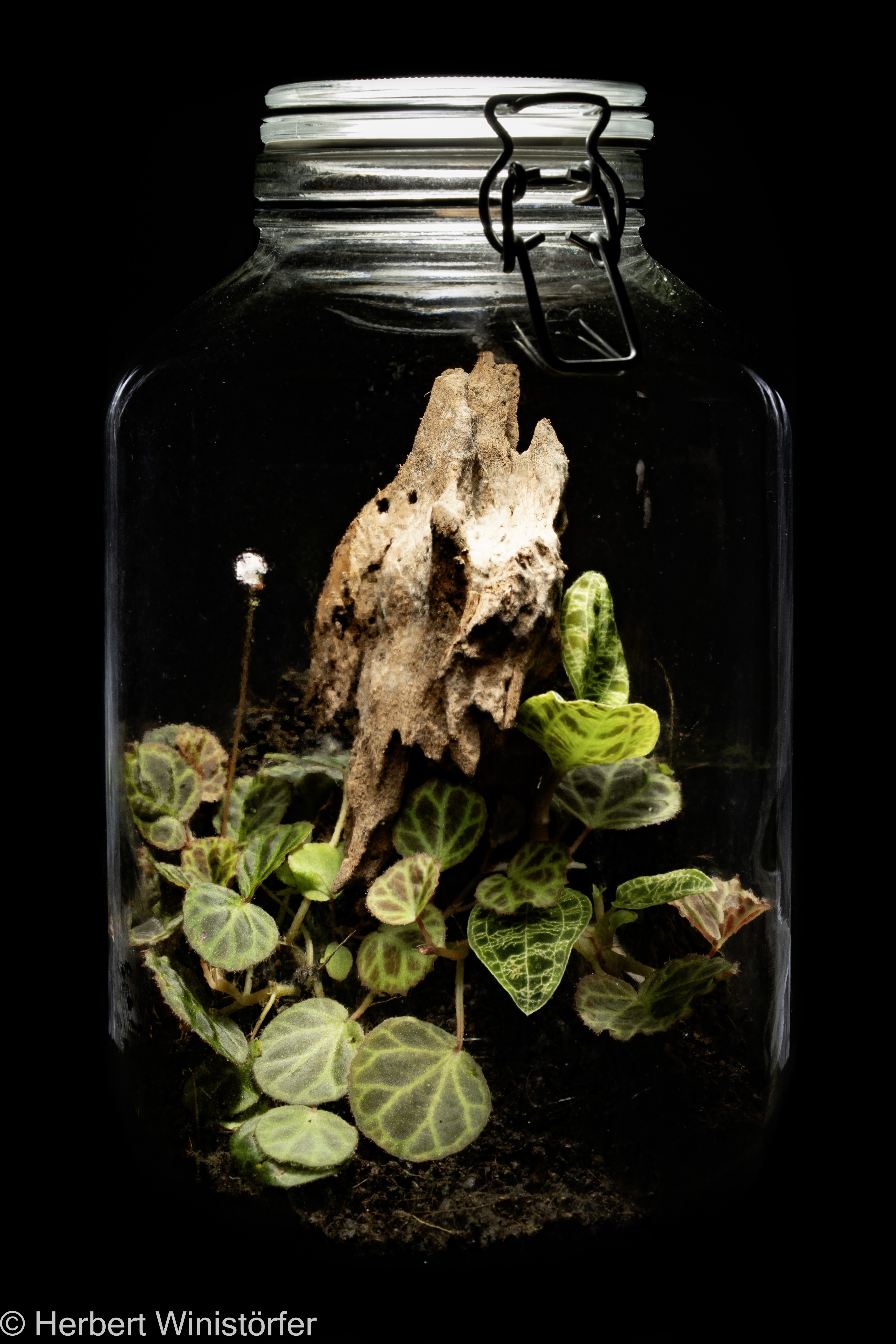
From the well-established potted plant I received, I took a piece of rhizome only about 5 cm long with a few leaves and planted it in a new jar together with a jewel orchid on my standard substrate. My concerns were not entirely unfounded. In just two months, my piece of rhizome had spread across large parts of the substrate, forming about a dozen new leaves (see the three pictures showing the development within the first two months). Two inflorescences had appeared with male as well as female flowers. It appears that calcareous substrate is not a necessary condition for healthy growth of B. olivacea despite the fact that it occurs naturally on limestone rocks.
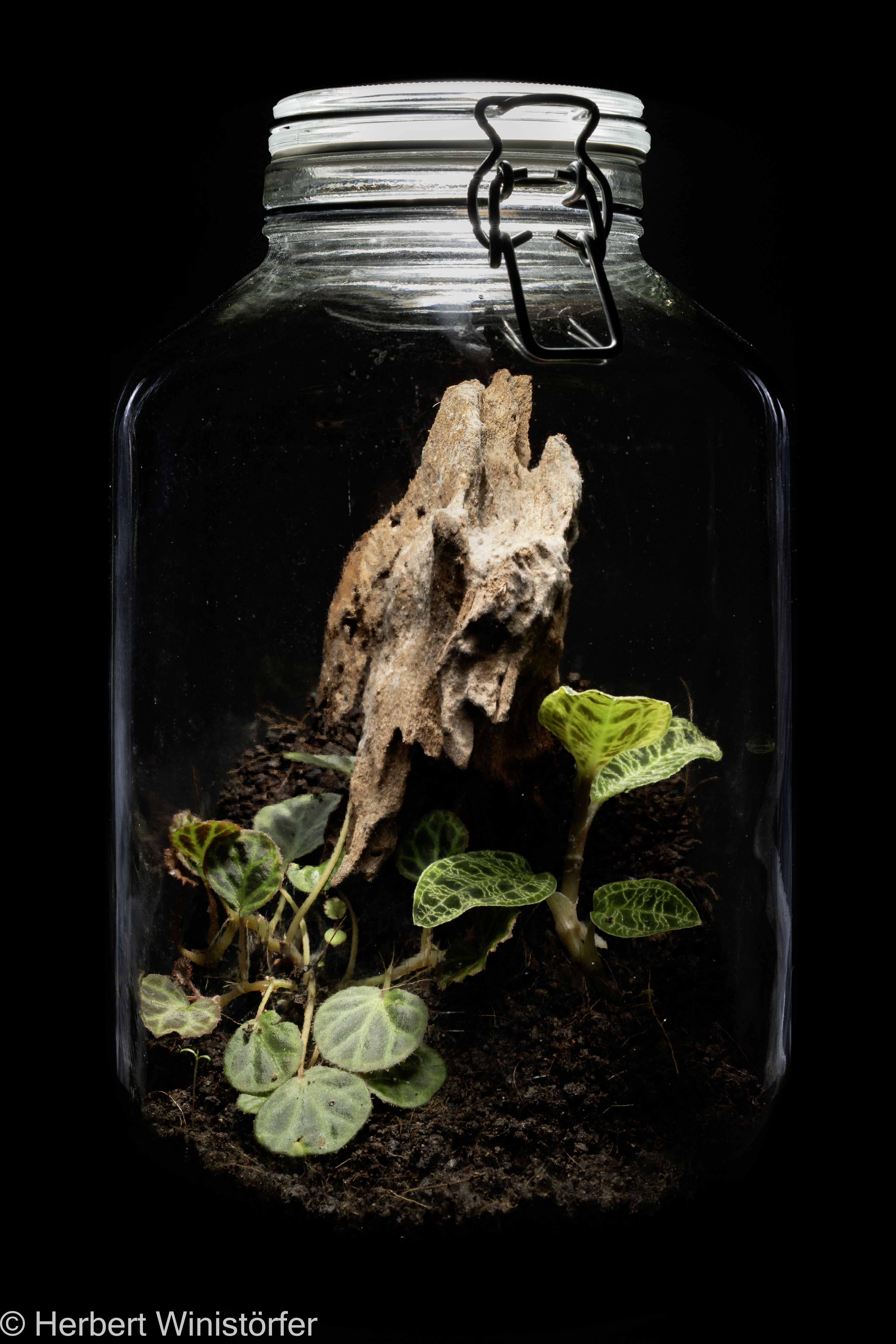
Container of 5 litres inspired by the flora of Sumatera with Begonia olivacea and Macodes petala, 25 July 2025, 27 days after onset.
Container of 5 litres inspired by the flora of Sumatera with Begonia olivacea and Macodes petala, 21 August 2025, 54 days after onset.
Container of 5 litres inspired by the flora of Sumatera with Begonia olivacea and Macodes petala, 02 September 2025, 66 days after onset.

It remains to be seen what will happen once the begonia has colonised the entire substrate. Will the rhizome continue to grow upwards without direct substrate contact, stop or slow down its growth, or collapse, as I have observed before with creeping begonias?

360° view of a container of 5 litres inspired by the flora of Sumatera with Begonia olivacea and Macodes petala, 02 September 2025, 66 days after onset.

Leave a comment