It is only ten years since this plant was given a scientific name. Nevertheless, it is already popular with plant lovers, especially for its rosette of maroon to dark malachite-green bubbled leaves covered with magenta hairs and its bright white flowers. The special appearance of the plant was one of the reasons why the authors named it the ‘good begonia’: “The specific epithet is after Mr Jui-Chin Hung, a plant enthusiast (nicknamed ‘budak baik’ in Ma-lay, meaning good (‘baik’) boy (‘budak’)), who accompanied the first author and discovered this new species. The epithet also highlights the attractive appearance of this new species.” (Lin e.a. 2014, p. 555)
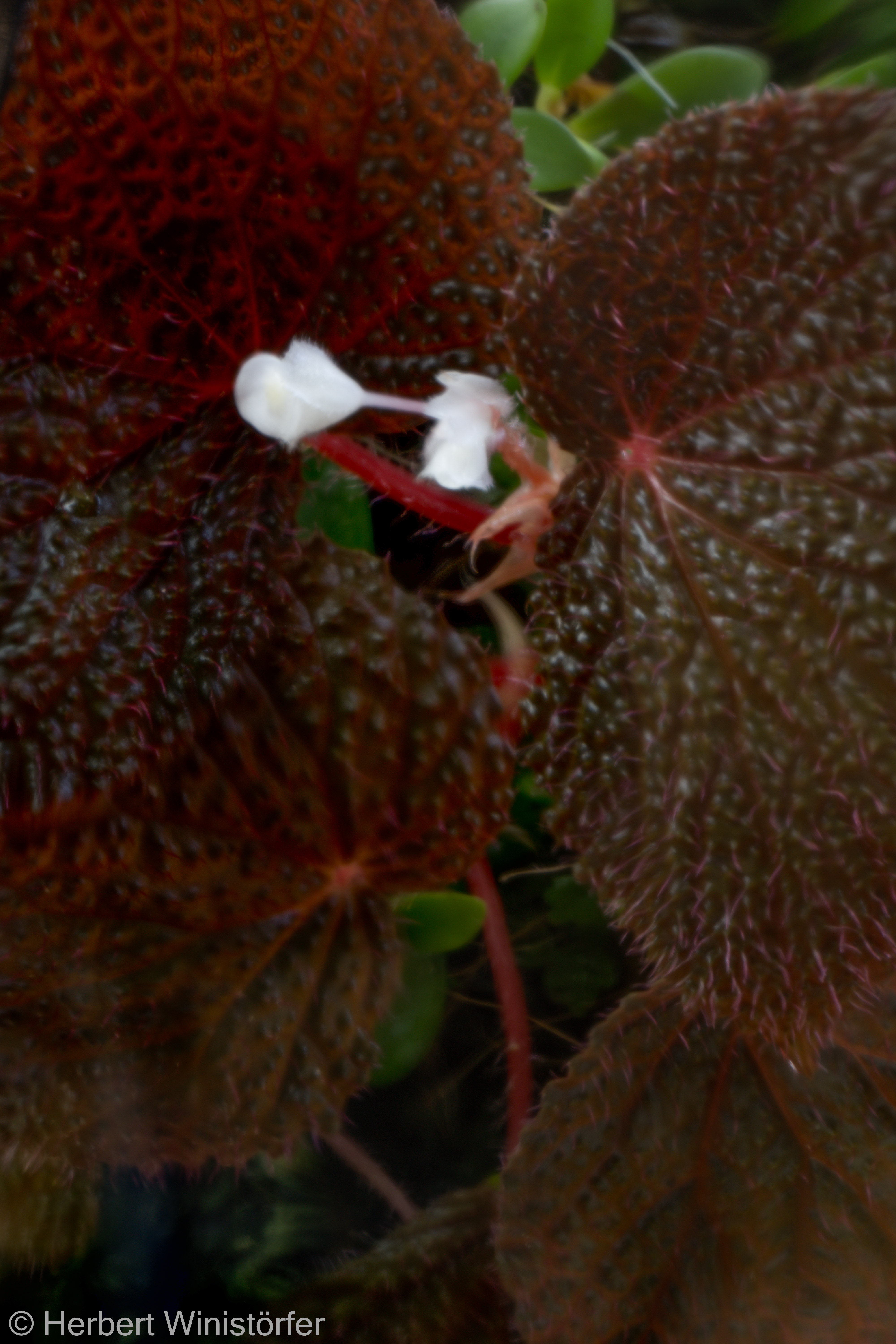

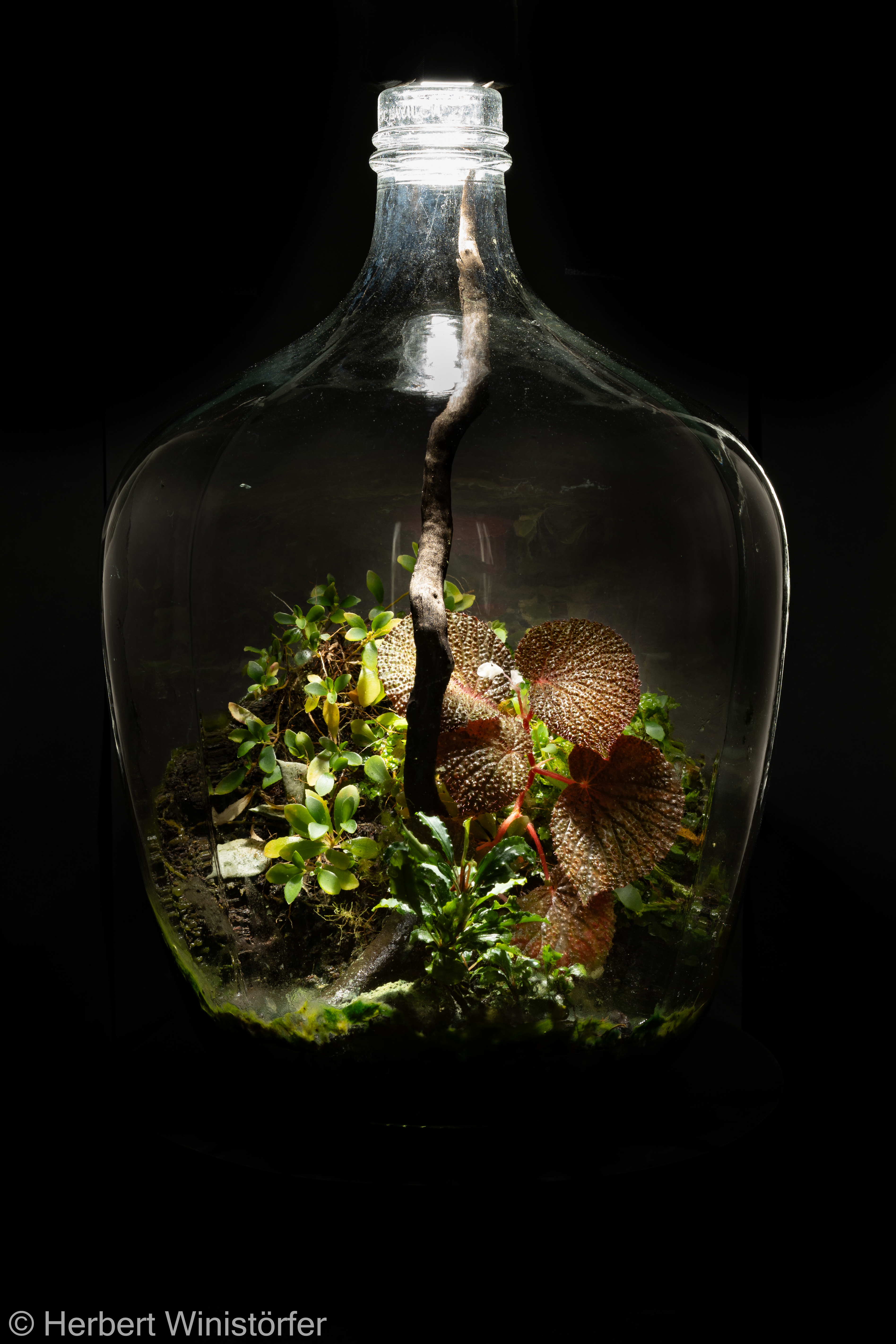
If you have a large enough container for a hermetosphere, try this begonia. For me, it thrives in a closed 25 liter demijohn for almost 2½ years and is now flowering for the first time.

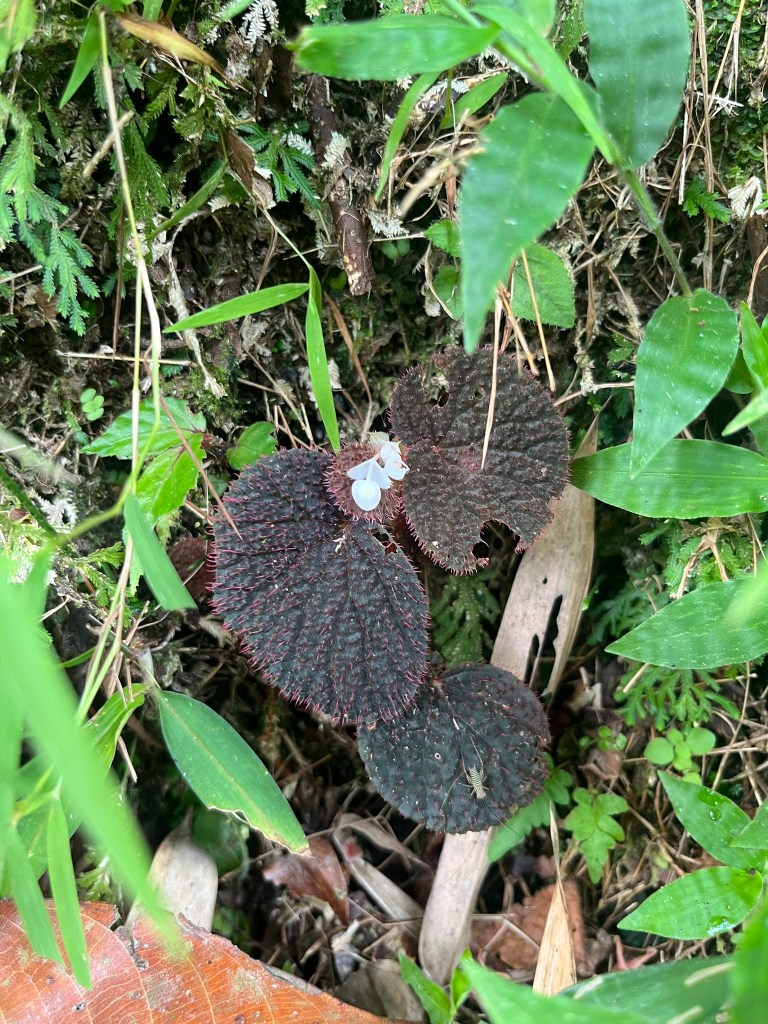
Like many plant species native to the rainforest of Borneo, this begonia is only known from a few locations in a small region. The natural habitat is described by the authors as follows. “Begonia baik is endemic to southern Padawan, Sarawak, Malaysia […]. It grows on semi-shaded, earthy slopes or at base of sandstone cliffs in dipterocarp forest, at ca 130 m a.s.l., associated with Gesneriaceae, Araceae, and some species of Nepenthes.” (Lin e.a. 2014, p. 557).
Fortunately, most begonias can be easily propagated by leaf cuttings or seeds. This means there is little incentive to continue collecting plants in the wild for commercial purposes once they are in cultivation. Nevertheless, many of these species, which are rare in the wild, are threatened by the destruction of their habitat. Let us therefore do everything we can to ensure that the primary tropical forests are preserved for the future.
 Hermetospheres