In 2017, Lin and colleagues described Begonia lichenora as a species new to science. The species is “Distributed in Sarawak, Borneo; known only from Bau to Padawan areas that are at border with West Kalimantan Province of Indonesia. Plants usually climb up the steep, slightly shaded soil slopes in wet dipterocarp forest, elevation ca. 100 m.” The name chosen by the authors “refers to the small leaves that are nearly appressed to substrate, rendering a lichen-like appearance”. Since its publication, the plant has already found its way into cultivation and has become popular with terrarium enthusiasts.
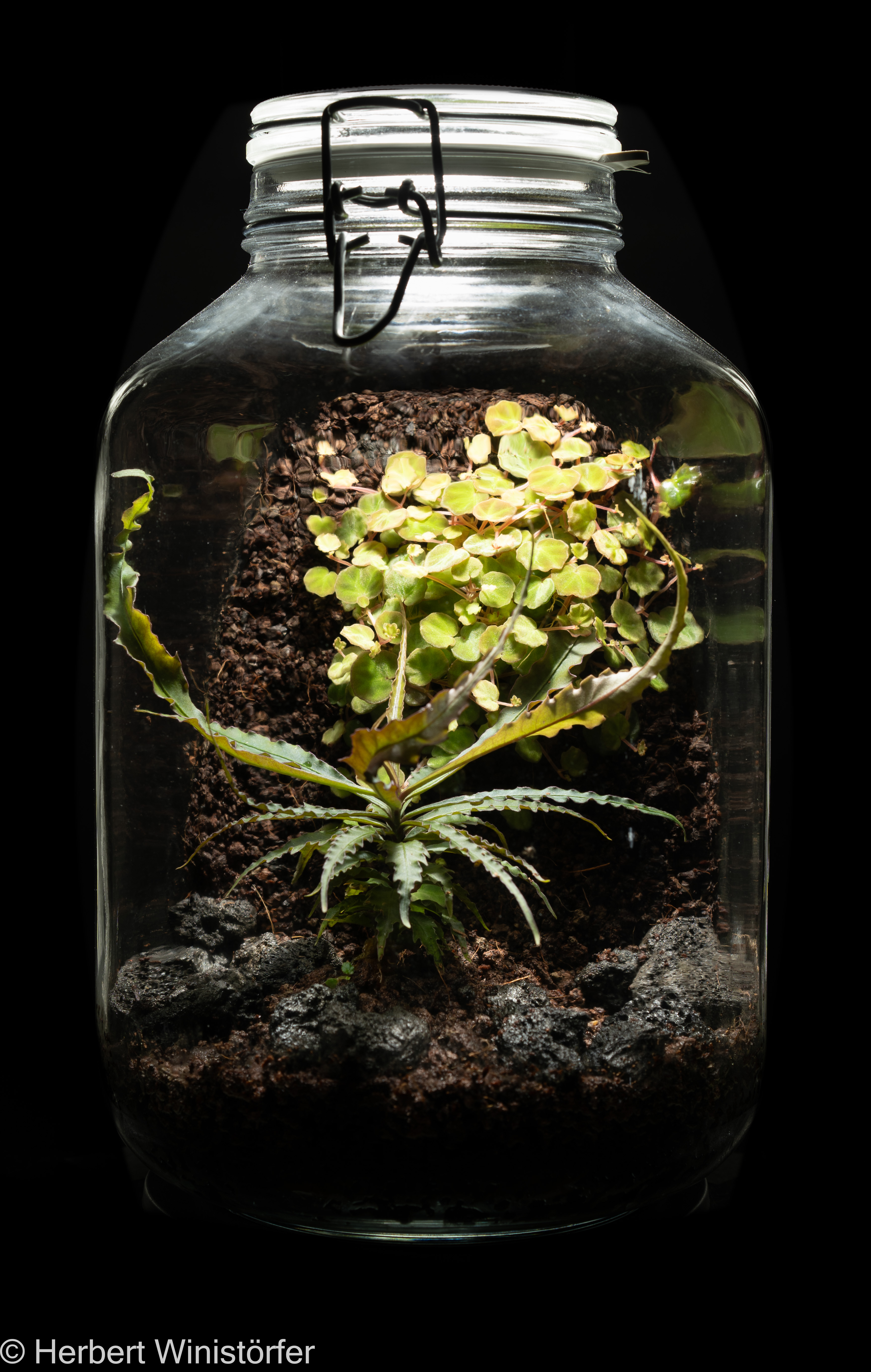
When I came across the plant at my local nursery, saw the small size and discussed the growing conditions, I was pretty confident it could strive in a hermetosphere. So I built a steep slope from lava soil to imitate the plant’s natural habitat and combined it with a Labisia sp. also from Borneo. How well B. lichenora is doing under closed container conditions in the long run will be seen, the start is promising.
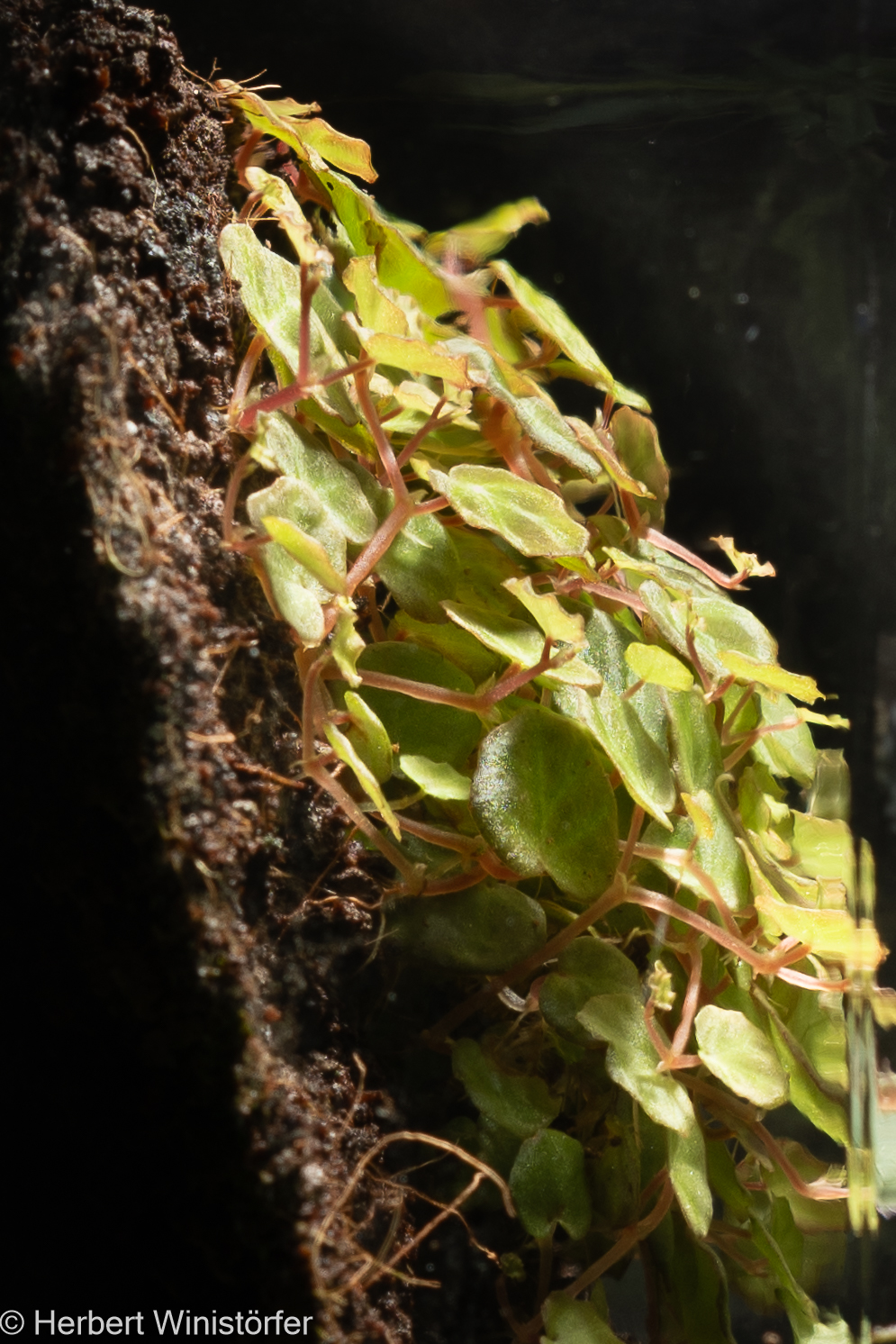
The picture below gives an impression of the Begonia’s growth habit.
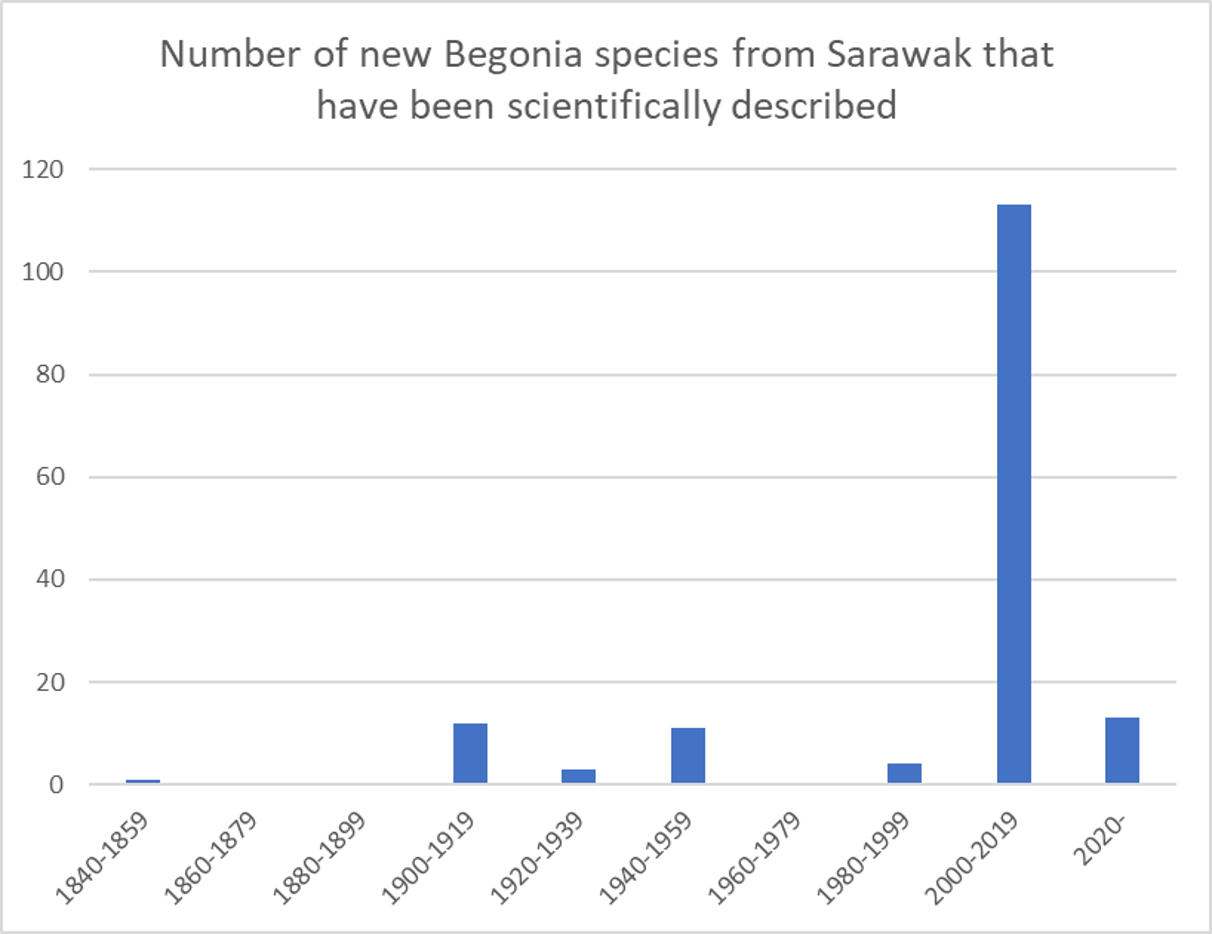
Although the first Begonia from Sarawak has been described more than 150 years ago (Candolle 1859), the vast majority of the 157 species known in 2022 (Sang e.a. 2022) has been published since 2000 (see chart below).
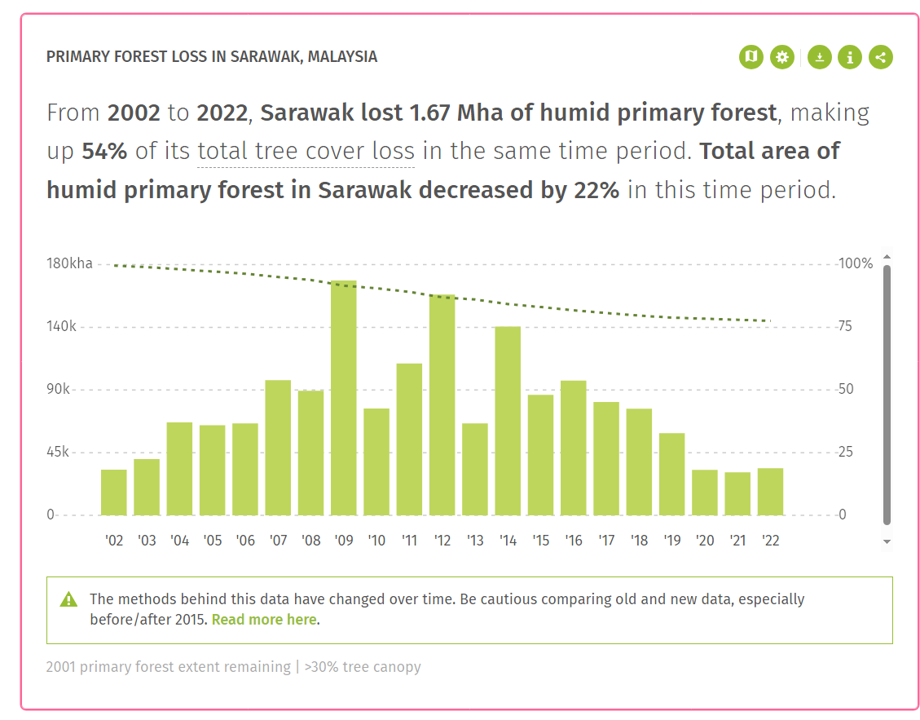
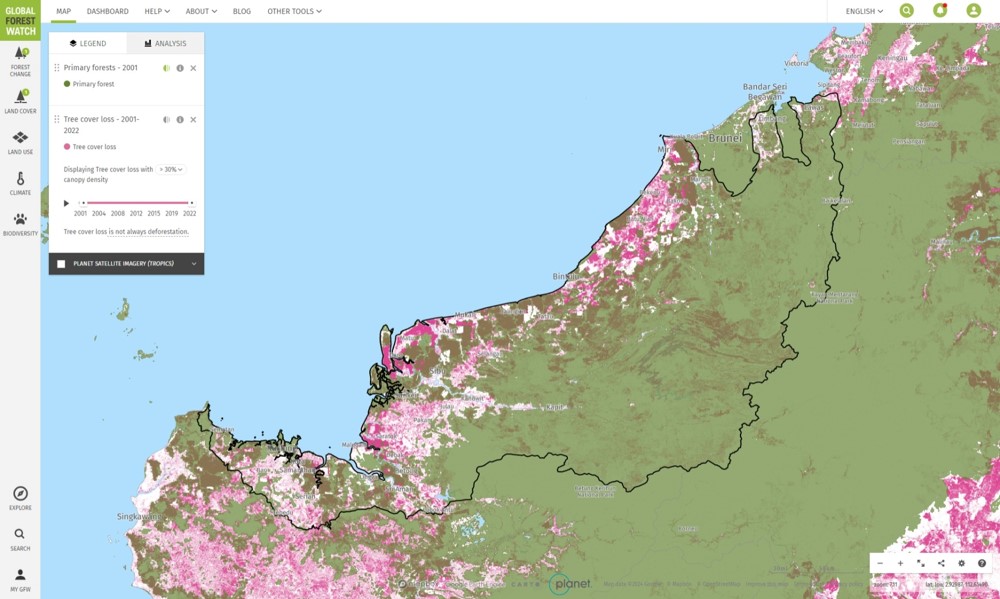
Just like Begonia lichenora, a lot of Begonias are only known from a very limited area: “Despite continuous exploration of forests in Borneo, the percentage of hyperendemic and rare species remains high among Begonia species.” (Sang e.a. 2022, p. 33). Knowing that Sarawak has lost 22% of its humid primary forest from 2002 to 2022 (see chart and map below), it is more than likely we have lost plenty of wonderful species due to deforestation before we are even aware of them. And we continue to do so. Think about it.
 Hermetospheres