A primeval plant that grows easily in hermetospheres provides insights into the early history of plant development.
Initially I had Selaginella uncinata, a spikemoss, growing in a 1 litre jar for a few weeks as a trial. That is how I found that the plant thrives under hermetosphere conditions and spreads quickly (see picture below). I observed that the spikemoss formed root-like structures from the shoot in many places and was thus able to repeatedly make contact with the substrate and obtain nutrients. This had to be a key factor for the rapid spread in the jar.
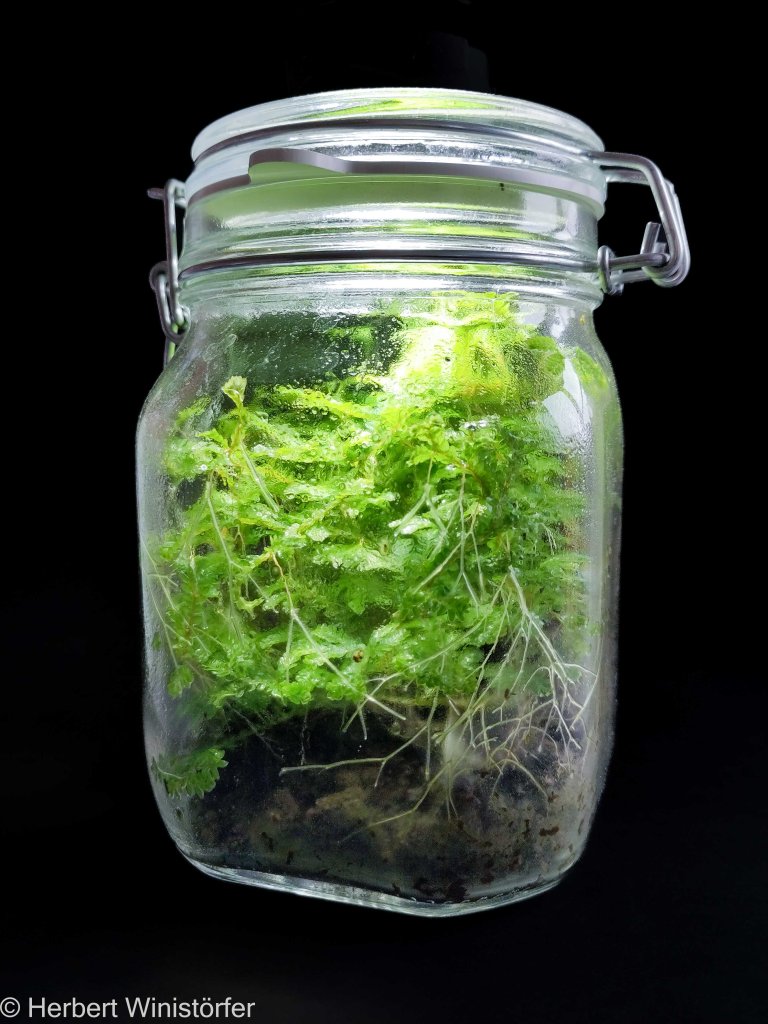
The spikemoss grew so well, in fact, that I could only combine it with plants that were similarly robust in the glass. S. uncinata is native to South China, Japan and Vietnam. From this region I considered the gesneriad Deinostigma tamiana (also known as Chirita tamiana) to be resilient enough for a trial with S. uncinata. The gesneriad originates from Vietnam, and I therefore dedicated the new 5-litre jar (see pictures below) to this country.
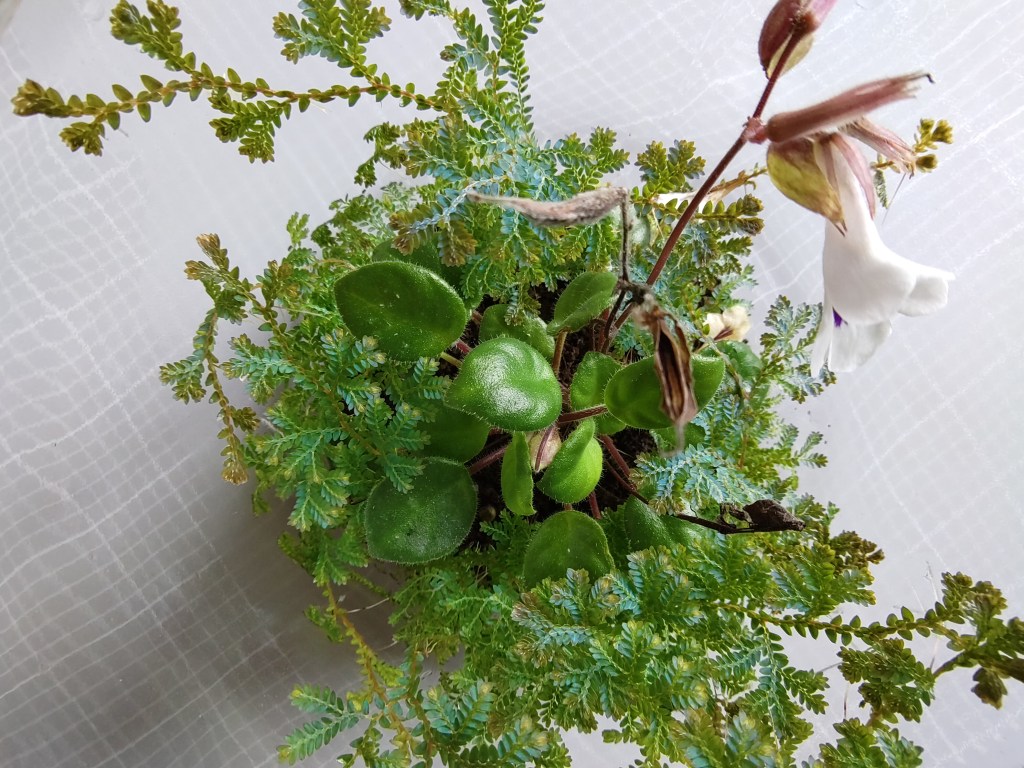
When I read up on Selaginella uncinata in more detail, I learnt that the “root-like structures” of Selaginella have caused quite a bit of confusion in the scientific community. The current state of knowledge is described in a molecular biology based paper by Alison Mello and colleagues (Mello e.a. 2019):
Selaginella represents a genus of lycophytes, a group of plants that includes clubmosses, firmosses, spikemosses and quillworts. The origin of Selaginella dates back to 400 million years ago, making these plants a system of evolutionary interest for over a century. The genus resides in an early branch of the land plant lineage that possesses a vasculature and roots. The majority of the Selaginella root system is shoot borne and emerges through an organ known as the rhizophore. Whether the organ is to be regarded as an aerial root or a distinctive structure has been a long-debated question. The rhizophore is particularly interesting from an evolutionary perspective as it could represent a plastic structure in an early land plant lineage that is not committed to either root or shoot fate. At the beginning of their development, rhizophores are pigmentless and grow in the direction of gravity (positive gravitropism) like mature Selaginella roots and the roots of most seed plants. However, they are otherwise smooth and lack root characteristics such as a cap and root hairs. At later stages, the structure develops root features (root cap and root hairs), usually just before or after it reaches the soil. The rhizophore of Selaginella moellendorffii – a model for the lycophytes – can develop into either a root or a shoot up to 8 days after the formation of the structure. From this point on it is fixed as a root. Using molecular biological methods, the authors were able to show that the rhizophores of Selaginella are clearly distinct from the early stages of both roots and shoots. Rhizophores can therefore be regarded as a distinct organ with unique characteristics.
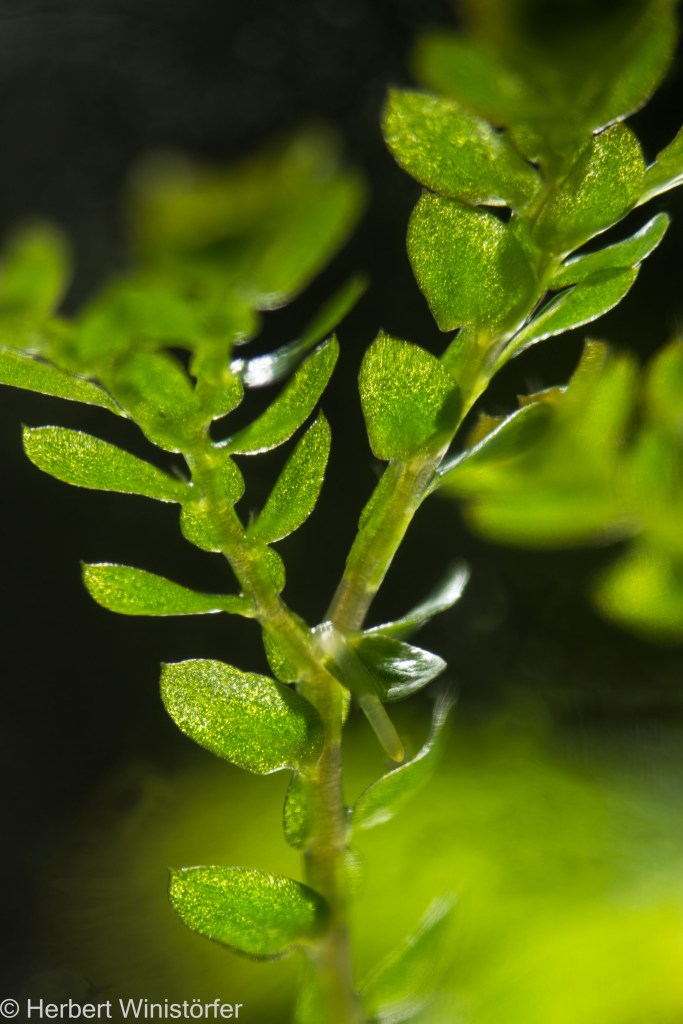
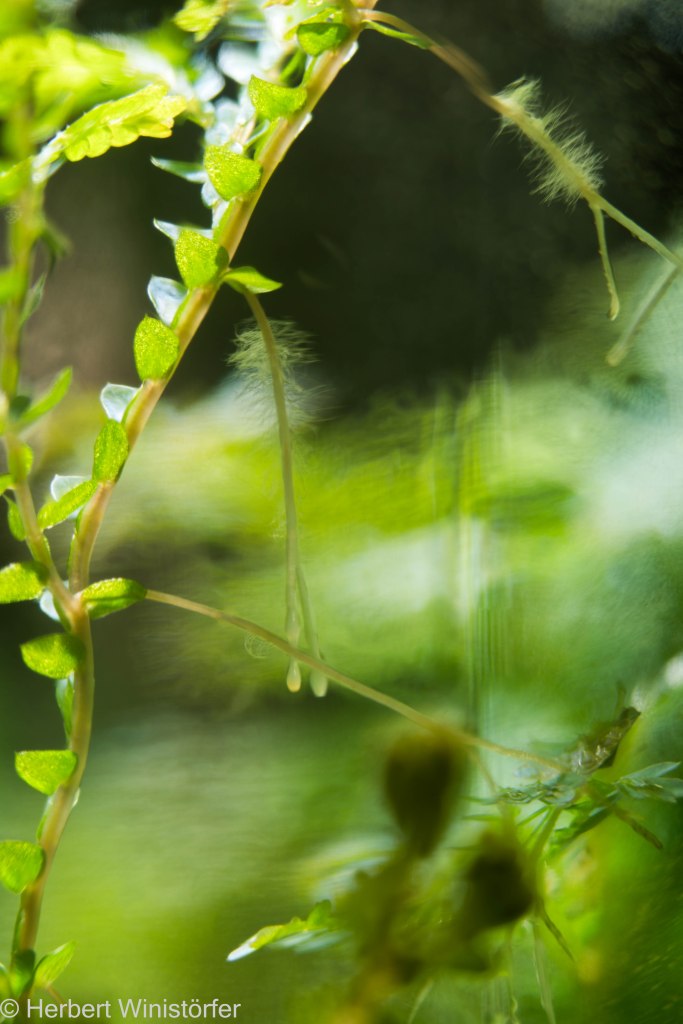
Close-up pictures of Selaginella uncinata rhizophores in my hermetosphere can be seen below; interestingly, some of them have root hairs, othes do not.
 Hermetospheres